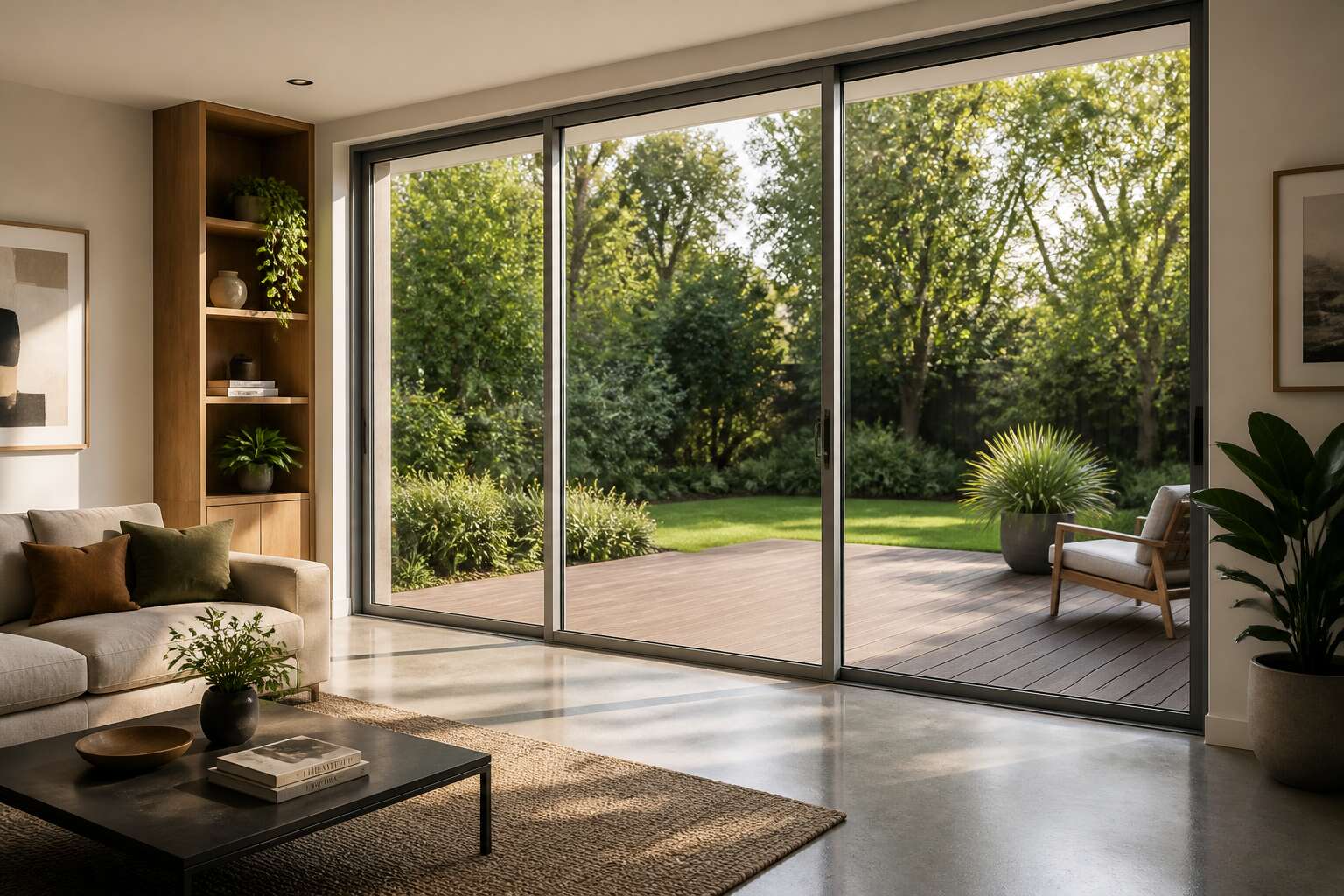
Understanding Aluminium Sliding Door Systems
Profile Materials
The distinction between a premium sliding door aluminium frame and a budget counterpart is measured in microns, not marketing claims. The profile material is an engineered composite of alloy temper, wall thickness, and surface treatment. Choose the wrong combination and your door will rattle on a breezy Highveld evening.
Let’s walk through the profile materials that matter.
- The alloy temper: T5 is air-cooled and artificially aged, adequate for standard residential bays. T6 is quenched and aged more aggressively, providing greater rigidity for spans exceeding three metres.
- Wall thickness: Anything below 1.2 millimetres is a warning. Coastal regions, with their salt-laden air, demand a thicker profile.
- The thermal break: A polyamide strip that separates the outer and inner aluminium sections, preventing condensation and limiting heat transfer.
Pair these elements with a durable powder coat or anodised finish, and the sliding door aluminium frame becomes a fixture that performs quietly for decades. That is the only outcome that matters.
Glass Options
Glass is the component that defines a sliding door aluminium frame’s performance. The frame carries the weight, but the pane controls comfort. For South African homes, the choice between single and double glazing comes down to thermal behaviour. A 6mm single pane loses heat on a Johannesburg winter night, while a double glazed unit with a 12mm argon gap reduces heat transfer by up to 50%.
Coatings change the equation. Low-emissivity glass reflects interior warmth back into the room, and in Durban, a solar control coating reduces glare before it reaches your furniture.
The glass options that matter:
– Tempered glass for safety in high-traffic doorways
– Laminated glass for security, as it holds together when shattered
– Tinted glass for privacy and UV protection
Each pane alters how the sliding door aluminium frame responds, from the Cape winds to the Highveld sun.
Hardware Components
Hardware determines whether a sliding door aluminium frame operates smoothly for years or turns into a daily struggle. The rollers matter most. Nylon wheels glide quietly, but in coastal towns like Port Elizabeth, stainless steel bearings resist salt corrosion far better. The track also deserves scrutiny. A powder coated aluminium track handles debris from the Cape winds without rusting.
Locks and handles endure constant use. These are the parts you touch every day, and they carry the heaviest strain. In Gauteng, multi point locking systems add genuine security by engaging at several points along the frame. Seals do quieter work, keeping dust, rain, and noise outside where they belong. You rarely notice them until they fail!
Thermal Break Technology
Heat loss through an aluminium frame is not gradual. It is a direct exchange, cold moving inward while warmth departs. A sliding door aluminium frame without a thermal break gives that exchange a permanent pathway. Thermal break technology inserts a polyamide strip between the interior and exterior profiles, interrupting the metal’s ability to conduct.
In South Africa, this shows up in winter as condensation on the inner surface. A proper thermal break prevents that by keeping the interior profile closer to room temperature.
Look for these markers:
- A polyamide barrier at least 24 millimetres wide.
- Independent seals on both sides of the break.
- Certified thermal performance data.
I have inspected frames where the thermal break was only a cosmetic seam. Those units felt cold to the touch and collected moisture constantly. A sliding door aluminium frame that skips this technology will show its weakness within a season!
Key Factors for Choosing Aluminium Frames
Durability and Maintenance
Nearly 40% of premature wear on coastal aluminium doors traces back to simple neglect. A sliding door aluminium frame endures harsh UV, salt, and humidity, especially in provinces like KwaZulu-Natal. Durability depends on the protective coating and how well you maintain drainage channels. Regular rinsing with fresh water removes corrosive particles that settle in corners.
I have seen frames fail within five years when owners ignored chalky residue on the surface. That residue signals the oxide layer breaking down. Check for scratches or chips in the coating, because exposed metal invites pitting.
Here is a practical maintenance rhythm:
– Wipe tracks weekly with a damp cloth to remove grit.
– Apply a silicone lubricant every three months to the rollers.
– Inspect the perimeter seal for tears after winter storms.
Such simple actions extend the working life of a sliding door aluminium frame considerably. Investing twenty minutes each season beats replacing a door unit.
Aesthetic Versatility
A sliding door aluminium frame decides how a room meets the outside. A slim profile lets the glass dominate, pulling the garden into the living space. A thicker profile gives a home a grounded, industrial feel. This is where aesthetic versatility matters.
South African homes vary from beachfront cottages to city penthouses, and the aluminium frame adapts. Powder coating opens a spectrum of colours that resist fading under high UV. Textured finishes can emulate wood grain without the swelling that real timber suffers.
Consider these points before you choose:
– Decide whether the frame should stand out or fade into the wall.
– Review the outdoor elements that will hit the frame daily.
– Match the finish to the existing window joinery.
The result is a sliding door aluminium frame that belongs to your home alone.
Energy Efficiency
A poorly chosen sliding door aluminium frame raises room temperatures by several degrees by afternoon. In South Africa’s summers, that inefficiency is a direct drag on your wallet. The frame’s thermal transmittance and gap sealing determine how much heat enters and how much cool air escapes.
Before ordering, check these items:
- the U-value of the entire door system, not just the glass.
- How the seals compress when the door closes; they must block drafts.
- The frame’s surface temperature rating for Western Cape winters.
A sliding door aluminium frame with poor energy efficiency forces your air conditioner to work harder every afternoon. That also shortens the lifespan of the compressor, making your electricity bill do double duty.
Security Features
An aluminium frame only secures your home if the lock engages properly. Many South African homeowners install a sliding door aluminium frame and assume the standard hook latch is enough. It is not. Burglars know that a firm upward lift can pop most sliding doors off their tracks in seconds.
The track design matters more than most people realize. I have watched security assessors lift an entire door out of its frame in under ten seconds. A proper anti-lift block stops that entirely. Multipoint locking systems distribute pressure along the frame height rather than relying on a single point. That makes jimmying significantly harder.
Some features worth comparing side by side:
- Anti-lift blocks that sit flush within the bottom track
- Multipoint locks with hardened steel bolt heads
- Laminated glass panels set directly into the frame
- Anchor screws that reach deep into the brickwork
Each element adds a layer of resistance. A sliding door aluminium frame with these details stops intruders from exploiting the most common weak points.
Cost Considerations
Getting an accurate quote for a sliding door aluminium frame in South Africa feels like a game of roulette. One supplier quotes a price that suggests the frame is carved from solid gold, while the next offers a figure so low you suspect the aluminium is recycled from old pot lids. The difference usually comes down to two things: the source of the material and the complexity of the installation. Local versus imported profiles carry different price tags, and the thickness of the alloy, not the paint job, is where the real cost hides.
Installation costs are often where homeowners get stung. The frame itself might be affordable, but if your wall opening is out of square or your lintel is weak, the labour charges climb rapidly. I have seen quotes where the installation fee matched the cost of the entire product. Urban areas like Johannesburg and Cape Town also carry a premium for transport and call-out fees that rural installers simply do not charge.
A proper breakdown of what you are paying for will include:
– The profile thickness and alloy quality
– The glass specification, including whether it is clear, frosted, or laminated
– The track system and its load rating
– The locking mechanism’s grade and certification
– The powder coating finish and its warranty period
A cheap sliding door aluminium frame is only cheap at the till. If the track is thin or the rollers are plastic, you will replace them within two years. The smart money goes into the components you cannot see, because the visible parts are the ones that are easy to sell and easy to fake. When you compare quotes, ask each supplier for a fixed installation schedule, not just a headline number. The lowest price will often omit the removal of your old door or the disposal of construction waste.
Your budget should also account for the thermal performance of the unit. A frame with a thermal break costs more upfront but reduces your air conditioning bill in summer. That distinction matters when you are choosing between a basic profile and one designed for energy efficiency. In the end, the price you pay reflects how long you want the door to last. The frame that survives a decade of coastal salt or Highveld sun is rarely the cheapest one on the board.
Installation and Structural Considerations
Measuring Opening Dimensions
South Africa’s high summer temperatures and coastal storms make a sliding door aluminium frame more than a decorative feature. It must fit its opening exactly, otherwise the frame twists, door binds, andwater pools. Measuring opening dimensions isthe first step,andmost important one. Use a steel tape,nota cloth one. Measure width at three locations:top, middle, bottom. Take the smallest figure. Same for heightat left, centre, right.
Check the floor levelsand the walls plumb. For a sliding door aluminium frame, allow10mm clearance aroundall sides for packing pieces and expansion. Then assess structural support. A large span door places load on the lintel. Masonry walls require reinforced concrete lintels,while timber frames need solid jambs. Include the total door weight in your calculations. If in doubt, speak to engineer.
- Measure widthat3 points, use smallest.
- Measure heightat3 points, use smallest.
- Check diagonals, ensure difference under5mm.
Alignment tolerances matter. A few millimetres off leads to draughts, noise,and premature wear on rollers. Packing pieces during installation squarethe frame, but structural errors need fixing before the door goes near opening.
Load-Bearing Capacity
Before any glass meets the tracks, the structure above and around the sliding door aluminium frame must prove its strength. A heavy door assembly, especially with double glazing, can weigh over a hundred kilograms. That load travels directly to the lintel or header, which in many older South African homes was never designed for such forces.
Concrete lintels need adequate reinforcement and bearing length. Steel beams should be checked for deflection. Masonry walls without proper support will crack over time, and the frame will rack, causing the rollers to bind.
- Bearing of the lintel on each supporting wall.
- Solidity of the wall material, not hollow brick.
- Presence of existing cracks or structural movement.
An engineer calculates the live and dead loads precisely. That calculation determines whether the structure can carry the door’s weight without twisting a sliding door aluminium frame later.
Weatherproofing and Sealing
Meanwhile, the physical act of installation tells its own story, one that needs to be just as meticulous as any structural calculation. An oversized “rough opening” invites trouble, while one that is too tight makes it impossible to shim the frame level. The frame has to sit perfectly plumb and square, or the sashes will drift on their own, fighting the rollers every time you slide them.
Once that frame is set, a sliding door aluminium frame relies on a shield of sealants to keep the elements where they belong. This begins with a backer rod, which takes up space in the joint and ensures the sealant cures in a controlled shape. Peeling and tearing are then prevented by a bond-breaker tape applied before the mastic. Without these details, the sealant often fails prematurely and lets water seep into the house.
- Waterproofing membrane that is dressed properly up the jamb.
- A head flashing designed with an end-dam to redirect water outward.
- Polyurethane sealant, resistant to the harsh UV rays of the South African sun.
This entire process is about creating a continuous barrier against wind-driven rain. Often, the smallest overlooked detail, like a missing weep hole or a poorly installed sill pan, becomes the source of relentless damp and draughts that no amount of silicon afterwards can fix. A silent protector, the correct sealing extends the life of your entire assembly.
Track and Roller Alignment
Measure the floor before anything else. A single millimetre of fall across the threshold makes the heaviest sliding door aluminium frame drift under its own weight. Track and roller alignment is a matter of precision, not guesswork. I have seen installers trust a spirit level over a laser line and pay later.
Rollers carry a precise share of the sash load. When the track runs out of true, that load shifts to a single bearing and the wheel develops a flat spot within months. Shim the sill until it is dead level, then lock it down before applying any sealant!
- Run a straightedge across the track to catch subtle dips
- Adjust roller eccentricity with the sash dry-fitted
- Check the interlock gap before glazing
The upper guide track keeps the sash vertical and prevents wheel lift during heavy wind. A sliding door aluminium frame performs exactly as its installation allows.
Tolerance and Clearances
There is a moment every installer knows: the sash hangs freely, glides without effort, and seats perfectly against the brush seal. That moment only arrives ifthe structural opening was honest from the start. A sliding door aluminium frame demands tolerance.
.The opening’s width, height, and diagonal must fall within 3 millimetres of each other, otherwise the frame will rack when you tighten the fixings. Check the head beam for deflection before you order glass.
. A sloppy structural opening will transmit every movement directly to the rollers, and the rollers will pass that movement to the track. The result is a door that binds after six months of useber.
. Verify the reference points at one metre intervals along the threshold, measure the diagonals twice from opposite corners, and leave a 10 millimetre shim gap at the head for final adjustment. The clearance at the head of the opening is the most underrated dimension. When the frame expands with heat, it needs headroom. When the building settles, it needs give. Pack the sides firm, but allow the top to breathe. You will thank yourself when the door still slides smoothly at the end of summer and winter alike.
Design Trends and Customization
Minimalist Profiles
Thin has become the baseline expectation for a sliding door aluminium frame. Homeowners in Johannesburg and Cape Town increasingly demand profiles that recess fully into the cavity, letting glass dominate the view. This pursuit requires exacting fabrication standards, where the visual rhythm of narrow reveals defines the entire composition.
Customisation extends beyond frame width. Powder coating mimics raw steel, bronze, and timber textures, while concealed drainage channels preserve the clean exterior line. Specific details define this aesthetic:
- Corner joints free of visible weld lines
- Recessed track channels flush with the floor finish
- Hidden fixing brackets for a seamless internal reveal
Each choice alters the perceived weight of the opening. In my experience, a sliding door aluminium frame with a 30-millimetre stile reads completely differently from one at 60 millimetres, yet both require the same precision in fabrication. The trend favours the former, but only when the architectural context accommodates that level of restraint.
Color and Finish Options
The visual character of a sliding door aluminium frame has shifted from bare silver to deliberate, tactile finishes. In Johannesburg, highveld light rewards matte surfaces that absorb glare rather than announce themselves. Cape Town homeowners often choose textured coatings that echo the weathered stone of the coast. A flat grey can feel sterile; a charcoal bronze reads as grounded and quiet.
Powder coating now mimics raw steel, weathered timber, and even concrete. Each finish changes how light travels across the frame surface. Many clients request different finishes for the interior versus exterior faces of the same profile, a custom detail that adds depth without adding bulk.
- Anthracite for bold, contemporary elevations
- Sandy beige for soft, coastal neutrality
- Textured graphite for low glare and visual warmth
The chosen finish defines how a sliding door aluminium frame integrates with the inside of a home. Custom color matching also extends to the track and visible hardware, which keeps the whole opening coherent.
Frameless Designs
Frameless sliding door aluminium frame systems are reshaping how interior and exterior spaces connect. The absence of a visible outer profile creates the illusion of a continuous glass plane. On a Cape Town site with Table Mountain views, this matters! The frame disappears into the structure, so the view becomes the real material.
Minimal hardware and invisible tracks reinforce the form. A few decisions shape the final feel:
- Rebated tracks that hide the wheel system
- Butt-glazed corners for unbroken glass lines
- Floor-integrated guides that vanish beneath the threshold
Each choice removes resistance between the inside and outside worlds. The result feels less like a product and more like a quiet architectural gesture. I have seen Stellenbosch clients request these details far more often lately. A sliding door aluminium frame that reads as frameless only performs when the engineering behind it is exact. The trend moves toward restraint, but it demands precision.
Integrating Smart Features
Smart features in a sliding door aluminium frame are no longer a luxury. In Cape Town, where load shedding sparks dinner table debates, linking your door to a backup power system or a home automation hub feels less like techno-fetishism and more like survival.
Today’s customization trends lean into sensors that detect when the door is ajar, motorized drives that respond to voice prompts, and lock states that ping your phone. Simple, practical choices. A bit of clever wiring transforms a standard opening into something that opens itself when your hands are full of Woolworths bags.
- Wi-Fi enabled locking with status alerts
- Sensor-controlled closing to keep out the Cape winter chill
- Motorized operation that syncs with smart home scenes
The underlying sliding door aluminium frame still does the heavy lifting, but the intelligence layered on top makes it feel less like inert building material and more like an attentive housemate. That is where design trends are heading.
Acoustic Performance
One trend I keep noticing on Cape Town projects is acoustic performance. It shapes design choices more than most buyers expect. A sliding door aluminium frame with laminated acoustic glazing can reduce traffic noise from the M3 to a barely perceptible level, while preserving the slender sightlines that contemporary architecture demands.
Customization trends now treat sound control as a layered system. The frame’s geometry, the gasket compression, and the threshold seal all contribute to the final decibel rating. Designers specify different acoustic packages per room orientation. A sea-facing lounge might prioritize thermal balance, while a bedroom facing a main road needs full acoustic treatment.
Three acoustic adjustments dominate current specifications:
- Asymmetric double glazing to disrupt specific frequency bands
- Acoustic pile weatherstripping for the interlock stile
- A raised threshold for superior bottom sealing
The result is a sliding door aluminium frame that performs predictably, filtering the city’s noise profile while keeping the open-plan layouts that define modern Cape Town living.
Maintenance and Longevity
Cleaning and Care
The coastal air in Cape Town carries salt that corrodes metal. A sliding door aluminium frame, left unwashed, collects a fine grit along its tracks. This grit grinds against the rollers with each movement, a slow erosion that shortens the door’s lifespan.
Cleaning is a ritual of preservation. Use warm water with a mild detergent. Wipe the frame’s surfaces, then attend to the track channels where dust and sand accumulate. A soft brush or vacuum attachment reaches the corners where cloth cannot.
- Inspect the weather seals for cracks every few months
- Lubricate the rollers with a silicone spray, never oil
- Check the drainage holes at the frame’s base for blockages
These small acts prevent the slow decay that humidity and neglect invite. The frame remains responsive, the glass clear, and the door slides as it did on the first day.
Lubrication of Rollers
In Cape Town, a sliding door aluminium frame faces salt-laden air and fine sand. The rollers bear the leaf’s mass across thousands of cycles. Their lubrication film determines whether movement stays silent or becomes a grind.
I have observed that lubricant viscosity shifts with the peninsula’s temperature swings. A film that thins in summer and thickens in winter alters roller drag. Particulates then embed in the bearing race.
- Roller bearing seals retain lubricant under coastal humidity.
- Nylon wheel hardness affects how lubricant distributes.
- Track contamination changes the load path.
The frame holds its alignment. The rollers turn freely! The door’s travel remains consistent for years.
Replacing Seals and Gaskets
On a sliding door aluminium frame, the gaskets rarely survive as long as the profiles. The rubber hardens, shrinks, and loses its compression set. I once owned a frame built in 1978 whose metal was flawless but whose seals had turned rigid. That door admitted draughts, water, and street noise through every corner.
The first signs are subtle. A faint whistle during south-easter, a hairline split near a corner, a gap that stops touching the glass.
- Flat or cracked weatherstripping
- Powdery residue on the rubber
- Water spots on the inner sill after rain
Replacing these seals early keeps the sliding door aluminium frame’s load balanced. It reduces strain on rollers and locks. For Cape Town homes, choose EPDM or silicone rubber, since they withstand UV and salt-laden air. Measure the existing groove, order compatible strips, then fit them with a small roller. That two-hour task pays for years of quiet, dry operation.
Inspecting Track Alignment
A sliding door aluminium frame depends on its track more than most owners realise. The bottom track collects grit and salt from Cape Town’s coastal air, and that abrasive layer gradually wears the running surfaces. Once the track wears unevenly, the door settles at an angle, forcing the rollers to bear weight they were never designed to handle.
Checking alignment takes a minute. Close the door fully and inspect the vertical gap between the stiles. It should remain parallel from top to bottom. Watch for these warning signs:
- The door slides open by itself on a slight incline
- A bump or hesitation appears at the same spot each time
- The lock bolt scrapes against the strike plate
A sliding door aluminium frame with aligned tracks distributes its load evenly. This simple inspection, done every six months, prevents premature roller failure and extends the frame’s working life considerably.
Upgrading Components
Every sliding door aluminium frame reaches a point where maintenance no longer suffices. The rollers wear flat, the guides develop hairline cracks, and the bottom track begins to cup. At that stage, upgrading individual components is the honest option. A full frame replacement is rarely necessary when the extrusion itself remains square and true.
Start with the rollers. Choose nylon wheels with sealed bearings rather than the basic plastic varieties. They tolerate Cape Town’s humidity and carry the door’s weight without that grinding sensation. Upgrade the guide blocks to stainless steel, especially near the coast. Salt air corrodes standard zinc fittings within a season.
- Nylon roller wheels for quieter operation
- Stainless steel guide blocks for corrosion resistance
- Adjustable bottom rollers to correct sag over time
These three swaps transform an ageing sliding door aluminium frame into a more reliable unit. The investment is modest, but the longevity gains are substantial. I have seen doors function another decade after such upgrades.


0 Comments