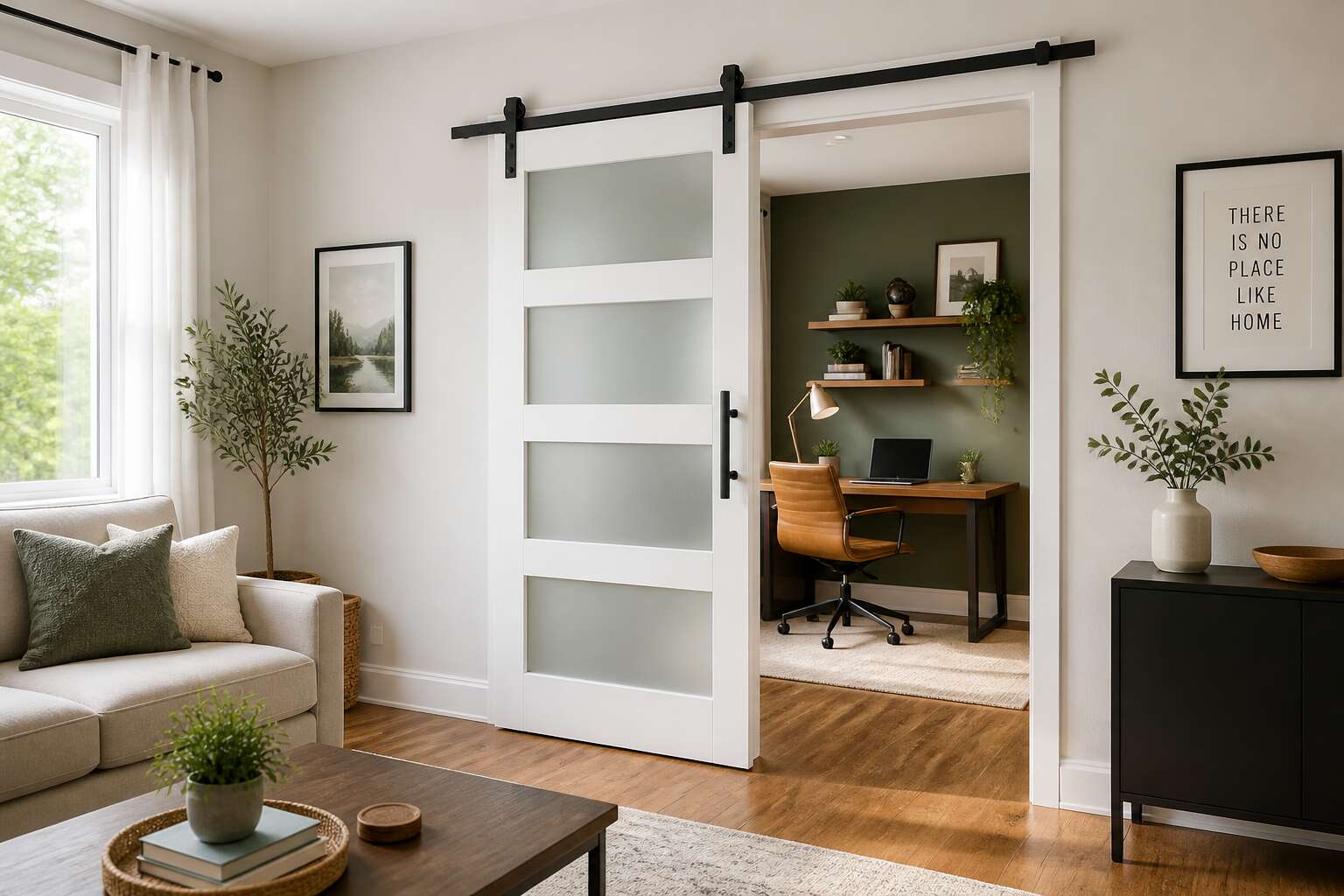
Material Choices That Slash Costs
Engineered Wood Alternatives
The most profound cost reductions in interior architecture often hide behind a facade of good sense. “Wood is the most human material,” observed architect Frank Lloyd Wright, but its price tag can be unforgiving. For the discerning homeowner chasing a specific aesthetic without the fiscal sting, engineered wood alternatives offer a path to grace. Medium-density fibreboard, or MDF, serves as a reliable chameleon, accepting paint finishes with a smoothness that rivals solid timber. High-density fibreboard, or HDF, offers a denser core, providing superior screw-holding power for heavier door panels.
These materials resist the warping and twisting that plagues natural wood in humid climates. While solid oak may swell in a coastal summer, engineered cores remain stable. The real savings emerge from the manufacturing process, as these boards utilise wood fibres more efficiently than sawing logs. The result is a cheaper sliding doors internal solution that does not whisper compromise. For spaces where moisture is a persistent concern, consider these specific product variants:
- Moisture-resistant MDF with a green core for bathrooms and kitchens.
- Plywood with a hardwood veneer for structural integrity and a premium look.
- Laminated chipboard with a high-pressure surface for scratch resistance.
You are not settling for less; you are choosing a material that prioritises function. The weight of these panels also affects hardware requirements, so confirm your track system supports the load. The quiet dignity of a well-fitted engineered door, gliding silently on its rails, often costs a fraction of its timber counterpart. This pragmatic choice allows you to allocate funds elsewhere, perhaps to finer handles or a more elegant frame. The house remains beautiful, but your budget remains intact.
Budget-Friendly Glass and Mirrors
Glass can unmute a room without emptying your wallet. Mirrored panels bounce light and make narrow passages feel wider. For cheap sliding doors internal, choose 6mm clear float glass for simplicity. Frosted glass offers privacy at a similar price. Reeded or textured glass adds character for a slight markup.
Consider these budget friendly options:
1. Clear float glass with a matte film.
2. Mirrored sliding door panels.
3. Obscured glass for bathrooms.
Each option keeps costs low while transforming how light travels. In South Africa, local glaziers often cut and finish panels for less than you expect. Pair them with a simple aluminium track and you have a striking interior feature! I have seen mirrored doors double the perceived size of a small apartment. That is value beyond the price.
Cost-Effective Metal Tracks
Most buyers obsess over the door panel, yet the track determines how smoothly the door moves and how long it lasts. A cheap sliding doors internal setup can fail within a year if you choose a flimsy plastic runner. Instead, invest in a basic aluminium track, which costs little more but resists rust and warping.
Steel tracks offer extra strength for heavier panels, though they need a protective coating in humid climates. In South Africa, hardware stores sell both options in standard lengths, so you can avoid custom cutting fees. I have installed budget tracks that glide effortlessly for a decade, proving that cost does not always equal quality!
- Choose anodised aluminium for coastal areas.
- Opt for a top-hung system to keep the floor clear.
- Match the track width to the panel thickness.
Smart Planning and Measurement
How to Measure Your Opening Accurately
Measure twice, order once, and you won’t be staring at a gap wide enough to smuggle a braai tong through. When planning cheap sliding doors internal, the opening is the boss. A tape measure is the difference between a sleek partition and a draughty postbox.
I have seen homeowners measure from the skirting board, an error that guarantees a door with the structural integrity of a parking ticket. Take readings at the floor, the top, and the midpoint of the opening, because no two walls in a South African home are truly honest! Mark these spots:
- Left, centre and right heights
- Top, middle and bottom widths
- End to end floor slope
Write each dimension down, then question the first measurement. If your opening is out of square, you need to know before you shop for cheap sliding doors internal, not after the delivery driver starts smirking.
Selecting a Track System Without Overspending
A sliding door reveals its true cost after installation. The track system carries the full weight of the door, so skimping there creates a hidden expense that surfaces within months. When shopping for cheap sliding doors internal, calculate the total price, which includes the track, rollers, and installation, and ignore the panel-only price. Cheap sliding doors internal need a track built for their weight.
Selecting a track system without overspending means matching the track’s load rating to your door’s weight. An undersized track warps and jams. An oversized track burns money.
- The track length should cover twice the opening width for a full clearance.
- The load rating per metre should exceed the door slab weight.
- The track and rollers should come as a matched set to preserve the warranty.
The floor surface matters. A suspended track avoids floor guides that catch dust and fail early. That choice reduces maintenance, and I have watched it save homeowners thousands of rand.
Estimating Your Total Project Budget
A price quoted for the panel is merely the opening bid in a negotiation with your budget. The real figure emerges when you account for hardware, delivery, and the labour of skilled hands. Most homeowners discover that the ancillary costs inflate the final invoice by a third, sometimes more.
To avoid this financial ambush, itemise every component before you commit to a single supplier. This disciplined approach separates a genuine bargain from a costly illusion.
– Delivery fees across the greater Johannesburg and Cape Town metros.
– The cost of removing and disposing of an existing door.
– A load bearing floor track for heavier glass units.
The humble screw pack and spacer kit often carry a surprising markup. When you search for cheap sliding doors internal, the panel price is the decoy. The total installed price is the reality. Always request a breakdown in writing, because a verbal estimate evaporates under the pressure of a final invoice. A door that costs a few hundred rand more upfront, but includes every fitting, remains the wiser purchase.
Avoiding Costly Measurement Errors
You can measure like a surveyor and still trip over a planning error. Everything moves. Wood expands. Concrete settles. Walls bow. A cheap sliding doors internal purchase only remains a bargain if your measurements account for this unpredictable building environment.
My advice: never measure twice and order! Measure twice, wait three days, then measure again. That waiting period exposes openings that shift with humidity or after nearby construction work. Two sets of dated measurements, kept in writing, become your ammunition if a supplier questions your order.
Planning ahead also means thinking about what happens after the door arrives:
- Will the door clear your light switches and window sills once open?
- Does the delivery route feature a narrow 90 degree turn?
- Have you confirmed your floor is level before the glass panels show up?
Answering these questions costs minutes. Discovering a problem after the trolley arrives costs rands. That distinction is what keeps your cheap sliding doors internal exactly that: cheap.
DIY Installation and Money-Saving Techniques
Step-by-Step Basics for DIY Mounting
Installing cheap sliding doors internal by yourself is the single most effective way to cut costs. The process demands patience, not expertise. Begin by securing the top track firmly to the lintel or header. Use a spirit level even if you think the surface looks straight. A slight slope will cause the door to drift.
Next, attach the floor guide. This small component stops the panel from swinging. For a two door system, mount the hangers onto the panels first. Then lift each door into the track. Tighten the adjustment screws slowly. Test the slide with a gentle push.
- Assemble all brackets and screws before lifting any panel.
- Place a soft cloth under the door to avoid scratching tiles.
- Use a second person to steady the glass while you secure the rollers.
Doing this yourself avoids callout fees and lets you reuse existing panels. Choose a Sunday morning when the house is quiet. The whole job takes less than three hours.
Tools You Already Have for the Job
According to a 2023 home improvement survey, over 60% of South African homeowners who renovated their interiors cited labour costs as the primary budget breaker. Yet the remedy often sits forgotten in the garage.
Installing cheap sliding doors internal can become a meditative Sunday ritual if you trust your own hands. The tools required are humble ones. You likely possess a drill with a masonry bit for the concrete lintel, a rubber mallet to nudge stubborn rollers into alignment, and a tape measure you have used for other projects. The spirit level is non negotiable, though your eye can be trained to spot a weak installation.
A workshop vacuum prevents dust from scoring the track’s smooth glide. Painter’s tape protects the frame from scratches while you fine tune the hangers. Consider these quiet allies:
– A claw hammer for gentle persuasion on the floor guide
– A sharp pencil for marking the drill points, not chalk
– An adjustable spanner for the locking nuts
The adjustment screws often require a flathead screwdriver, which you already own. The beauty of this method lies in its silence. No electrician, no carpenter, no invoice. You become the architect of your own threshold. Reusing an old panel from another room also trims the budget further, giving new life to glass that once framed a bathroom window. The savings accumulate like coins in a jar, and the sliding door becomes a testament to your resourcefulness.
Refurbishing Second-Hand Parts
Refurbishing second-hand parts is where the real savings appear. That battered door from a demolition sale in Durban can become the centrepiece of a cheap sliding doors internal setup. The trick is stripping it down to the raw frame, treating the timber with coarse sandpaper, and applying a fresh sealant.
Finding these parts requires patience. Architectural salvage yards and online marketplace listings are the best sources, especially where sellers undervalue old fittings. A 2024 property report noted that renovated homes with unique repurposed features captured buyer attention faster.
Here is what to inspect before handing over cash:
– Warping in the stiles or rails
– Cracked glass that can be replaced with budget mirror offcuts
– Rusted rollers that are still standard sizes
Once the hardware is swapped out, the old door slides with a smoothness that feels expensive. That is how cheap sliding doors internal projects become talking points rather than compromises.
When Calling a Professional Saves You Money
Sixty two percent of South African homeowners who attempted DIY door installations last year spent more correcting errors than a professional quote would have cost. That statistic from the 2024 SA Home Improvement Report should slow anyone down.
The cheap sliding doors internal strategy works when you know your limits. Measuring, track fitting, and roller adjustment are all manageable with basic tools. Structural work is not.
Here is what I check before touching a wall:
- Load bearing walls require an engineer’s sign off.
- Hidden conduit or water pipes change everything.
- Uneven floors demand custom track shimming.
When any of those conditions appear, calling a professional saves money. Their day rate feels steep until you price out a collapsed ceiling or a severed electrical cable. I have seen both. The professional’s invoice is often the cheapest part of the project.
Common Installation Pitfalls to Avoid
The phrase cheap sliding doors internal carries a certain optimism. A homeowner sees a reasonable price and imagines a weekend project. Then the roller catches on the second day. DIY installation rewards patience, but it punishes assumptions. The people who succeed treat the track like furniture, not hardware. They lay out every screw, shim, and Allen key before lifting a single panel. They also know when a door fights back, it is usually telling them something about the floor, not the door.
Common installation pitfalls avoidable with basic foresight include:
- Mounting the track before checking for level, which turns a smooth glide into a constant battle.
- Using drywall anchors for a door that will carry real weight.
- Forgetting to account for skirting boards when calculating the door’s setback.
Each mistake adds an afternoon, and often a new part. Cheap sliding doors internal only stay cheap when installation mistakes stay out of the picture. Measure twice, shim once, and let the track tell you what it needs.
Design Ideas and Where to Buy on a Budget
Stylish Sliding Doors for Closets and Rooms
Think of a sliding door as a hardworking wall that slides away when needed. The design trick is to make the door look intentional, not like a temporary barricade. On a budget, paint is your first ally. A bold jewel tone or a soft matte finish can make a plain panel look custom. Cheap handles from a hardware store add personality without the designer price.
For genuine cheap sliding doors internal, timing matters. Shop clearance sections at Builders or Leroy Merlin, and check Gumtree for renovation leftovers.
Here is what works on a budget:
– A single bold colour to hide a less expensive wood grain
– Slim black track that contrasts with a light door
– A plain slab with one decorative strip of laminate
Pair a wooden door with a metal track for an industrial feel. A mirrored door opens up a cramped bedroom. These cheap sliding doors internal ideas rely on restraint, not expense. Keep the track simple and let the door carry the style. Buy smart and the finished look costs a fraction of its custom equivalent.
Space-Saving Benefits That Add Value
A conventional swing door claims a rough one metre arc of floor area every time it opens. A sliding door claims none. For cheap sliding doors internal, the design win sits in unglamorous details: build-grade pine painted deep oxide, a leather pull, a barrel bolt. The door becomes a feature wall that happens to move.
Shop beyond the chain stores. Habitat for Humanity Restore outlets in Cape Town and Durban stock second-hand panels for a fraction of retail, and Pretoria’s Facebook Marketplace lists renovation leftovers ready for a fresh coat.
- A single sliding panel frees nearly a square metre of swing space in a hallway.
- Sliding doors let a bedside cabinet sit flush against the opening.
Cheap sliding doors internal hand that floor space back to the room, a quiet addition of practical value to a small flat.
Finding Bargains Online and In-Store
The design opportunity for cheap sliding doors internal begins with what you are willing to overlook. A plywood sheet, cut to size and painted with chalkboard paint, turns a doorway into a family noticeboard. The same panel in a pale pine finish suits a farmhouse aesthetic.
The hunt for bargains takes you beyond the usual hardware aisles.
– Habitat for Humanity Restore outlets in Cape Town and Durban sell reclaimed panels at a fraction of retail.
– Gumtree South Africa lists used sliding door kits from homeowners upgrading their interiors.
– Facebook Marketplace in Pretoria and Johannesburg has renovation leftovers, often free if you collect quickly.
I once found a perfectly good track system in the clearance bin at a Builders Warehouse in Randburg. The scratched glass panel beside it became the centrepiece of a bathroom door. These are not defects. They are negotiation points. A sliding door assembled from parts with a history often looks more deliberate than anything straight off the shelf, and the imperfection gives the room a story.
Upcycling and Customizing Cheap Doors
Few joys match the discovery of a solid-core door destined for a skip, especially when your wallet is making all the decisions. Upcycling transforms that hefty piece of wood into a statement piece for a fraction of what a retailer would charge. A quick sanding and a coat of bold Dutch paint give it a new life that screams deliberate design, rather than budget constraint.
This is where the real fun begins. You can source materials from places that smell of potential and sawdust.
– Demolition yards in Durban often have interior doors with original hardware still attached.
– Online marketplaces like BidorBuy feature sellers clearing office stock, perfect for standard-sized openings.
– Local joiners sometimes sell off misordered doors at a discount, which is my personal favourite hunting ground.
A cheap sliding doors internal solution does not have to look cheap. One popular trick involves attaching a full-length mirror to a salvaged door to bounce light around a narrow hallway. Another involves using a decorative stencil and spray adhesive to create a faux wallpaper effect. The freedom to customise is the true profit; you pay for the base and invest your sweat instead of your savings.
The real skill lies in re-purposing pieces that almost fit. A door with a different height can become a sliding panel if you build a simple timber frame to bridge the gap. Or, a set of old louvre shutters can be hinged together to form a collapsible screen. These projects require patience, but they produce a focal point that a standard pre-hung unit would never match.
When the budget is tight, visiting a local scrapyard for a length of steel rod is a clever trick. This becomes the handle that defines your unique design of cheap sliding doors internal. The imperfections become the story, and the story makes the room memorable. With a bit of creativity and a willingness to get your hands dirty, you save money and create a piece that is entirely yours. Just remember to measure twice before you drill, and keep some wood filler on hand for your inevitable mistakes.
Final Tips for Long-Lasting Value
There is a quiet satisfaction in making a budget work harder. For cheap sliding doors internal, the design choices you make now will define how the space feels for years. Consider using perforated hardboard sheets as door panels; they offer a scandinavian aesthetic while providing natural ventilation for linen cupboards. Or, source a set of salvaged shutter slats, hinge them together, and mount them on a ceiling track. They break up a long wall with texture and shadow, turning a simple passage into a gallery of light.
When you hunt for hardware, look beyond the big box stores. Your budget will stretch further at local builders’ merchants and aluminium suppliers that specialise in track systems. A practical shopping list makes the process easier:
– Check the clearance stock at Cashbuild and Builders Warehouse for discounted rail kits.
– Visit CTM for over-ordered door units that often sell below cost.
– Ask local glass shops for off-cut mirrored panels to attach to your sliding door face.
The final decision on cheap sliding doors internal is about longevity. Purchase a quality top-hung track system, even if you skimp on the door itself. A reputable brand like Häfele will outlast three cheaper alternatives. Remember to apply a clear lacquer to the top and bottom edges of any timber door; this single step prevents moisture absorption and warping. Investing thirty minutes in maintenance now saves you a full replacement later.


0 Comments