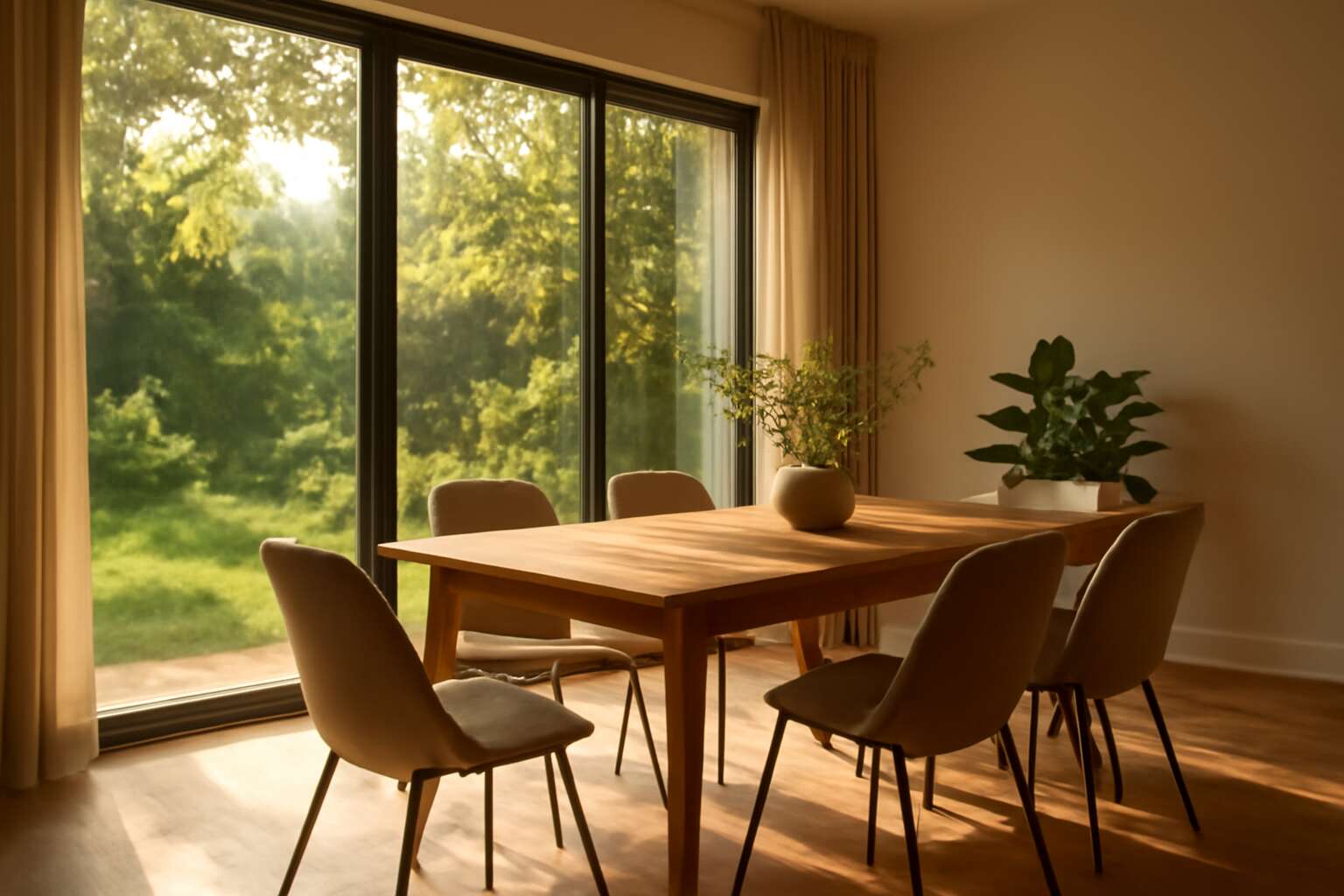
Understanding Sliding Doors in Dining Spaces
Benefits of Sliding Doors in Dining Areas
A bright dining room is a living invitation—a sliding door for dining room turns meals into memories by letting light and air stroll in as if they were guests. In South Africa, where seasons shift and verandas beckon, these doors frame patios and blur the line between inside and out. Understanding how they operate—tracks, rollers, glazing options—helps you weigh privacy and openness.
Benefits of sliding doors in dining areas go beyond aesthetics. They invite natural light, improve airflow, and create an effortless flow for entertaining. Here are a few advantages that resonate with homes across the country:
- Natural light floods the space, reducing daytime lighting needs and lifting mood.
- Space-saving design opens floor area, making cozy dining nooks feel expansive.
- Seamless indoor-outdoor connection supports relaxed gatherings in SA summers.
Whether by braai or breakfast table, the gesture blends magic with practical design.
Popular Materials and Finishes
Light is the most honest co-author of a dining room, and understanding sliding doors in dining spaces begins with selecting the right sliding door for dining room. A well-chosen model frames conversations as much as it frames light, inviting daybreak to linger and evening to settle with quiet grace.
Consider these materials and finishes:
- Aluminum frames with powder-coated finishes for durability
- Timber frames in teak or iroko for warmth and character
- uPVC (PVCu) profiles offering clean lines and cost efficiency
- Glass options: low-E coatings, laminated or tinted for privacy
- Hardware finishes: brass, brushed nickel, or matte black for accents
In South Africa’s climate, finishes must resist glare and heat while remaining easy to maintain. The right palette harmonises dining rituals with outdoor spaces, turning every meal into a memory—bright, balanced, and quietly luxurious.
Space and Lighting Considerations
Space is the new luxury, and in a dining room it spills through a sliding door for dining room, turning meals into moments. Light and space should perform a small ballet—conversations framed as attentively as the view outside. In South Africa’s sun, glare and heat are constant guests, so style must be easy to maintain.
- Maximise daylight while muting glare with appropriate glazing
- Frame garden views and smooth flow to outdoor dining
- Choose heat-resistant hardware and finishes for SA conditions
When space, light, and proportion align, the door becomes a quiet conductor, guiding meals between indoors and outdoors. In SA homes, smart choices here set the rhythm of daily rituals without shouting about it.
Sound and Privacy Impacts
Sound is the unsaid spice of a dining room, and a sliding door for dining room can tune it with the precision of a maestro. When conversations breathe and laughter lingers, the room feels curated rather than crowded, a stage set for meals that become memories.
Understanding sound and privacy means watching how voices travel between spaces. Laminated glazing softens echoes; tight seals and refined frames keep distractions at bay while preserving the theatre of shared meals.
- Glass thickness and lamination
- Seal quality and frame geometry
- Furnishings that absorb sound
South Africa’s climate makes glare management a companion to acoustics. A door that closes softly becomes a hinge of daily rituals, letting the indoors and outdoors converse without interruption; the right hardware glides with quiet confidence, even as the city hums beyond the glass.
Choosing the Right Sliding Door System
Track styles and hardware options
Light dances differently when a sliding door for dining room slides toward the terrace, turning meals into a theatre of glow. In South Africa’s sunlit homes, the entry point between kitchen and dining spaces becomes a canvas of choice, rhythm, and quiet drama.
Track styles ripple with the rhythm of daily life—top-hung, bottom-rolling, pocket, or recessed systems, each offering a distinct cadence for flow.
- Top-hung (ceiling-mounted) for heavy doors
- Bottom-rolling for long, wide openings
- Pocket sliding to disappear into a wall
Hardware choices shape durability and mood: robust rollers, soft-close, floor guides, and weather seals. For SA coastal homes, marine-grade stainless steel keeps the gleam against humidity; for a sliding door for dining room, balance silence with smooth use.
Glass types and glaze options
Sunlight pours into dining spaces, and in South Africa that glow can cut lighting costs by up to 40% when the glass is up to the task. A thoughtfully chosen sliding door for dining room becomes a climate ally, as much as a social hinge.
Glass types shape safety, mood, and visibility. Tempered glass resists impact; laminated glass with a PVB interlayer keeps shards contained and blocks more UV; clear, low-iron variants offer crisp, almost invisible sightlines in bright rooms. I love how these choices respond to moments of theatre light.
- Tempered safety glass for impact resistance
- Laminated glass with PVB or ionoplast interlayer for UV protection and security
- Low-iron glass for crisper, true color
- Tinted or reflective variants to tame glare and heat
Glaze options add drama and function: double or triple glazing with inert gas fills, Low-E coatings for heat control, and smart-tint finishes that shift with the sun. For a sliding door for dining room across a sunny terrace, these choices balance heat and light with quiet sophistication.
Frame materials and durability
Frames that cradle a sliding door for dining room become the room’s quiet conductor, guiding light and mood. In South Africa, sun and coastal air test materials daily, so frames that resist corrosion stay calm and inviting. The right choice blends elegance with endurance, keeping the view crisp as meals unfold.
Frame materials to consider:
- Aluminium — lightweight, slender sightlines, corrosion resistant; powder-coated or anodised finishes suit SA climate.
- Timber — natural warmth; engineered or treated timber for stability.
- uPVC — low maintenance, solid insulation in sunny interiors.
- Composite — wood-aluminium or fibreglass blend for beauty and resilience.
Durability is a conversation between finish and climate, where long-lasting coatings and enduring hardware harmonize with the core material, shaped by South Africa’s sun and humidity. When the frame and glass move as one, the dining space retains clarity and cadence through the seasons.
Energy efficiency and climate control
The dining room is where conversations simmer and well-timed jokes rise like steam. The door between us and the world should condense heat, not drama. A well-chosen sliding door for dining room is your climate-friendly stage—frosty mornings stay outside, late-afternoon glare softens, and meals stay in the moment, drafts surrendered to the punchline.
Energy efficiency and climate control hinge on airtight seals, well-proportioned frames, and thoughtful shading. In South Africa’s sun, the right system reduces solar gain without sacrificing daylight, keeping rooms comfortable and bills kinder. Choosing the right sliding door for dining room that breathes with the sun makes sense—and yes, it’s as satisfying as a perfectly timed rib-eye.
Consider these priorities as you weigh options:
- Airtightness at all joints and corners
- Smooth, quiet operation that holds up to daily use
- Hardware and finishes built to survive SA humidity
- Architectural harmony with existing space and glazing
Design Ideas to Complement Your Dining Room
Modern minimalist glass panels
Design Ideas to Complement Your Dining Room unfold like a quiet symphony when you pair modern minimalist glass panels with warm, tactile textures. In South Africa’s sun-drenched homes, a sliding door for dining room becomes a soft hinge between kitchen bustle and dining calm, letting light wander while conversations stay intimate. The result is refined, airy, and surprisingly playful in its restraint.
To sculpt your space, consider these ideas:
- Let the panels fade into the wall with frameless glazing and subtle hardware.
- Pair with warm wood or natural fibres to keep the dining area inviting.
- Use strategic lighting—pendant clusters or wall washers—to stage reflections on glass after sunset.
Beyond aesthetics, these designs respect South Africa’s climate and living rhythms, offering a practical, poetic way to define gatherings. A sliding door for dining room doesn’t just separate; it choreographs moods.
Glossy vs matte finishes and color schemes
Light slips through like a whispered secret, and the sliding door for dining room becomes the quiet punctuation between kitchen bustle and table-talk. Glossy finishes flare with metropolitan energy while matte surfaces ground the room in warmth. Pair these with color schemes that drift from dune to night—gleaming whites, smoky greys, and mossy greens—so the door reads as living texture, not a boundary. “Light is a material you can walk through,” a designer once whispered, and the room answered with breath.
Glossy and matte finishes speak to a room’s mood without shouting.
- Glossy finishes catch daylight, add height; pair with cool palettes.
- Matte finishes soften reflections, hide fingerprints; weave with warm woods.
Color schemes—charcoal with terracotta or sand with teak—keep conversations intimate as daylight fades.
Frameless vs framed aesthetics
Night trims the edge of daylight, and the sliding door for dining room becomes the hinge between kitchen theatre and table’s quiet confession. Frameless aesthetics invite breathy openness, letting glass and air do the talking; framed designs ground the scene with architectural gravity. We weave light and shadow like a loom, chasing moods rather than rules, in a room where South African evenings tilt toward violet skies and conversations linger.
To complement either path, consider these ideas:
- Frameless for uninterrupted sightlines that fuse indoors with the horizon.
- Framed silhouettes that anchor corners, shaping your view with poetry.
- Hardware that whispers, with slim tracks in bronze or graphite and soft-close mechanisms.
Integration with cabinetry and dining set
South African dining rooms deserve doors that do more than close a space—they choreograph the mood. ‘The hinge is the punctuation in a good home,’ says a designer, and the sliding door for dining room delivers that cadence with quiet wit. When it glides beside cabinetry and the dining set, light and conversation thread the room in one fluent arc, whether you favor frameless openness or framed gravity. Cape Town evenings tilt toward violet skies, and the door keeps the moment intimate yet expansive.
- Door planes aligned with adjacent cabinetry for a seamless horizon.
- Finishes echoed in hardware to ground the palette.
- Soft-close tracks in bronze or graphite whisper transitions.
- Slim profiles with minimal mullions preserve sightlines.
These ideas allow the dining room to breathe—a space where cabinetry and seating converse in refined tones, and glass behaves like a polite chorus rather than a spotlight.
Outdoor-indoor flow and accessibility
Cape evenings remind us that space is a living thing, and a door should whisper, not shout. A well-timed hinge makes the room breathe, and a sliding door for dining room does more than close a space—it choreographs mood. In Cape Town’s light, every glide becomes a quiet incantation.
Design ideas to enhance outdoor-indoor flow and accessibility hinge on gentle thresholds and sightlines. Imagine level transitions that invite guests to stroll from deck to dining area, panels that frame the garden like a living painting, and hardware finished to echo your chosen palette—your sliding door for dining room doubles as a bridge and a stage.
- Level thresholds that erase the line between patio and dining floor.
- Wide panels with minimal mullions to preserve sightlines.
- Outdoor-ready finishes and coordinated hardware for SA climates.
- Integrated lighting to keep evenings intimate yet expansive.
Installation and Maintenance Tips
Planning the installation process
Planning the installation of a sliding door for dining room is less a ritual of tools and more a choreography of light and space. Envision the routes of air, the swing of the narrative between kitchen and table, and the moment when the room breathes easier. In South Africa’s bright mornings and late sunsets, choosing the right frame, seal, and track becomes a quiet vow to durability and grace!
Key considerations for a serene fit:
- Aesthetic alignment with ceiling height, cabinetry, and dining set
- Structural support and track routing that respect your floor plan
- Climate-aware seals and finishes that endure heat and humidity
Maintenance arrives as a ritual rather than a task: regular, gentle cleansing, observing alignment, and allowing hardware to speak softly when needed. A well tended sliding door for dining room remains a quiet chorus at every meal.
Maintenance routines for sliding doors
In South Africa’s sunlit homes, a sliding door for dining room is more than glass and rails—it’s a quiet agreement between light and space. When the glide is smooth and the seal holds its breath, meals begin with a breath of calm!
Maintenance, in this corner of the world, becomes a ritual: regular, respectful care that keeps the door singing rather than squeaking. I’ve learned that attention to alignment and pace yields a softer, longer life.
- Gentle cleansing to preserve glide and seal integrity
- Periodic alignment checks that respect the room’s temperature and traffic
- Quiet hardware listening—notice creaks and address them with measured care
Common installation challenges and fixes
“Light travels on rails,” a craftsman once told me, and in South Africa, the sliding door for dining room makes that journey tangible. When perched properly, it glides with a whisper; when misaligned, meals start with squeaks and glare—and that’s never ideal!
Common installation challenges hover at the threshold of level, plumb, and clearance. In response, look to track alignment, door leaf balance, and seal compatibility for our climate.
- Track cleanliness and levelness for smooth operation
- Door balance and roller alignment without forcing the leaf
- Weatherstripping and seals suited to heat, dust, and humidity
Maintenance whispers rather than shouts: regular sniffing of creaks in the hardware, periodic inspection after seasonal shifts, and gentle lubrication that keeps the glide quiet. A well-considered installation for a sliding door for dining room becomes a lifelong partner in space and light.
Safety features and childproofing
A well-balanced installation lets a sliding door for dining room glide with the mercy of a whisper, even under South African heat and dust. Safety features and thoughtful design protect families without marring the room’s drama: soft-close hardware, anti-lift brackets, and discreet child locks that cooperate with daily life rather than demand attention.
Maintenance remains a gentle ritual, a quiet pact that endures as seasons shift; components stay aligned, seals endure the climate, and moving parts keep their hush through patient, regular care.
- Soft-close and damped rollers
- Tamper-resistant locks
- Bottom guides that prevent misalignment


0 Comments