Types of Glass Options
Tempered Glass
Walking into a Johannesburg home, the first thing you notice is the light pouring through the sliding doors. That pane separating you from the garden is likely tempered glass, a material engineered for safety and strength. When it breaks, it crumbles into small, blunt granules instead of jagged shards, reducing the risk of serious injury.
Tempered glass for sliding doors is created through a process of extreme heating and rapid cooling. This thermal treatment makes it up to five times stronger than standard annealed glass. In a country where load shedding and security concerns are part of daily life, choosing the right glazing matters! Look for a certification mark that indicates compliance with local standards.
- Check for the SABS mark on the corner of the pane.
- Request a thickness of at least 6mm for large panels.
- Confirm that the edge work is polished, as this reduces weak points.
Laminated Glass
A rock hits the sliding door and the pane holds together, cracked but intact. That is laminated glass at work! Two panes of glass bond to a polyvinyl butyral interlayer, a plastic membrane that keeps fragments from separating upon impact. The pane stays in one sheet, still blocking entry until you replace it.
This matters for security in South African homes. A burglar gains nothing by breaking a laminated pane, since the opening does not appear. The interlayer also dampens street noise and blocks most ultraviolet radiation, keeping interior furnishings vibrant.
Laminated glass for sliding doors costs more than tempered options, but the price difference buys protection. For a ground-floor door facing the street, it is a pragmatic upgrade.
Low-Emissivity Glass
The South African sun turns a west-facing sliding door into a furnace by mid-afternoon. Low-emissivity glass, commonly called Low-E, applies a microscopic metallic coating to reflect long-wave heat while admitting daylight. Rooms stay cooler in summer, which matters when electricity prices keep climbing.
I have tested Low-E glass for sliding doors and noticed the difference immediately. The coating is invisible, so the view stays sharp. Upholstery and wooden flooring survive longer because UV radiation is blocked from the start.
Here is what Low-E delivers:
– Heat reflection without darkening interiors
– Lower air conditioning demand in summer
– Warmer internal surfaces during winter nights
Pair Low-E with double glazing for even better thermal performance. The extra investment pays off through reduced energy bills.
Tinted and Colored Glass
South African light hits hard, especially through a westward wall of clear glass. Tinted alternatives absorb a portion of solar energy before it reaches the room. Bronze tinted glass for sliding doors keeps interiors noticeably cooler while cutting the glare that makes afternoon television unwatchable.
Bronze and grey lead sales for good reason. Bronze adds warmth, grey stays neutral. Green tints suit bushveld homes, while blue works near the coast. Each shade alters the colour of the garden and sky from inside, so the choice is personal.
- Bronze: warm light, hides dust marks
- Grey: neutral tone, maximum glare reduction
- Green: cool visual, classic hotel look
- Blue: coastal feel, modern aesthetic
Expect tinted glass for sliding doors to dim the outside world after sunset. That is the honest tradeoff for daytime comfort. If night views matter, choose a lighter tint or pair it with a low-e coating for better balance.
Frosted and Etched Glass
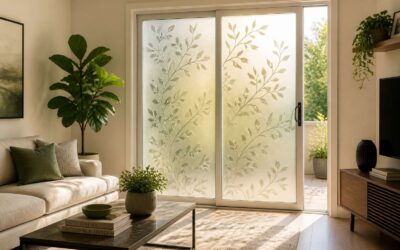
Frosted and etched glass for sliding doors solve a particular South African tension: the desire for natural light versus the need for privacy. Acid etching transforms clear panes into translucent surfaces that diffuse sunlight while obscuring shapes behind them. The result is a room that stays bright without becoming a public spectacle.
Frosted finishes work well for bathrooms, street-facing lounges, or any sliding door that opens onto a shared courtyard. Etched patterns take this further, adding a decorative layer that reads as texture rather than ornament. Sandblasted florals, geometric grids, or simple vertical lines each cast their own shadow play as the sun moves across the glass.
The honest tradeoff is visibility. Frosted glass for sliding doors blocks the view entirely, which means you lose the garden vista you might have paid for. I have seen homeowners wrestle with this choice, and the partial etch solution often wins. That compromise preserves the landscape while protecting your domestic privacy.
Insulated Glass Units
Insulated glass units are the quiet workhorses of a South African sliding door. Two or more panes separated by a sealed air gap slow heat transfer dramatically. That gap keeps Highveld winters from bleeding warmth through your glass for sliding doors, and it blocks harsh summer sun from turning a lounge into an oven.
The construction matters as much as the glass itself. A low-conductivity spacer holds the panes apart and prevents condensation from forming inside the seal. When that seal fails, fog appears between the layers, and the unit must be replaced entirely.
The benefits compound. Noise reduction is a welcome side effect on busy streets, as are reduced energy bills. For double-storey homes or converted warehouses with large glazing expanses, insulated units are not a luxury. They are a necessity.
Key Factors to Consider When Choosing Glass
Safety and Building Codes
South Africa’s building regulations aren’t exactly page turners, but ignoring them when selecting glass for sliding doors can transform a weekend DIY project into a bureaucratic nightmare. SANS 10400 sets the baseline, and your local municipality will check compliance. Coastal provinces add another layer, because wind loads here can make a poorly chosen pane behave like a sail.
Thickness and edge quality matter more than aesthetics. A certified supplier will verify that the glass carries the correct safety marks. Without those, an inspection failure means reinstallation, and nobody wants to explain that to their bank account. The regulations for residential sliding panels typically include:
- Safety glazing for all doors and adjacent side panels
- Adherence to SANS 10137 for wind resistance calculations
- Visible certification marks on the glass surface
Your chosen glass for sliding doors must align with the National Building Regulations, not just the sales pitch. Extra costs appear when specifications don’t match on site. Verify every dimension and strength rating before signing off. That small effort saves a mountain of frustration later.
Energy Efficiency and Climate
South Africa’s climate varies across regions. Durban’s humidity, Johannesburg’s frosty winter mornings, Cape Town’s wind. The right glass for your sliding door setup must respond to your regional weather patterns, not generic national averages.
Think about solar gain. A north-facing panel in Pretoria will overheat a room if the glass lacks proper thermal control. Meanwhile, a coastal home in the Western Cape faces different pressures. Energy efficiency hinges on matching performance to your environment.
Here’s what to weigh up:
- The orientation of your sliding doors relative to the sun’s path
- Local temperature ranges, summer and winter
- How much natural light you want without the heat gain
- Indoor humidity levels and condensation risks
Your glass for sliding doors should balance these dynamics. A pane that works well in Mpumalanga may underperform in the Northern Cape. Selecting glass for sliding doors based on your climate prevents uncomfortable interiors and excessive bills.
Privacy and Aesthetics
Sliding doors are a threshold, not a wall. They mediate between the private interior and the exposed exterior, and the glass you choose shapes how that mediation feels. In a country like South Africa, where outdoor living is part of the domestic rhythm, the question of visibility carries real weight. Do you want the garden to feel like an extension of the living room, or a separate realm?
The glass for sliding doors defines this boundary. Clear glass erases it entirely, leaving your daily life open to view. Textured, frosted, or patterned glass creates a deliberate distance while still allowing daylight to pass. The choice is about temperament as much as function.
- Who can see into your home from the street or neighbouring properties?
- How much natural light do you need without sacrificing a sense of enclosure?
- Does the glass complement your interior palette and the architectural tone of your home?
These considerations turn a practical decision into an expressive one. The right glass for sliding doors can make a room feel guarded without feeling closed in.
Maintenance and Durability
In South Africa, the sun and wind are not passive observers; they are active agents in the wear of your home. The glass for sliding doors endures this daily dialogue. The practical question of durability begins with the tracks and rollers, but the glass itself must resist pitting from airborne sand and the corrosive salt of coastal air. Treated surfaces offer a first line of defence.
Maintenance is a simple equation of effort versus reward. A larger pane means a larger surface for dust and mineral deposits from rain. The finish of the glass determines how easily smudges and water spots yield to a cloth. Options with a protective coating reduce the frequency of deep cleans. The lifecycle of the seals around the glass is equally critical.
Consider the following factors to ensure your installation remains robust:
– The hardness of the glass surface and its resistance to micro-scratches from cleaning.
– The quality of the spacer and sealant, which prevents internal condensation and failure.
– The warranty period, which signals the manufacturer’s confidence in their product.
These elements define the true cost of ownership. A cheaper pane may require replacement sooner than you think. The durability of glass for sliding doors is not only about impact resistance, but also about its stamina against the elements and the friction of daily use. A well-chosen unit will maintain its clarity and structural integrity for decades. The balance between the initial specification and the long-term maintenance routine will determine your peace of mind.
Sound Insulation
The hum of a Johannesburg highway or the bark of a neighbour’s dog arrives through the weakest point in your envelope. That point is often the glass. Glass for sliding doors must do more than separate inside from outside; it must separate your quiet from the city’s noise.
Sound insulation depends on mass, cavity, and seal. Thicker glass blocks lower frequencies. A wider air gap absorbs mid-range energy. The seal must remain airtight, since a single crack ruins the performance.
Consider these factors when comparing units:
- Glass thickness and weight per square metre.
- The width of the sealed air gap.
- An acoustic interlayer if the unit uses laminated glass.
A sliding door is a membrane. Every component, the frame, the rollers, the glazing, works together. Choose the correct glass for sliding doors, and the room holds its peace.
Understanding Coatings and Treatments
Reflective and Mirrored Coatings
The right coating changes the character of a room. Reflective and mirrored coatings on glass for sliding doors act as a shield, bouncing harsh sunlight away from the interior. This simple principle keeps homes cooler in our intense climate, reducing the strain on air conditioning systems.
These coatings create a two-way effect that shifts with the light. During peak sun, the exterior shows a sleek, mirrored appearance, while the interior remains clear for viewing. This provides excellent glare mitigation for televisions and workspaces.
– Low-emissivity options reflect heat without the full mirror effect
– True mirrored coatings offer maximum solar control and daytime privacy
– Some variants balance light transmission with subtle reflectivity
South African homeowners often choose these surfaces to protect furnishings from UV fading. The visual impact is striking against the skyline, yet the true value lies in what it does for the living space. At dusk, the effect reverses as interior lights turn the glass into a dark mirror, allowing for unobstructed views outside. This interplay between light and surface makes coated glass for sliding doors a practical and aesthetic choice for modern living, linking the interior with the landscape without sacrificing comfort.
Self-Cleaning Treatments
Another layer in the story of modern glazing is the chemistry that works while you are not watching. Self-cleaning treatments have quietly evolved into a sophisticated solution for the South African environment. These surfaces use a photocatalytic reaction, activated by UV light, that lifts and breaks down organic dirt. Then, when rain finally arrives, the water spreads evenly across the pane and carries those particles away. The result is a glass for sliding doors that maintains its clarity without the relentless chore of manual cleaning.
The practical value here extends beyond convenience. In regions where mineral-laden water leaves stubborn spots, a hydrophilic surface prevents droplets from drying into crusty deposits. The cleaning cycle is shorter and less aggressive, which helps preserve the integrity of the glazing over its lifetime.
– Oxidation of grime occurs on contact with sunlight
– Rainwater sheets off in a uniform film
– Fewer streaks and less reliance on harsh chemical detergents
These treatments do not replace conventional washing, but they extend the intervals between deep cleans dramatically. For a homeowner, this means the view through the glass for sliding doors remains uninterrupted and pristine, even through the long, dry months. The technology is a silent partner in the home, working with the angles of the sun to deliver a clearer connection to the landscape outside. It is this quiet efficiency that makes such surfaces a practical addition to any serious glazing specification.
UV Protection Layers
South Africa’s UV index regularly exceeds 11 in summer, a level the World Health Organisation classifies as extreme. Ultraviolet radiation reaching a home through unprotected glazing attacks fabrics, artworks, and timber flooring. This is where UV protection layers become a defining feature in glass for sliding doors. These coatings, often metallic oxides applied at the molecular level, filter out the damaging spectrum while letting visible light pass freely.
- Blocks up to 99% of harmful UV radiation
- Preserves natural daylight without darkening the pane
- Protects interior finishes from fading
The technology is invisible. The coating does not change how the glass looks, so the view stays clear and true to colour. For a Cape Town home with west-facing glass for sliding doors, afternoon sun can flood in without threatening a leather sofa or an heirloom rug. The protection works as reliably in Johannesburg’s high-altitude glare as in Durban’s coastal humidity.
Impact-Resistant Films
Impact-resistant films take a different approach. Where laminated glass builds protection into the pane itself, these films stick to the surface of existing glass for sliding doors. A polyester layer, often 175 to 375 microns thick, bonds to the glass and absorbs shock from projectile impacts.
When the pane breaks, the film keeps fragments in place instead of letting them scatter across a room. This matters in South African homes where burglaries target sliding doors. The film adds seconds to a forced entry, and often that is enough to send an intruder elsewhere.
- Holds shattered glass together
- Works on existing frames without replacement
- Adds strength to standard toughened panes
Specifying the right film for glass for sliding doors depends on the threat level. A 175 micron film handles accidental breakage. A 375 micron film resists deliberate attack. I have watched a pane survive a brick strike with nothing more than a starred surface. Both options keep the original frame and preserve the view.
Decorative Patterns and Textures
The final layer of character for glass for sliding doors comes from its coatings and textures. A ceramic frit is a permanent enamel fired onto the surface. It forms a dot matrix or linear pattern that blocks ultraviolet rays while letting soft, diffused light through. This yields control over heat and privacy without committing to a dark tint.
Textured glass takes this further. Reeded or fluted profiles have raised ridges that scatter light and obscure shapes. They suit a bathroom or a street-facing entrance. I have found these textures surprisingly effective at reducing glare without sacrificing the open feel of a room!
- Frit patterns offer a gradient of opacity for sun control
- Reeded textures hide fingerprints and smudges
- Hammered surfaces break up harsh reflections
Choosing between a coating and a texture depends on whether you prioritize heat management or visual obscurity. Both work on standard frames and preserve the sightline for any glass for sliding doors.
Installation and Replacement Considerations
Measuring for a Perfect Fit
In Johannesburg, a sliding door that sits a half centimetre off its track will become a daily nuisance. I have seen homeowners measure with a tape they found in a drawer, then wonder why the glass for sliding doors never aligns properly. The truth is, measuring for a replacement demands more than a single diagonal reading.
Take the width at three points, the height at two, and check the frame for square using a spirit level. If you ignore the subtle bow in an older threshold, your new panel will cause constant friction.
- Measure the opening width at the top, middle, and bottom.
- Measure the height on both sides.
- Record the diagonal lengths to verify squareness.
These figures ensure the glass for sliding doors fits without forcing the rollers or straining the seal. A few minutes spent here saves a month of inconvenience, and that is a worthwhile exercise!
Professional Installation vs. DIY
The measuring is done, and the specifications look perfect. The next moment of reckoning arrives when someone decides to install it themselves. I have watched confident homeowners attempt this with a friend and a prayer. The result is often a scratched frame, a chipped edge, or a panel that sits crookedly and refuses to slide. Installing glass for sliding doors requires lifting heavy panels with precision, and one wrong twist can ruin the entire unit.
A professional brings tools and techniques that most households simply do not own. They also bring experience with the subtle frame warps that plague older Johannesburg homes. They know how to adjust the rollers, seat the gaskets properly, and secure the panel to handle our gusty Highveld days. You might save on labour costs upfront, but you will pay for the mistake in repairs or, worse, a shattered door. The DIY route often becomes an exercise in patching up the consequences. A professional handles the risk, so you do not have to.
When you evaluate the installation, consider what you are actually paying for:
– Lifting and positioning heavy glass without injury
– Aligning rollers to avoid premature wear on the track
– Sealing against dust and water ingress effectively
For most homes, the extra cost of a professional remains a modest price for the peace of mind that comes with a panel that actually works. Installing glass for sliding doors incorrectly is a problem you cannot fix with a quick phone call; it is a physical obstacle in your daily routine. That friction is far more expensive than a qualified installer.
Handling and Disposal of Old Glass
A single square metre of 6mm glass weighs fifteen kilograms. The panel in a typical sliding door weighs three times that, and old glass for sliding doors is rarely as sturdy as it looks. Years of dust and grit settle into the rollers, but the glass itself holds a tension from thermal expansion. Touch it with a steel tool in the wrong spot, and it will shed its strength without a warning.
Handling starts with preparation. I always wear leather gloves, closed shoes, and long sleeves. Keep the panel vertical and carry it with two people. Never lift by the top edge!
For disposal:
– Wrap the pane in thick canvas before moving it anywhere.
– Never place it in a residential bin. Give it to a municipal depot that accepts glass.
– Separate laminated sheets from standard float glass for recycling.
The removal of old glass for sliding doors is a slow process. Rushing it creates the only danger that matters.
Cost Factors and Budgeting
The quoted price for replacement glass for sliding doors rarely tells the full story. In South Africa, the tariff shifts with the profile of the frame, the size of the opening, and the time of year. A standard 6mm clear float panel might cost one amount in Johannesburg and something different entirely in Cape Town, simply because of transport logistics and local demand.
Budgeting for this work means more than the glass itself. The old frame must be inspected for squareness, the tracks cleaned, and the rollers assessed. If the aluminium has twisted or the timber has swollen, the new pane will not seat properly.
The final figure usually assembles from components like these:
– The cost of the cut and polished panel itself
– Delivery and handling to the site
– Removal and disposal of the existing unit
– Labour for the fitter and any frame adjustments
– Compliance certificates where SABS standards apply
I have seen homeowners save a few hundred rand on the panel, only to spend triple on emergency call-outs because the fix was rushed. Allow a contingency of ten to fifteen percent when planning the job. That cushion absorbs surprises like a corroded track or a sill that needs re-levelling.
A site visit before the quote is not a luxury. It is a necessity. The person measuring must see the condition of the existing frame, the head room, and the access path to the install location. Some glass for sliding doors arrives as a massive sealed unit that requires a crane or a second lift. That expense appears on the invoice if it is not discussed upfront.
Payment terms also vary. Smaller suppliers want cash on delivery, while larger companies offer a deposit and final payment structure. Ask about cure periods for the silicone sealant and whether the warranty covers the glass or the installation. The price is only the beginning of the conversation. What you are really buying is the silent, smooth movement of a pane that will serve you for years.
Warranty and Expected Lifespan
Replacing glass for sliding doors is rarely a same-day operation. The old unit must come out without damaging the frame, and the new one must sit perfectly plumb. A warranty that covers only the glass panel, and not the sealant or workmanship, may not serve you well. Ask whether the installation itself carries any guarantee. Sealed units in South Africa typically last ten years or more, but the lifespan of glass for sliding doors depends on whether you live in coastal humidity or Highveld UV. Installers should also check the track camber and roller alignment before fitting. If the new pane is forced into a distorted frame, you will hear about it later.
- Whether the warranty transfers if you sell the property.
- How long the silicone needs to cure before the door can slide.
A competent fitter will also show you how to adjust the rollers afterwards. You will need that knowledge eventually.
Enhancing Sliding Door Performance With the Right Glass
Thermal Performance Ratings
Selecting the right thermal performance rating for your glass for sliding doors is a decision that shapes comfort long before you feel the morning sun. In South Africa, the numbers matter: U-value measures how quickly heat escapes, while the solar heat gain coefficient tells you how much solar radiation passes through. A lower U-value keeps winter warmth inside. A lower SHGC reduces summer heat load.
Other terms appear on specification sheets:
- Visible transmittance: the amount of daylight admitted
- Air leakage rating: how well the assembly seals
- Condensation resistance: how well the glass handles humidity
Pairing these ratings with your orientation and local climate prevents overglazing or underperforming panes. The result is a quieter indoor environment and lower energy bills, without sacrificing the view.
Condensation Resistance
Condensation on glass for sliding doors is a nuisance that many South Africans tolerate each winter. Morning moisture pools on the frame, drips onto the floor, and eventually stains the aluminium. The root cause is simple: the inner pane is too cold. When warm, humid air inside your home meets that cold surface, water vapour turns to liquid.
Condensation resistance measures how well a glass unit avoids this. It is a score, usually between 50 and 100. Higher is better. I have seen ratings of 70 or above handle coastal humidity and winter mornings with minimal fog.
Several design elements influence this score:
– Spacer bar quality
– Air gap width
– Low-E coating position
For glass for sliding doors, this matters. Sliding doors expose more glass to outdoor temperatures than most windows, thanks to their large surface areas and low sills. A good condensation resistance rating keeps the view clear and the floor dry, even when the rest of the house stays cosy.
Security and Forced-Entry Protection
Your sliding door is often the most inviting entry point for a determined intruder. Standard glass for sliding doors shatters with little resistance, offering a silent welcome. Laminated glass changes that story entirely. It holds together even after impact, forming a stubborn web that delays entry and forces noise. I have seen this one feature turn a casual smash into a failed attempt.
Consider these upgrades when selecting glass for sliding doors:
- Laminated glass with polyvinyl butyral interlayers
- Tempered glass for thermal shock resistance
- Security film applied to the inner pane
Each option works with your existing frame to raise the effort required for forced entry. The right glass for sliding doors becomes a silent barrier, not a fragile fixture. Intruders move on when the glass fights back.
Acoustic Performance and Noise Reduction
Traffic noise in Johannesburg or Cape Town can raise cortisol levels without you noticing. The right glass for sliding doors acts as an acoustic buffer, not a decorative afterthought. Acoustic laminated glass uses a specialized interlayer that dampens sound vibrations across frequencies. It reduces decibel penetration by up to 35 percent compared to standard annealed panes.
Consider these factors when selecting acoustic performance:
- Interlayer thickness directly affects sound attenuation
- Asymmetric glass thickness disrupts resonance patterns
- Frame sealing matters as much as the glass itself
For homes near highways or busy intersections, the glass for sliding doors must work with the frame to eliminate air gaps. Sound leaks through tiny crevices, turning a quiet interior into a noisy one.
Smart Glass and Dynamic Glazing
The highveld sun can raise indoor temperatures by ten degrees within an hour. Smart glass for sliding doors changes that. Electrochromic glazing uses a small voltage to move lithium ions between layers, shifting the pane from clear to deeply tinted. The glass becomes a dynamic filter that responds to the sunlight in real time.
Dynamic glazing systems integrate with home automation networks. They adjust to the sun’s position, cloud cover, and the time of day. Consider where this technology performs best:
- West facing installations that receive punishing afternoon heat
- Open plan living areas where the sliding door is the primary thermal barrier
- Homes in Johannesburg or Pretoria where UV intensity varies sharply
Thermochromic glass for sliding doors offers a passive alternative. It reacts to temperature without wiring, darkening as the pane warms. This suits Cape Town’s mediterranean climate, where coastal mornings give way to fierce midday radiance.

0 Comments