Maximizing Open-Concept Living with Sliding Door Systems
Seamless Indoor-Outdoor Transitions
In Johannesburg, a 2024 architectural survey found that 68% of renovated homes prioritise indoor outdoor connectivity. Yet most existing thresholds still rely on swing doors that eat into floor space and block sightlines. Sliding door systems solve this by turning the boundary between living areas and the garden into a fluid plane.
When the panels slide away, the patio becomes an extension of the lounge. This is where sliding doors entertainment shines, allowing guests to drift between the braai and the sofa without interrupting conversation. Track systems with low thresholds also eliminate trip hazards, while slim profiles keep the view uninterrupted.
- Multi panel configurations fold into a single pocket
- Thermally broken aluminium frames reduce heat transfer
- Flush tracks allow wheelchairs and prams to pass freely
The result is a living space that adapts to the weather. Morning coffee catches winter sun, and summer evenings extend onto the lawn without physical or visual separation.
Flexible Room Division for Game Nights
Homeowners often assume that open concept living means sacrificing privacy, but the reality is more nuanced. A 2023 survey of Johannesburg interiors found that nearly half of all renovated homes now allocate at least one room to dual purposes, yet most still rely on static walls.
Sliding doors entertainment offers a more sophisticated answer. A track system allows a single lounging area to shift from a closed, intimate cinema room to a sprawling gathering space. When hosting game nights, the ability to reconfigure the space without moving furniture is decisive. Instead of announcing a break in the evening, one simply pulls a panel.
The adaptability comes from the hardware. Consider what a modern multi panel system actually provides:
– Panels that stack discreetly against a side wall, preserving the full room width
– Acoustic seals that keep the sounds of a spirited board game from disturbing the rest of the household
– Soft close mechanisms that allow the transition to happen mid conversation without dramatics
What becomes apparent is that the boundary itself is negotiable. A quiet corner for cards can become the main stage for a communal activity. Sliding doors entertainment encourages this informality, where the division of space is dictated by the mood of the hour, not the architecture. For South African homes where the living space often hosts the braai crowd and the kids simultaneously, this flexibility removes the friction of choosing one activity over the other.
Maximizing Natural Light and Sightlines
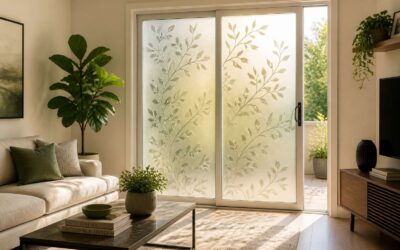
Open concept living in Johannesburg homes often becomes one bright cavern with no visual privacy. Yet a carefully considered track system can channel daylight while carving out zones. Sliding doors entertainment relies on slim frames and frosted glass to bounce morning light from the patio doors into the deepest corners of the kitchen. Sightlines stay intact, and conversations continue across the room.
- Top hung tracks that eliminate floor channels
- Mirror finish panels that amplify natural luminance
- Glass with a low solar heat gain coefficient
I’ve seen how sliding doors entertainment turns a box into a layered environment. Brightness and connection become the true boundaries, not the walls.
Acoustic Control for Movies and Music
Open-concept living has a noise problem. I have stood in Johannesburg homes where a movie soundtrack competes with the dishwasher. The design is beautiful. The acoustics are terrible! Sliding doors entertainment changes that equation.
Modern sliding systems use dense cores and perimeter gaskets to block sound. They divide a large volume into focused zones. A film plays in one area. A guitar amp stays quiet in another. You get the open plan without the audio chaos.
The right panels reduce noise transfer by up to 35 decibels. That is the gap between hearing every word and hearing nothing at all.
For anyone serious about home cinema or music, the systems that work best share these acoustic features:
- Laminated glass with acoustic interlayers
- Automatic drop seals at the bottom edge
- Heavy panels with a solid timber core
Sliding doors entertainment keeps the space fluid and the sound contained. The openness stays. The quiet stays too.
Choosing the Right Sliding Door Configuration for Your Home
Pocket Doors vs. Barn Doors
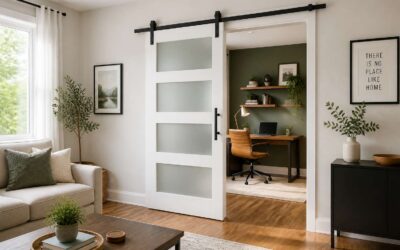
Pocket doors vanish into the wall. Barn doors demand attention. That difference drives every decision when you are choosing a configuration for sliding doors entertainment in your home. In a narrow Johannesburg hallway, a pocket door keeps the opening clear and the wall unbroken. Barn doors suit spaces where the hardware itself becomes part of the decor, like a game room off an open-plan kitchen.
Installation separates them further. Pocket doors require a hollow cavity and careful framing, so they work best during renovations. Barn doors mount directly onto solid masonry, making them a practical retrofit in older South African homes.
- Pocket doors: ideal for hidden storage or en-suite bathrooms
- Barn doors: better for wide openings that need a visual anchor
Your choice for sliding doors entertainment ultimately reflects, in my view, how much wall you want to sacrifice and how bold you want the entry to feel.
Multi-Panel Folding Systems
A multi-panel folding system can open a wall by eight metres while stacking into a bundle not much wider than a standard doorway. That geometry offers Pretoria and Umhlanga homeowners an option neither pocket nor barn doors provide.
These configurations suit sliding doors entertainment when the boundary between lounge and patio should dissolve entirely. The stacked panels rest against a clear wall zone, the floor track sits flush with the threshold, and the glazing offers a clear view across the garden. For sliding doors entertainment in older homes, a few structural details matter:
- The structural header above the opening must support the full door weight
- The concrete slab needs to be level along the entire track length
- Stacked panels require roughly 400 millimetres of side wall clearance
The wall space beside the opening determines everything. The folding action is straightforward. The preparation is not.
Glass Thicknessand Tempering for Safety
When planning sliding doors entertainment, the configuration must consider glass thickness before the profile style. A 6mm toughened pane suits most residential openings, but wider spans demand 10mm or 12mm glass to resist deflection. Tempering is non negotiable in South African homes, especially where children or pets move near the threshold.
Safety glass shatters into granules rather than jagged shards. That matters for sliding doors entertainment in Pretoria and Umhlanga, where high traffic flows between patio and lounge. The choice of glass also affects thermal comfort, so consider low emissivity coatings.
Common configurations include:
- Single sliding panels with fixed side lights
- Double track systems with overlapping leaves
- Corner sliding systems that open two walls
Each configuration changes the structural load on the glass. Always consult an engineer for the exact specification.
Track Materialsand Hardware Durability
Single track systems suit narrow passages, while tandem tracks stack panels behind one another. Choose the configuration that matches your wall space and daily traffic. That choice decides the hardware load on your sliding doors entertainment!
Track material shapes longevity. Aluminium tracks with nylon rollers handle Pretoria’s dusty conditions. Stainless steel stands up to Umhlanga’s salt air. From what I have seen, hardware durability comes down to three components:
- Ball bearing rollers that carry panels over 80kg
- Self lubricating wheels for quieter movement
- Floor guides that prevent panels from drifting
Custom Finishes that Complement Décor
Some configurations feel right the moment you slide the panels open. A four panel system shares the weight across a wider track and frames a generous opening to the patio. A two panel setup suits compact walls and parks neatly against the side. Picture where those panels rest when fully open before you commit.
Custom finishes translate the mechanical choice into something personal. Powder coated aluminium can echo your window frames precisely, while timber veneers add warmth but demand more upkeep in Durban’s humidity. For sliding doors entertainment, the finish shapes the room’s character before a single guest arrives.
Finish directions worth raising with your installer:
- Textured black profiles for a bold architectural frame
- Bronze anodised panels that soften harsh afternoon light
- Dual tone finishes coordinating interior timber and exterior brick
Design Strategies for Entertaining Guests
Open Layouts that Encourage Mingling
Hosting in South Africa often means balancing the braai outside with the chatter inside. The genius of a great open layout is that it lets guests choose their own rhythm. Instead of forcing everyone into one room, you create gentle zones where conversations can split and reunite.
For sliding doors entertainment to succeed, the space must never feel segmented. I have watched guests drift naturally when the threshold between kitchen, lounge, and patio dissolves completely. Consider the placement of seating in relation to door openings; the best layouts give people a reason to move. A counter for platters, a bench near the window, a quiet corner with a drink. These small invitations make mingling effortless.
When the doors slide fully away, the entire house becomes one generous room, and that is the true luxury.
Creating a Cozy Media Nook
Every good gathering needs a place where guests can step back without leaving. A media nook can do exactly that. The approach is to make it a comfortable pause, not a separate room. When guests need a break from the braai or the informal chatter, they can sit quietly, watch a film, or watch the light change through the glass.
For sliding doors entertainment to work, position the nook where it can be seen but not overheard. Place seating at an angle to the opening, so people inside and outside can acknowledge each other without raising their voices. This keeps the energy flowing between zones.
Consider these elements for a nook that serves both film lovers and party hosts:
- Dimmable lighting close to the seating, positioned away from the screen
- A low table for glasses and plates that stays out of foot traffic
- Acoustic panels hidden behind fabric to stop movie sound from carrying into the courtyard
The best media nooks give guests permission to pause. That is the quiet utility of sliding doors entertainment.
Zoning with Sliding Panels
One host once told me that the secret to a good gathering is letting people choose their distance. Sliding panels make that possible. For sliding doors entertainment, the trick is to create zones that respond to the ebb of the evening.
Consider a panel near the braai. It shields smoke without blocking the view. Another can curve around the bar, offering a quiet spot for conversation. The material matters. Opaque glass gives privacy, while a timber slat allows peeks and airflow.
Practical zoning ideas:
- Place a panel halfway between the dining table and the lounge to soften noise.
- Use a narrow panel to frame the doorway, guiding guests toward the garden.
- Set a panel on a pivot to change the room’s shape in seconds.
The result is a flexible space. Sliding doors entertainment means shifting the boundary as the mood shifts.
Outdoor Entertainment Areas Connected by Glass
Most Johannesburg hosts overlook the gap between panel and paving. The design strategy for sliding doors entertainment in outdoor areas connected by glass begins with that gap. A recessed track removes the sill entirely, letting guests step from dining room to lawn without breaking conversation.
The glass panels become the partition between meal preparation and socialising. Position the opening near the side of the braai, never directly in front of the fire. This gives the chef a clear line to the patio table. I have found a single wide panel creates a more generous gesture than two narrow ones.
Design choices from the outdoor layout:
- The opening faces the seating cluster, not the garden centre
- Panels stack entirely to one side for maximum clearance
- A transom window above the track keeps the ceiling line open
Evening light angles off the glass. The sliding doors entertainment experience depends on how these elements align. Effortless hospitality is a sequence of measured decisions.
Lighting Coordination across Spaces
Lighting coordination across spaces determines the success of an evening. When the sun drops behind the Magaliesberg, the threshold between your dining room and patio should sit in a shared zone of warm light. I always start with dimmers on the indoor circuit and a separate zone for the outdoor fittings.
The coordinated scheme for sliding doors entertainment has four layers:
– Interior dimmers set low, keeping the room intimate.
– A braai task light aimed at the grid, avoiding shadows on the food.
– Patio uplights washing the boundary wall in soft amber.
– Track lighting above the glass panels switched off, so the gap disappears entirely.
This layering is what makes sliding doors entertainment feel seamless. Guests rarely register the moment they crossed from tiled floor to paving because the light level never breaks across the threshold.
Furniture Placement for Clear Pathways
Furniture placement determines whether guests drift naturally or hesitate at the threshold. The sliding doors entertainment zone demands an unbroken path, so keep the first meter of floor clear on both sides. A lounge chair angled toward the garden invites movement. A coffee table set parallel to the glass becomes a quiet barrier.
- Leave a corridor of at least 900 millimeters from the door track.
- Place seating backs toward the interior walls, not the glass.
- Anchor the braai side with a sturdy trolley, not a fragile pedestal.
When the evening swells, bodies move between the kitchen, the patio fire, and the pool edge. If the path narrows near the sliding door, guests will pause. The pause disrupts the gathering. Wide, uncluttered routes keep the crowd in motion from the dining table to the outdoor seating.
Smart Home Integration with Sliding Door Operation
Automated Opening and Closing Schedules
Power cuts reshaped how we schedule our homes. Smart home integration makes sliding doors entertainment respond to your daily routine. Automated opening and closing schedules follow time of day, temperature, and even your calendar. Panels can part for a morning swim and seal before an afternoon thunderstorm.
- Sunrise mode for the east-facing deck
- Midday venting to cool the living area
- Sunset closure for security
These routines cut air conditioning costs and prevent weather damage. You program the glass, and it behaves accordingly, letting you enjoy the moment without fuss.
Voice-Activated Control with Smart Assistants
Voice activated control makes sliding doors entertainment respond to spoken commands. Say “open the patio” while carrying a full cooler box and the panels part instantly. Smart assistants like Google Home and Alexa connect to motorised tracks through Wi-Fi or Zigbee controllers.
Voice commands can be chained for complex scenes. A single phrase might trigger multiple actions at once. “Braai time” could open the east-facing glass, adjust the ceiling fan, and start the patio speakers.
- Set individual voice profiles for each family member
- Define restricted commands for guest mode
- Link door motion with security system alerts
I have tested this with braai tongs in one hand and a cold drink in the other. It works! Sliding doors entertainment becomes something you speak to, not something you push. The glass responds, and your gathering stays uninterrupted.
Security Sensorsand Interlock Systems
Smart home integration turns sliding doors entertainment into a quiet negotiator, not a passive glass wall. Security sensors work in the background, so when a panel is left slightly ajar, the system knows before you do. A forced entry attempt triggers the same track that opens for guests to seal itself shut, which is a polite way to refuse entry.
Interlock systems add another layer. They stop two panels from opening at the same time when the wind would turn the room into a kite factory. This is not about limitations; it is about rhythm. A simple set of rules governs the flow:
- A door stays closed when the security alarm is armed with interior motion detection active
- A panel refuses to open if the external wind speed tops 15 km/h
- Adjoining glass sections cannot both open if they face each other in a narrow passage
The real comfort is that your home keeps watch without announcing itself. Sliding doors entertainment becomes a sensible houseguest, one that knows when to open the door and when to lock it down.
Energy Efficiency through Weather Sealing
Smart home integration changes how sliding doors entertainment handles the weather. A weather sealing system reads the thermal pressure across each panel and adjusts the seal in real time. The operation is subtle. The door does not slam shut; it settles into the frame, pressing the gasket against the threshold until the gap closes.
The energy savings come from small, repeated corrections:
– Edge seals compress when the interior temperature drifts
– Thermal break frames limit heat transference through the aluminium
– Draft sensors trigger a slow closing sequence when wind presses on the glass
Sliding doors entertainment then performs as a thermal buffer. It holds the warmth in winter, keeps the heat out in summer, and does so without announcing its work. For South African homes, where electricity prices climb each year, this quiet efficiency makes every open panel a measured choice.
Maintenanceand Upgradesfor Peak Performance
Cleaning Tracksand Rollers
Nobody notices rollers until the door scrapes. In South African homes, dust and sand cause most sticking door issues. A track clogged with grit forces the entire system to labour, and that strain wears out the hardware early. Keeping sliding doors entertainment smooth begins with consistent track care.
I recommend this basic routine:
- Vacuum the track weekly to remove sand.
- Wipe the rollers with a damp cloth.
- Apply silicone spray, not oil, twice a year.
Every six months, lift the door and clean the roller wheels directly. If the door still feels rough, upgrade to nylon rollers with ball bearings. They run quieter and handle heavier panels. A short maintenance habit keeps the system reliable, so the focus stays on the movie, not the mechanics!
Lubricationand Alignment Adjustments
Most homeowners forget that a sliding door is a mechanical system, not merely a pane of glass. In South Africa, temperature swings can shift a door frame by millimetres, so alignment becomes essential for sliding doors entertainment.
Lubrication matters more than people assume. A dry track creates friction, and friction creates noise. That squeak during a tense movie scene? That is misalignment talking.
Here is what I recommend checking every season:
- Spray the rollers with a dry PTFE lubricant, never grease.
- Check the gap between the door and the frame. It should be even.
- Adjust the bottom roller screws to level the panel.
- Inspect the guide wheel at the bottom corner.
Alignment adjustments take ten minutes. A door that hangs straight glides with almost no effort, and that keeps the focus on the movie. For sliding doors entertainment, a quiet, smooth panel is the difference between immersion and irritation!
Glass Cleanersand Coatings
Nobody buys a R50,000 glass panel to watch it turn into a smeary mess after one Highveld storm. For sliding doors entertainment, clarity is the whole point. A film of grime ruins the view.
Skip ammonia-based sprays. They strip protective coatings and leave streaks that catch the afternoon sun. Use a pH-neutral cleaner with a microfiber cloth. For the exterior, apply a ceramic or nano coating. It repels water, dust, and bird droppings. One application lasts months.
- Water beading on the exterior surface.
- Reduced dust adhesion between cleanings.
- Longer intervals before streaks appear.
That routine keeps panels transparent and movie marathons uninterrupted. In South Africa, a coated door performs better.
When to Update Hardware
Hardware eventually wears out. Rollers that once glided smoothly may start to catch, even after cleaning and lubrication. That is the signal to replace them, not to keep adjusting. In South Africa, temperature swings and dust accelerate wear on steel bearings. Nylon rollers handle the climate better and reduce strain on the track.
When I inspect older installations, the track is usually the next issue. Look for burrs or bowing along the running surface. A bent track will wear out any new roller you fit. Replace the track if the door drags in one section. Also inspect the handles and locks. A loose handle on a heavy glass panel creates safety risks. A multi-point locking system offers better security. The signs are clear:
- Rollers that need monthly realignment.
- Track screws that pull out of the frame.
- Latches that no longer seat firmly.
These upgrades keep sliding doors entertainment zones safe and responsive for years.
Seasonal Care for Exterior Exposure
South African summers punish exterior sliding doors with UV and dust. Winter brings cold contraction and morning damp. Each season changes how your sliding doors entertainment zones respond.
For coastal homes, salt air eats cheap rollers and corrodes aluminium tracks. Rinse the tracks with fresh water monthly. Inland, dry heat hardens rubber gaskets. Apply a silicone dressing before the worst months.
Outdoor exposure also means checking the threshold seal. A perished seal leaks dust, noise, and air conditioning. Keep a small kit ready:
- pH-neutral cleaner for the frames
- UV protectant for gaskets
- spare nylon rollers
That kit makes the next seasonal change a ten minute task.

0 Comments