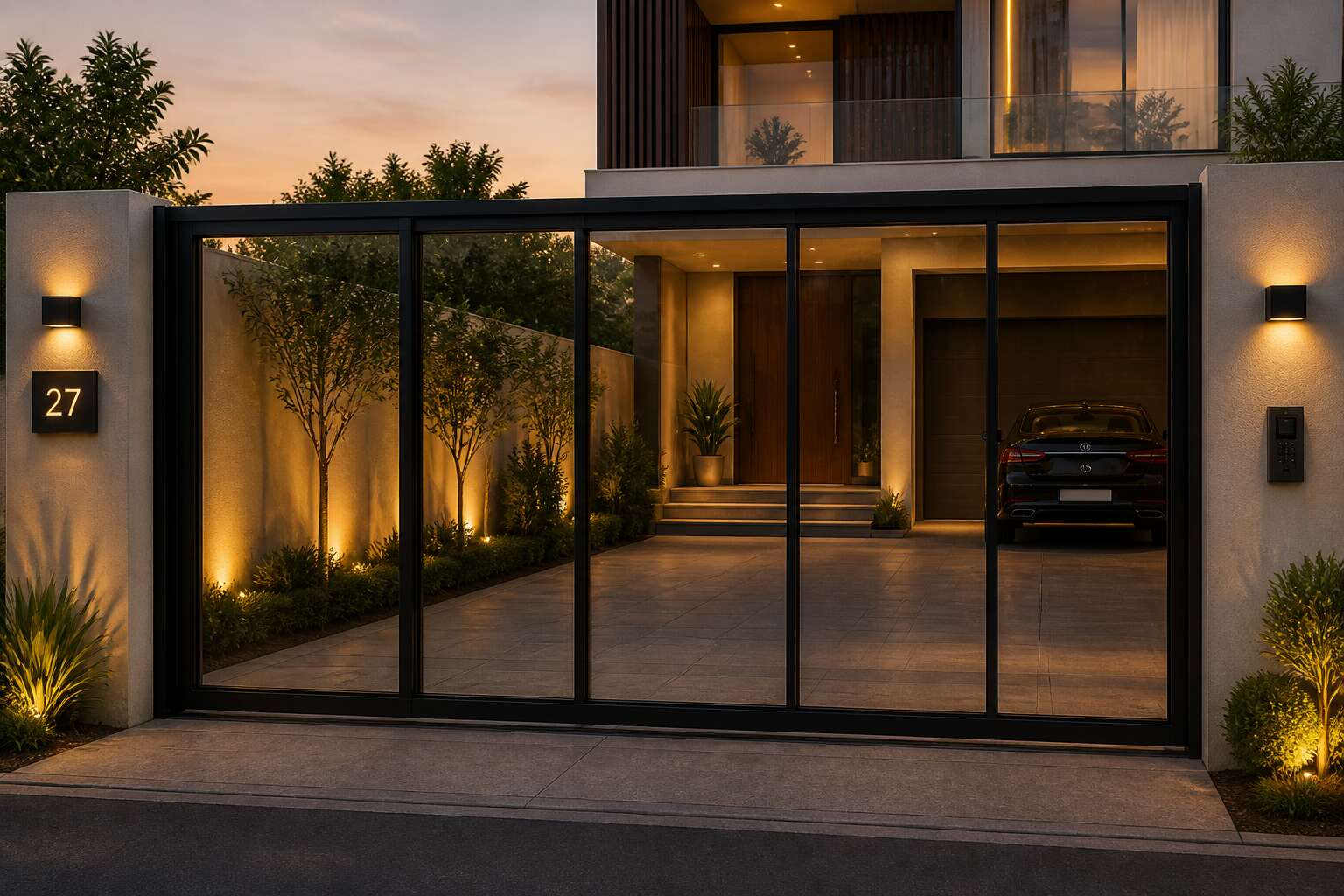
Why Choose Sliding Gate Technology for Your Property
Space Efficiency and Maximizing Curb Appeal
For every metre of driveway that opens outward, you lose usable space. Most South African homeowners never measure this loss until they park. Sliding doors gates glide parallel to your boundary wall, eliminating the swing radius entirely. On narrow plots, that difference creates room for a second car or a braai area.
Beyond pure function, this technology boosts curb appeal. The horizontal motion looks deliberate and modern, not heavy. Choose aluminium or composite timber and your gate becomes a design feature. It also operates smoothly, which throws a subtle signal of quality to visitors. Three advantages stand out:
- Space savings: no arc required, perfect for sloped driveways.
- Aesthetic flexibility: match any facade from minimalist to traditional.
- Security: auto-locking and sensor reversals are built-in.
Given South Africa’s rising urban density, sliding doors gates are a practical, visually clean solution for property owners who refuse to waste a single square metre.
Enhanced Security and Access Control Features
Some say a gate is merely a barrier, but the quiet intelligence of sliding doors gates tells a different story. These systems are engineered for a reality where security must be invisible and immediate. The motorized rack and pinion drive eliminates the vulnerabilities of a swinging hinge, which can be compromised with simple leverage. Instead, you get a unit that locks into its track with a mechanical grip that is difficult to challenge.
Access control is where the modern homeowner finds true autonomy. You are no longer bound to the physical act of opening a heavy panel. Integration with your existing automation allows for seamless entry from your vehicle or a smartphone from anywhere in the world. The operational protocols are precise, reducing wear on the mechanical components.
Consider the depth of protection built into these systems:
1. Anti-lift brackets that prevent forced removal from the track.
2. Sensor reversals that halt motion if an obstacle is detected.
3. Backup battery systems for load shedding reliability.
The choice of sliding doors gates is a declaration of security, a deliberate move to fortify your perimeter without sacrificing the elegance of your property’s entryway.
Automation and Smart Home Integration
The real value of sliding doors gates appears in the quiet moments of routine. Imagine returning home after a long drive, the gate recognising your vehicle and opening before you even reach the sensor. This is the promise of property automation.
Your smart home integration ties everything together. From your bedroom, you can grant a service provider temporary access, then revoke it the moment they leave. The system learns your patterns and anticipates your arrival.
Consider what genuine integration delivers:
- Geolocation triggers that prepare your entryway as you round the corner.
- Real time notifications with visual verification of every vehicle that passes.
- Scheduled access windows for staff, eliminating constant manual oversight.
Your sliding doors gates become an extension of your digital life, a reliable component of your home that works quietly while you focus on living.
Exploring the Different Types of Sliding Mechanisms
Cantilever Sliding Gates: Ground-Level Freedom
A ground track is the most common point of failure on a sliding gates system. Dirt, debris, and rust accumulate in the channel, forcing the wheels to drag and the motor to strain. Cantilever sliding gates eliminate this vulnerability entirely by lifting the entire weight of the structure off the ground.
Instead of wheels on a track, the gate hangs from a counter-lever system mounted on a concrete foundation. This design allows for complete ground-level freedom, which is a critical advantage for properties with uneven driveways or those that need to be kept completely flush for pedestrian traffic. The gate glides on wheels that run inside a box beam, with no floor obstructions whatsoever.
– No ground track means zero debris buildup.
– The gate can span gaps or uneven terrain without issue.
– Heavier, more substantial materials like solid steel can be used without causing track deflection.
Because the weight is distributed evenly over the foundation, these systems experience less operational wear and tear. This makes them a superior long-term investment for high-traffic entrances. When you choose this mechanism, you are effectively future-proofing your access point against the harsh South African weather and the daily grind of constant use.
Track-Mounted Sliding Gates: Traditional Reliability
From the gravel driveways of Johannesburg to the coastal winds of the Cape, the entrance to your property speaks volumes before a single word is exchanged. In a landscape where security and durability are non-negotiable, the choice of your perimeter access is a decision that echoes for decades. The market offers a spectrum of options, yet the conversation inevitably turns to the engineering that separates a temporary fix from a permanent solution. Specifically, the debate between a traditional wheel-on-track setup and the floating elegance of a cantilever system defines the modern standard for residential and commercial estates alike.
When we speak of sliding doors gates, we are referring to a mechanism that requires precision and foresight. The conventional approach, which relies on a ground track, presents a litany of operational headaches that only reveal themselves after years of exposure to the Highveld elements. Rain washes silt into the channel, autumn leaves clog the rollers, and the relentless sun warps the metal over time. This is where the cantilever design distinguishes itself as the superior architectural choice. By eliminating the bottom guide rail entirely, the structural integrity of the system is no longer compromised by ground-level debris.
The fundamental advantage of this suspended motion lies in its simplicity. Instead of the gate dragging along a vulnerable groove, it is supported by a sturdy counterbalance that rides on bearings housed within a reinforced box beam. This configuration transfers the entire weight of the sliding doors gates to a concrete foundation that is poured level with the surrounding surface. As a result, the opening remains completely flush, allowing for seamless pedestrian traffic and unimpeded drainage. Furthermore, this design excels where the terrain is less than perfect, accommodating a significant amount of unevenness without jamming.
Consider the operational benefits that accrue over the lifetime of the installation:
– Zero Maintenance on the Trolley: With the track removed from the ground, there is no need to continually scrape out mud or stones before every open command.
– Weather Resilience: Heavy downpours do not create a riverbed in your driveway entrance, preventing rust and corrosion at the critical load-bearing points.
– Enhanced Aesthetics: The absence of a protruding rail allows for a cleaner, more linear facade, which is often a requirement for modern architectural designs.
– Superior Wind Resistance: Because the gate is supported at two distinct points along its length rather than on a single ground wheel, it suffers less from the high wind loads typical of the Cape and Gauteng regions.
The materials used in this context are also a direct response to the harsh South African sun. Galvanised steel, and in some cases structural aluminium, form the backbone of these systems. Because there is no track on the ground, we can use heavier, more substantial material without worrying about the friction that would normally cause the motor to strain. The electric motor, therefore, operates with a smooth, consistent torque, extending the life of the gearbox and the remote control receiver.
Automation is the final piece of the puzzle. A cantilever gate integrates flawlessly with modern smart home technology, offering features like battery backup for load-shedding and infrared safety beams. When you pair these mechanical advantages with the sheer convenience of a gate that glides on a fixed plane without touching the ground, the value proposition becomes clear. For the discerning homeowner in Pretoria or the estate manager in Durban, the question is no longer whether you can afford the better system, but whether you can afford the constant repairs of the outdated alternative. Every interaction becomes an effortless operation, proving that the quiet hum of a balanced gate is the sound of money well spent.
Vertical Lifting Sliding Doors: For Steep Driveways
Some driveways defy convention. They climb away from the road at an angle that would make a standard horizontal slider seize within weeks. For these properties, a vertical lifting sliding door is not a luxury. It is the only rational engineering solution.
The principle is straightforward. The gate panel moves straight up into a header box instead of gliding sideways along a track. This vertical travel removes the reliance on ground-level guide rails entirely. The driveway stays clear. There are no wheels to jam and no channels to dig out after a Highveld storm.
This mechanism pays for itself in specific scenarios:
– Steep inclines where a horizontal gate would scrape the surface.
– Limited side space next to the driveway entrance.
– Sites with high water runoff that would flood a conventional track.
– Frontages where a taller, more imposing entrance is desired.
The counterbalance system does the heavy lifting. Heavy steel panels ride on a series of pulleys and bearings mounted within a reinforced steel frame. A domestic motor, usually a 400kg or 600kg unit, drives the entire assembly with ease. When the gate is open, it rests neatly above the opening, giving you a clearance that matches the height of the structure itself.
This is where the sliding doors gates conversation takes a turn towards the bespoke. Vertical lift installations require a structural engineer’s sign-off. The wind load on a raised panel is substantial, so the supporting steelwork must be welded and bolted with precision. The payoff is a gate that handles a 15 degree incline without a whisper of complaint. It is a permanent answer to a problem that no other gate design can solve.
Bi-Parting Sliding Systems: Wide Access Made Simple
There is a curious choreography to a bi-parting gate, a symmetry that feels almost like a formal dance between two equal partners. Instead of one panel shouldering the entire burden, two halves split the load, each gliding towards its own recessed pocket. This design is the answer for wide entrances where a single slider would demand an enormous, impractical swing space. You receive a full, unobstructed opening that makes maneuvering a double-cab bakkie or a delivery truck feel effortless, while the motors work in tandem to create a seamless operation.
This configuration also reduces the physical strain on your mechanical parts. Because each leaf is lighter, the track and rollers face less sustained pressure, which translates to quieter performance and a longer lifespan. For a South African property, this means fewer maintenance headaches.
– Ideal for double-width driveways exceeding 5 meters.
– Balances wind load evenly across two panels.
– Provides a stately, symmetrical appearance.
– Can be paired with pedestrian access gates.
A bi-parting system shines where space is tight, yet the entrance must feel expansive. It is a pragmatic solution wrapped in an elegant silhouette. The motorisation, whether a single unit with a linkage arm or twin operators, coordinates the leaves to close with a precise, gentle meet in the centre, ensuring your sliding doors gates offer both grandeur and steadfast reliability, regardless of the harsh Highveld sun or the seasonal rains.
Materials and Design Considerations for Sliding Entrances
Steel, Aluminum, or Wrought Iron: Pros and Cons
When selecting a sliding gate, the material determines its lifespan, maintenance, and overall presence on your property. Each option brings a distinct set of strengths to the table, and the right choice often hinges on your specific security needs and aesthetic preferences. Steel is the workhorse of the industry, offering exceptional tensile strength that can withstand high winds and forced entry attempts. However, this robustness comes with a caveat; steel is prone to corrosion, particularly in coastal regions where salt-laden air accelerates rust, therefore requiring a galvanised finish and regular paint touch-ups to preserve its structural integrity.
Aluminium, conversely, presents a compelling alternative for those prioritising ease of movement and longevity. Its innate resistance to oxidation means it never rusts, which significantly reduces long-term upkeep. Furthermore, its lightweight nature places less strain on the gate motor and tracks, potentially extending the life of your automation system. While it might not match the brute force of steel, modern aluminium gates are engineered with reinforced frames that offer commendable security for residential applications. The trade-off usually involves a higher initial investment compared to steel.
For a touch of classic elegance, wrought iron sliding doors gates remain a favoured choice among homeowners. This material offers a timeless, intricate aesthetic that can be customised with scrolls and finials, adding a layer of architectural charm that other materials cannot replicate. Yet, this beauty is demanding; wrought iron is heavy, which necessitates a robust support system, and it requires vigilant maintenance to fend off rust and flaking paint. Given the South African climate, which ranges from humid subtropical in the east to semi-arid in the west, your local weather patterns should heavily influence your decision between the durability of aluminium and the classic strength of steel or iron.
Glass Panels for Modern Aesthetics and Visibility
In South Africa, the entrance to your property sets the tone for the entire home. While solid steel and aluminium options offer security, there is a growing shift towards glass panels for those seeking a modern aesthetic without sacrificing sightlines. These designs allow you to see who is approaching while maintaining a sleek, architectural look.
When considering materials for this style, the choice often dictates the overall ambiance. Frameless glass offers an unobstructed view, perfect for showcasing a well-manicured front garden. Alternatively, a combination of aluminium frames with frosted panels provides privacy while still allowing natural light to filter through. The interplay between transparency and solid material defines the character of the entryway.
Key considerations for glass sliding doors gates include:
– Tempered or laminated glass for impact resistance
– Powder-coated aluminium for corrosion resistance in coastal winds
– Minimalist track systems that conceal rollers for a clean finish
Beyond mere aesthetics, the design must integrate with the surrounding environment. A home with contemporary lines benefits from a minimalist gate that complements the architecture rather than competing with it. The visibility offered by these gates also adds a layer of passive security, allowing occupants to monitor the driveway without relying solely on intercom systems. Ultimately, the choice of material and design should reflect a balance between transparency, durability, and the unique character of your property.
Wood Options for Traditional and Rustic Homes
Wood carries a warmth that no steel can replicate. For a rustic bushveld retreat, timber for your sliding doors gates connects the entrance to the landscape. Real wood breathes and shifts, requiring a thoughtful relationship with moisture and sun.
The most enduring options are indigenous hardwoods. Meranti offers a rich, reddish hue while resisting coastal humidity. Rhodesian teak provides density and termite resistance. Saligna, though softer, takes paint beautifully.
- Meranti for coastal resistance
- Rhodesian teak for termite proofing
- Saligna for a rustic paint finish
Each species demands a robust track system for sliding doors gates, because heavier timber creates stress on rollers. Account for seasonal swelling, especially in humid summers. A well built timber entrance remains a statement of permanence.
Custom Finishes, Colors, and Branding Opportunities
The front entrance is a signature, a quiet statement of who you are before a single word is spoken. For businesses, sliding doors gates become a canvas for identity, carrying a logo or a specific corporate hue that clients will remember. The finish you select is not merely an aesthetic layer, it is a technical decision impacting durability and upkeep. Powder coating offers a resilient, matte surface that stands up to harsh UV rays, while a galvanised base provides the necessary armour against rust.
Custom colours allow you to harmonise the gate with architectural features like cladding or roof sheeting. You can opt for a bold, contrasting tone or a subtle shade that blends into the landscape. For a more industrial look, a brushed or textured finish hides smudges and minor scratches far better than a glossy one. Here are some common finish systems:
1. Polyester powder coating for colour retention.
2. Anodising for a metallic, low maintenance sheen.
3. Primed and painted for a bespoke, on site colour match.
The branding opportunity lies in the detail. A laser cut metal panel or a precisely placed vinyl decal for sliding doors gates turns a functional barrier into a marketing asset. It ensures your property maintains a professional appearance where first impressions are counted in seconds.
Safety Sensors, Edge Guards, and Emergency Releases
Most gate accidents are prevented, not fixed. Sensors, edge guards, and emergency releases are the three safeguards that keep sliding doors gates from becoming a liability. Photoelectric sensors detect obstructions and halt motion instantly. Edge guards, often fitted with pressure strips, reverse the gate upon contact. Emergency releases allow manual operation during power outages, a feature you appreciate when stuck on the wrong side of the property!
The materials inside these components deserve attention. Galvanised tracks resist corrosion, sealed bearings handle dusty South African conditions, and UV-stable rubber edging survives years of sharp sun. I have seen inferior alternatives fail within two seasons. Sliding doors gates rely on these internal parts as much as the visible panels. Common configurations include:
- Infrared sensor arrays for full-width detection
- Pressure-sensitive edge strips that trigger immediate reversal
- Keyed manual release mechanisms for secure override
The result is an entrance that works quietly and safely, daily or weekly.
Installation, Maintenance, and Troubleshooting Tips
Professional Installation vs. DIY: Key Trade-offs
Every 23 seconds, a home invasion occurs in South Africa. That statistic is sobering, and it is why the perimeter of your property demands more than just a casual thought. We often focus on the aesthetic appeal of a gate, but the real conversation should be about its resilience and longevity. The choice between hiring a professional and attempting a DIY installation for your sliding doors gates is a significant fork in the road, one that affects your budget, your time, and ultimately, your family’s safety.
Installation: The Foundation of Function
Bringing a heavy steel frame to life on your driveway is not a simple weekend project. A professional installation team arrives with the specific tooling required to set concrete footings and mount the cantilever system with precision. They understand soil composition, which is crucial in areas with heavy rainfall or expansive clay. Conversely, the DIY route might seem cost-effective initially, but the risk of misalignment is high. A single millimeter off-kilter can cause the wheels to bind or the motor to strain, leading to premature wear. Unless you possess structural engineering knowledge and a masonry crew on standby, the foundation of your security is far safer in expert hands.
Maintenance: Keeping the Silent Guardian in Check
Once installed, the rhythm of upkeep begins. The harsh South African sun and coastal salt air are relentless adversaries for metal components. To ensure your investment pays off, a consistent maintenance schedule is non-negotiable. For those who manage it themselves, the process involves:
- Lubricating the rollers and track every three months with a lithium-based grease.
- Inspecting the photo-eye sensors for dust or spider webs that could trigger false closures.
- Tightening the bolts on the wheel brackets to prevent the gate from sagging over time.
- Testing the manual release mechanism to ensure you can open the gate during a power outage.
While this list is manageable, many homeowners forget the critical step of clearing debris from the bottom track. A small pebble can create a significant headache. Hiring a professional for an annual service check can identify rust on the internal torsion springs before they snap, saving you a costly emergency call-out later.
Troubleshooting: Decoding the Silence
When your gate suddenly refuses to move, the immediate reaction is often panic. Before you call for backup, there are a few diagnostic steps you can take. If the gate is unresponsive, check if the remote battery is flat first; it is the simplest culprit. If the motor hums but the gate stays put, you are likely dealing with a stripped gearbox or a broken sprocket, which requires replacement parts. However, if the gate moves a few centimeters and stops, this usually signals an obstruction or a misaligned limit switch. Diagnosing these issues remotely is difficult, but learning to identify the symptom helps you communicate effectively with a technician, ensuring they bring the right parts on the first visit, rather than a second.
Seasonal Maintenance Checklist for Smooth Operation
The changing seasons in South Africa put distinct stresses on sliding doors gates. Winter’s dry highveld winds deposit a fine abrasive dust into every moving joint, while coastal summer humidity accelerates oxidation on unprotected hardware. A quarterly maintenance rhythm that tracks the calendar, not just the odometer, keeps these forces in check.
- After winter, measure the drive chain for elongation caused by cold contraction.
- Before summer storms, clear drainage channels around the track to prevent standing water from seeping into the motor housing.
- During autumn, remove fallen leaves that can wrap around wheel bearings and cause binding.
- In spring, test the gate’s balance, especially if wooden panels have swollen from seasonal moisture.
Tackling these tasks on a fixed schedule means your sliding doors gates respond exactly when you need them. It is the difference between a small, planned adjustment and a sudden call-out on a rainy Sunday. As someone who has watched a neglected gate seize up mid-season, I can tell you that fifteen minutes of foresight beats a full afternoon of repairs. A little attention, timed well, keeps the mechanism honest.
Common Friction Points and How to Fix Them
A clamp meter reading of 1.2 amps on a healthy motor versus 2.8 amps on a struggling one tells a story that vibration and noise cannot. That current draw difference is the first sign that your sliding doors gates are fighting against friction, not just carrying weight. Overlooked resistance in the rollers or track will shorten the motor’s lifespan faster than any storm.
Installation quality determines which side of that amp reading you land on. Many South African homeowners try to save a few rand by pouring their own concrete footings for the bottom track. The result is a surface that looks level to the eye but is off by eight millimetres over a six metre run. That discrepancy acts as a permanent incline the motor must overcome. Professional installers use laser levels and precision string lines to ensure a tolerance of under three millimetres. They also verify that the gate’s centre of gravity aligns with the drive unit’s output sprocket.
Power supply stability is another critical factor. South African grid fluctuations, especially in industrial areas, can send voltage spikes through control boards. A dedicated surge protector with a fast response time handles these transients. The drive motor should also have thermal overload protection rated for continuous operation in our climate.
Maintenance follows a rhythm that mirrors the gate’s actual usage. A gate that opens forty times a day requires different care than one that opens eight times. The quarterly checks should focus on the components that absorb the most punishment.
– Clean the bottom track with a stiff brush to remove compacted debris.
– Lubricate the wheel bearings with a lithium-based grease, not a penetrating oil.
– Inspect the drive chain for slack and adjust the tensioner accordingly.
– Verify that the safety photocells are aligned and clean.
– Test the manual release mechanism to ensure it disengages smoothly.
The drive chain itself stretches over time, creating a condition called lash. This back-and-forth play causes the gate to surge on start-up and overshoot on stop. Adjusting the tensioner by a quarter turn every six months keeps the chain tight enough to avoid slap but loose enough to prevent bearing wear. A chain that has stretched beyond its service limit should be replaced entirely, since mixing new and old chain links creates uneven wear patterns.
Troubleshooting common friction points requires a methodical approach. A gate that stalls halfway through its travel is usually suffering from a seized wheel bearing. The cause is often the fine red dust from the Karoo that gets into the bearing race and mixes with old grease to form a grinding paste. If you hear a high-pitched squeal during movement, that is the sound of metal-on-metal contact. Remove the wheel, clean the race with a solvent, repack it with fresh grease, and check the wheel diameter for ovalisation.
The bottom track itself accumulates a specific kind of damage. The constant weight of the gate, repeated over thousands of cycles, causes the track surface to develop grooves or divots at the point where the gate rests when closed. This creates a bump that the wheels must climb every time the gate opens. A track that has worn beyond one millimetre in depth requires replacement, as grinding it smooth only makes the depression worse.
Electric motor troubleshooting often has a simple explanation. The gate opens but refuses to close, which usually means the safety sensor at the receiver end has a dirty lens. A damp cloth wipe is the first step. If the problem persists, check the sensor alignment by looking for the red indicator light. A misaligned sensor yields poor diagnostics. Loose connections in the terminal block cause intermittent behaviour that mimics a logic board failure)Skip that last phrase. Another common issue is water ingress in the limit switch housing. The seal degrades over time, and once moisture gets in, the contacts corrode. Replacing the housing and seal prevents a recurring problem that keeps the gate from stopping at the correct position.
The reality is that most friction problems trace back to installation shortcuts or deferred lubrication. For example, the motor sprocket and chain interface needs a thin film of grease. When this lubricant dries out, the chain starts to stretch faster because each engagement point produces more wear. Adjusting the chain without greasing it first will only delay the inevitable replacement. A simple grease gun with a needle nozzle reaches deep into the chain links without making a mess.
Understanding the load characteristics of your specific gate model matters. Sliding doors gates with solid wood panels carry more inertia than steel versions. These gates behave differently when the drive mechanics bind. They require thrust bearings or additional idler wheels to reduce the load on the motor. Stone or brick cladding adds substantial weight to the gate structure, so the track must have a proper base that spreads the load evenly across the concrete foundation.
When troubleshooting a gate that moves unevenly or stutters, check for a crooked track before blaming the motor. A track that has shifted by just five millimetres forces the wheel to climb up and down, converting rotational torque into wasted energy. Use a spirit level to check every section, not just the ends. The foundation underneath may have settled after heavy rains, creating a dip that traps water and accelerates corrosion.
The control board’s potentiometer settings also influence friction perception. Turning up the stall force to compensate for a stiff track simply masks the underlying issue. The gate becomes more dangerous, as it will not reverse when it encounters an obstruction. The correct approach is to fix the mechanical resistance first, then calibrate the force limits to match the gate’s actual weight and condition.
Regular maintenance is a negotiation with physics. Heat, dust, and corrosion are constant opponents. A gate that has been designed, installed, and maintained according to these principles will open and close reliably for years. The alternative is a gate that behaves unpredictably, and in a country where security is paramount, that unpredictability is a liability. Being consistent with your maintenance schedule means the mechanism stays honest, and you are never left standing in the rain with a gate that refuses to move.
Upgrading Existing Gates to Automated Systems
Most homeowners assume any gate can be automated. Roughly a third of retrofit attempts fail within the first year because the existing structure was never built for motorised force. When assessing sliding doors gates, measure the panel’s diagonal squareness first. A rack that is out of true will bind, transferring strain to the motor gearbox.
Upgrading needs different hardware than a fresh installation. Existing gates roll on light-duty wheels meant for human pushing. Swap these for sealed-bearing rollers. Inspect the track for wear at the resting position. Load shedding makes the manual release your backup plan. Test it before installing the motor.
- Verify the gate’s centre of gravity sits low for stable travel
- Ensure the manual release stays accessible once the motor is mounted
- Confirm the concrete foundation runs the full length
Retrofitting sliding doors gates keeps the original panel, which often outlasts the motor bolted to it.
Cost Analysis and Long-Term ROI of Sliding Systems
Initial Purchase and Installation Price Factors
Look past the invoice and consider the lifespan. From my experience, sliding doors gates demand a higher initial purchase, but that figure hides long term value. Price factors include material choice, motor rating, and control system complexity. Site preparation, like levelling a slope or pouring a reinforced foundation, often doubles the installation fee.
- Track length and wheel quality set base costs.
- Automation retrofits add labour hours.
- Security features raise upfront spending.
This spending pays back through reduced strain on posts and gates. Fewer hinge repairs and less frequent motor replacement cut annual upkeep. Over two decades, the total ownership cost of sliding doors gates can undercut cheaper looking alternatives by 20 percent. That is the long term calculation.
Energy Efficiency and Insulation Benefits
The sharpest financial analysis for sliding doors gates rarely stops at the purchase invoice. Long term ROI emerges from operational data, particularly when you scrutinize thermal performance. For South African properties, where energy tariffs continue to climb, the insulation value of your gate system can materially shift monthly utility bills.
A well sealed sliding door system reduces thermal bridging. This is crucial because the heat differential between your interior living space and the outside environment dictates your HVAC load. When your sliding doors gates fit precisely with dual layered panels and proper weather stripping, they create a buffer zone. The air pocket within the panel acts as a barrier, keeping cool air inside during Durban summers and retaining warmth during Cape Town winters. This efficiency translates directly into fewer kilowatt hours consumed by your heating and cooling appliances.
Consider the mechanical and structural facets of this efficiency.
– High density foam cores in steel panels provide superior R values
– Thermal break technology in aluminum frames prevents temperature transfer
– Torsion spring balances reduce motor strain, lowering electrical draw
– Powder coated surfaces with reflective pigments reduce solar gain
The kinetic efficiency also plays a role. A smooth, well balanced automated system requires less torque from the motor to initiate movement. This lower power requirement reduces the amperage draw each time the gate opens. Over hundreds of cycles a year, that small saving compounds. The result is a gate that works hard without drawing excessive energy, an outcome of thoughtful engineering rather than accidental design.
My experience comparing system types reveals that cantilever sliding doors gates often outperform their track mounted cousins for energy retention. Why? The absence of a bottom track eliminates a significant gap where air pressure can escape. The cantilever design allows for a continuous threshold seal at the base of the doorway crowd. This design nuance seals the perimeter more effectively, preserving the meticulous climate control you have paid to establish inside your home. The cumulative impact lowers operating expenses, proving that the sliding system is not merely a physical barrier, but an active participant in your household energy budget.
Durability, Warranty, and Resale Value Impact
The investment in sliding doors gates extends far beyond the initial installation invoice. A durable system engineered with marine grade components and hot dip galvanized steel rails will resist the corrosive coastal air of KwaZulu-Natal or the dusty winds of the Highveld. This material fortitude directly influences your cost analysis. A gate that resists rust and mechanical fatigue for fifteen years delivers a significantly lower annual cost than a cheaper alternative requiring replacement within five.
Warranty structures reveal the manufacturer’s confidence in their product. Look closely at the coverage for the motor, the panel integrity, and the wheel assemblies. Transferable warranties on premium sliding doors gates add tangible value if you decide to sell your property. Prospective buyers view a certified, low maintenance entrance as a premium feature, not a liability. A robust system with a documented service history can swing a negotiation in your favour. The financial logic of purchasing inferior equipment fades quickly when you factor in the hidden costs of premature replacement and the diminished appeal of an unreliable entrance. The resale value of your home is quietly supported by the quiet efficiency of a well maintained gate.
Financing Options and Potential Rebates
When evaluating sliding doors gates, the initial purchase price is only the beginning. The true cost analysis must include energy consumption, maintenance schedules, and the lifespan of the motor and panel components. A cheaper unit often draws more power and requires frequent part replacements, increasing operational expenses year after year.
– Purchase price and installation fees
– Annual maintenance and lubrication costs
– Electricity consumption of the motor system
– Projected lifespan of mechanical parts
Consider how a robust gate boosts property valuation. Automated sliding doors gates reduce the need for manual security personnel, which is a measurable monthly saving. Financing options spread the capital outlay into manageable installments, making premium equipment accessible without straining your cash flow.
Local rebates for energy efficient motors are scarce, but the long-term ROI appears through reduced repair bills. A system that runs quietly for a decade outperforms a budget model that fails within three years. Your bottom line benefits from selecting durable materials and professional installation over temporary savings.



0 Comments