Understanding Vulnerabilities in Patio Doors
Common Weak Points in Sliding Door Construction
A sliding door safety lock depends on every component working correctly. Patio doors in South African homes often use aluminum frames that hide a simple weakness. The bottom roller track carries the entire weight of the glass panel. Sand and grit from coastal winds wear down the wheels. Once the track loses tension, the door settles, and the locking mechanism no longer aligns with the strike plate.
The latch itself offers another point of failure. Most sliding doors use a hook or claw lock that grips a thin metal catch. I have watched a firm push pry that catch open. The glass, a standard pane, adds no real resistance.
- Roller wheels degrade with daily use
- Strike plates are fixed with short screws
- Gaps between fixed and sliding panels widen over time
These flaws matter because a sliding door safety lock must compensate for structural decline, not just stop an intruder.
Why Conventional Locks Often Fall Short
Most intruders size up a patio door in under a minute. They look for a weak lock, a loose handle, or a frame that gives under pressure. A conventional latch rarely changes that assessment. The sliding door safety lock market exists because standard mechanisms fail under real conditions.
A keyed lock operates on a simple principle. Two surfaces meet and hold. That principle ignores force, wear, and manipulation. An intruder can apply leverage to the cylinder or insert a tool between the door and frame. The mechanism was never designed to resist such tactics. I have watched this happen.
Conventional locks also lack redundancy. One point of contact, one path to failure. No backup system, no secondary barrier. The weakness is the entire assembly, not the lock alone.
For homeowners, the lock is the least reliable part of the security chain. An upgraded sliding door safety lock addresses that gap.
Real-World Statistics on Entry Point Breaches
The South African Police Service reported over 44,000 home invasions in a recent twelve month period, with a significant portion occurring while residents were present. The patio door, with its panoramic glass and accessible track, remains a favoured point of entry for these crimes. It offers a clear view of the interior, allowing a thief to assess valuables and movement before making a move. This is not a pleasant thought, but it is a factual assessment of the security landscape in our suburbs.
Police dockets consistently show the method of entry is rarely sophisticated. A crowbar, a screwdriver, or a well placed kick is often sufficient. The patio door is perceived as the path of least resistance, a single pane of glass with a flimsy latch separating the family from the street. When a property is surveyed, the absence of a robust sliding door safety lock removes the final barrier that might send a criminal searching for an easier target. The statistics reveal that these are not random acts; they are calculated operations where the patio door is a known quantity.
The tools used in these breaches are common household items, not specialist kit. The brazenness of these acts is the most disturbing element. A break in is often completed in under three minutes.
– A cold chisel to pop the track.
– A flathead screwdriver to warp the frame.
– A strong shoulder to force the lock entirely.
The presence of a visible, heavy duty sliding door safety lock changes the calculation entirely. It suggests the homeowner has considered the risk and has taken measures that will cost the intruder time and create noise. In the majority of residential breaches, the door itself is not the primary target, the weak lock is. Upgrading that single point of vulnerability is a direct response to the documented methods of entry used in our neighbourhoods.
Assessing Your Home’s Exposure to Break-Ins
Assessing your home’s exposure demands a cold look at rarely considered spaces. A patio door opening onto a braai area often sits away from street sightlines, creating a private workspace for ill intent. Walk the perimeter at dusk and note where shadows gather. I have yet to find a home where every door remains visible to neighbours. Intruders select properties offering concealment and easy exits. A visible sliding door safety lock signals that occupants have prepared. Consider the details:
- Are there walls or tall fences providing cover?
- Does the door’s position allow a clear escape route?
- Is the surrounding vegetation overgrown?
These factors compound. A sturdy door to you may look inviting to a determined individual. The absence of reinforced glass or solid locking hardware is noticed within seconds. A sliding door safety lock, installed with a clear understanding of the door’s exposure, creates resistance that redirects a burglar.
Exploring Security Devices for Gliding Entryways
Track Locks and Pin Locks
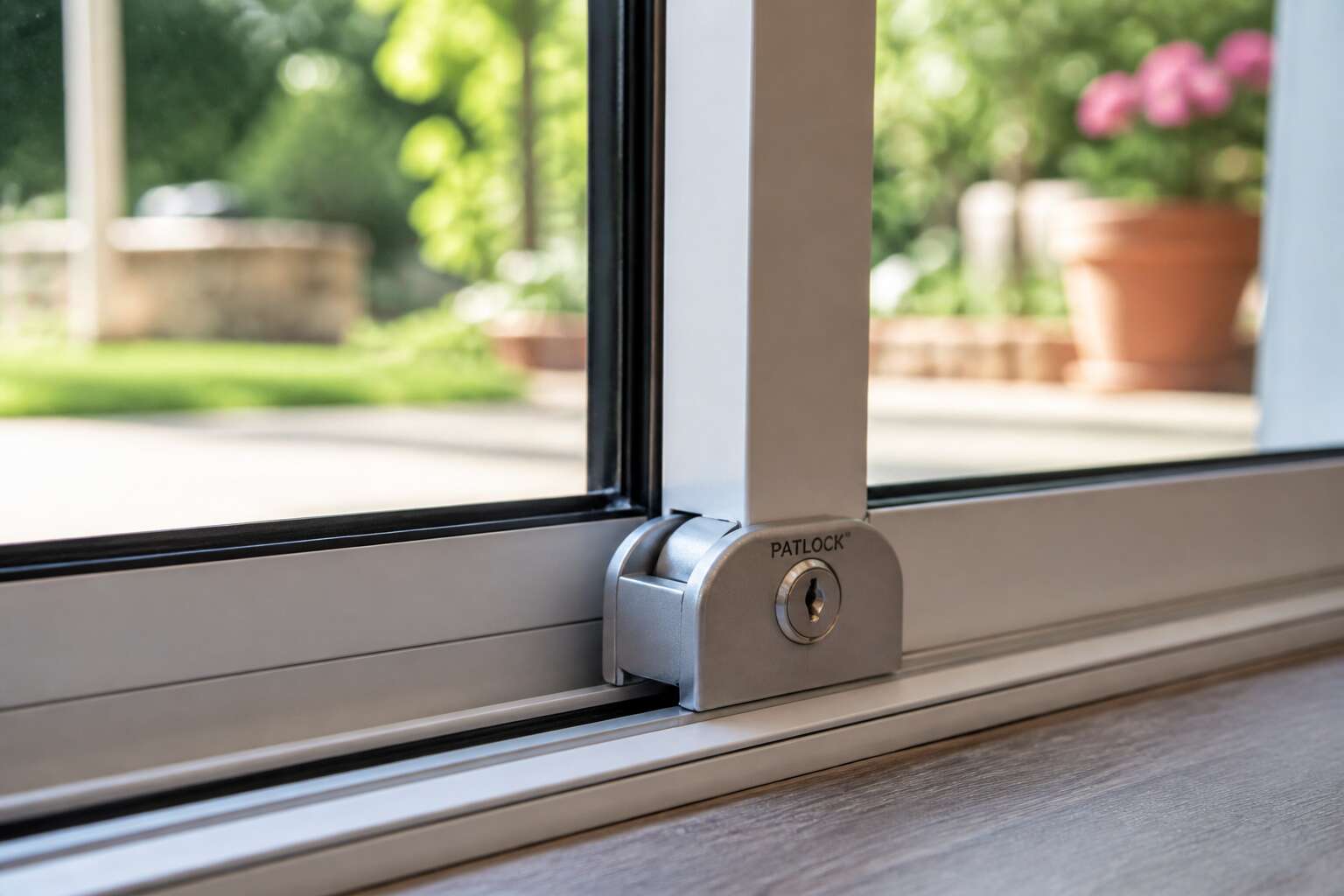
The gap between a sliding door’s rollers and its frame is where most break-ins succeed. Track locks and pin locks close that gap through different mechanisms. A track lock wedges into the bottom channel and arrests movement entirely. A pin lock drives a hardened steel bolt through the door’s stile into the fixed jamb, creating a shear point that resists prying and lifting.
Each approach has its own logic:
- Track locks suit doors with unobstructed channels and require no alteration.
- Pin locks demand precise drilling but offer resistance where leverage attacks occur.
For South African homeowners, where forced entry is measured in minutes, the mechanical honesty of these devices matters. Neither replaces an alarm, but both restore the door’s function as a barrier. That is what a sliding door safety lock should do, and these mechanisms do it without pretending to be something they are not.
Keyed Cylinder Locks for Sliding Panels
A keyed cylinder lock changes the ritual of securing a gliding entryway. Instead of a wedge or a pin, you turn a key, and the bolt does the work. For many South African homeowners, this feels like a return to something older, something deliberate. The lock demands a decision each time you leave the house.
The cylinder sits flush on the stile, and the bolt shoots into the jamb. It resists the same lifting and prying, but with a different characteristic: the key is physical proof of intent. You cannot forget you locked it.
Consider what this means for a sliding door safety lock. The mechanism adds weight to the door, and the strike plate must be reinforced to avoid tearing. You are not just buying a product. You are altering the door’s relationship to its frame.
Smart Locks with Remote Monitoring
Smart locks with remote monitoring convert a sliding door safety lock into a connected device that reports from the threshold. In South Africa, where load shedding disrupts schedules, the ability to check your door from a phone offers certainty. A sensor on the stile confirms whether the bolt is seated. You receive an alert if the door stays ajar past a set time. Some models log every open and close, creating a pattern you can review. The effect changes how you think about entry points. You no longer wonder if you locked the door. The app tells you.
For homes with multiple access points, a smart lock can link to a central hub. Consider these factors:
- Battery life during extended outages
- Signal range through steel-reinforced concrete
- Compatibility with existing mortise plates
Each factor determines whether the lock remains a convenience or becomes a liability.
Security Bars and Auxiliary Braces
In a country where load shedding tests every security measure, a mechanical barrier offers quiet reliability. A sliding door safety lock in the form of a security bar prevents the panel from sliding even if the main lock is compromised. These bars wedge against the frame and floor, turning the door into a static block.
Some auxiliary braces use a pin that drops into the track. Others clamp onto the stile. What matters is the metal gauge, the anchor point, and whether the brace resists a crowbar.
- Steel bars with anti-lift tabs
- Floor-mounted brackets with hardened bolts
- Adjustable tension rods that fit tight
Choose a bar that matches your frame’s strength. A flimsy brace gives a false sense of safety.
Magnetic Contact Sensors and Alarms
Magnetic contact sensors operate on a simple principle: break the circuit, raise the alarm. A sensor pair consists of a magnet on the moving panel and a reed switch on the frame. When the magnetic field breaks, the alarm triggers. This detection happens instantly, whether the panel slides an inch or a foot.
South African homes face frequent load shedding, so choose sensors with battery backup and cellular connectivity. I have seen too many Wi Fi dependent units drop offline when the power fails! Cellular units keep sending alerts. A sliding door safety lock built from physical hardware and electronic monitoring covers both sides of the threat. The sensor catches the attempt, the siren deters the intruder.
For a sensor to earn its place as a genuine sliding door safety lock component, confirm:
– Magnetic gap tolerance of 30mm or more
– Tamper detection if someone pries the sensor off
– Siren output above 100 decibels
Choosing Between Passive and Active Protection
Every security decision for a gliding entryway comes down to one question: deter or respond? Passive protection, like a sliding door safety lock that physically blocks the panel, requires nothing once installed. Active protection demands electricity, connectivity, and sometimes your attention. The tradeoff turns stark when load shedding leaves your home dark and quiet.
South African homeowners face a philosophical choice. I have watched too many default to what feels high tech, only to see it fail when the grid dips! A mechanical sliding door safety lock offers certainty. No batteries, no signal dropout, no failure modes. Electronic systems offer awareness. They tell you something happened while you were away.
Compare the approaches:
- Mechanical resistance stops the opportunistic intruder
- Electronic detection alerts you to the determined one
- A layered strategy pairs both philosophies
Each path carries its own compromise. The mechanical solution cannot phone for help. The electronic solution cannot hold a door shut.
Selecting the Right Locking Mechanism
Material Strength and Corrosion Resistance
Coastal South Africa presents a harsh reality. Salty air and humidity corrode lock mechanisms faster than inland owners anticipate. A bolt that appears solid can develop surface rust, then seize or snap under pressure. Material strength and corrosion resistance determine whether your sliding door safety lock holds during a forced attempt.
Evaluate the construction metals:
– Marine grade 316 stainless steel resists chloride and delivers high tensile strength.
– Brass withstands corrosion but remains vulnerable to prying.
– Zinc alloy carries a lower cost, yet its plating degrades with thermal cycling.
The screws and strike plate matter equally. They transfer force during an attack. If these corrode or shear, the sliding door safety lock fails with them. This is the unglamorous mathematics of security. A lock is only as reliable as the material from which it is made.
Ease of Installation for DIY Enthusiasts
For the DIY enthusiast, installation complexity can determine whether a sliding door safety lock becomes a permanent fixture or a weekend frustration. Align the mechanism with your skill level. Some locks require precise drilling into aluminium frames, while others use adhesive backing that removes the need for tools entirely.
Maintenance deserves equal consideration. A lock with numerous moving parts demands periodic lubrication. Simpler designs, such as pin locks or track locks, offer straightforward fitting with minimal hardware.
Those in sectional title schemes must check whether the body corporate permits alterations. Several locks mount without modifying the frame, preserving your deposit and your neighbourly relations.
Compatibility with Existing Alarm Systems
Your sliding door safety lock needs to work with your alarm system. Research from the South African Security Industry Alliance shows that roughly 60% of residential burglaries occur through doors where an alarm was present but the locking point remained unmonitored.
Several manufacturers build reed switches directly into their locking mechanisms, letting the door report its state without a separate magnetic contact. This integration eliminates the clutter of add-on sensors! Consider these factors when matching components:
- Open versus closed circuit signalling, since some panels only detect a break in the loop
- Voltage ratings on the internal switch, which must match your control panel
- Wireless protocols like Zigbee or 433 MHz when hardwiring proves impractical
Retrofitting a sliding door safety lock onto an existing installation means checking whether the alarm panel supports zone doubling. Older systems treat every contact as a single zone, limiting keypad detail. Newer panels allow dual reporting, giving both door position and lock status.
User-Friendly Features for Everyday Use
A sliding door safety lock must suit the ritual of daily life. The household that wrestles with a stiff latch each morning will quietly abandon it. Choose a mechanism with a rounded handle, a quiet action, and a thumb turn that rotates in a predictable arc. Test the lock with the door both open and closed. This simple check exposes alignment flaws that appear only under pressure. Spindle length matters more than most buyers realise. A short spindle leaves the thumb turn wobbling, while a long one binds against the frame. Measure twice before ordering.
A visible indicator that shows whether the bolt is thrown removes guesswork. It also prevents the evening ritual of rattling the handle to confirm the door is secure. I have seen promising locks fail in showrooms because nobody operated them with the door shut. Consider these features before you commit:
- A thumb turn that works with wet hands
- A keyhole that accepts a key in low light
- A bolt that slides without scraping the track
Each element determines whether the sliding door safety lock becomes part of your daily routine or an obstacle that gets ignored.
Budget Considerations and Long-Term Value
A sliding door safety lock should cost enough to make you wince, but not enough to make you weep. In South Africa, the sensible middle is elusive. The lock that saves you fifty today may ask for a new handle, a new plate, or a new frame within a year. Choose the mechanism by what is inside, not by the shine on the outside.
I have seen too many people choose by price alone. A R400 lock on a R20,000 door is a weak point. A R1,200 lock with a hardened bolt and a smooth action is an investment. Check the warranty and spare parts availability.
- At least 8 mm of solid steel for the bolt
- Phillips or Torx screw heads, not slotted types that strip
Long-term value comes from a sliding door safety lock that keeps working without attention. Durability, not decoration, is what justifies the price.
Step-by-Step Installation Guide
Preparing the Door Frame and Track
Before any sliding door safety lock can perform, the frame and track need precise preparation. A misaligned track causes nearly 30% of lock failures. I have seen installations ruined by a single overlooked screw or a buildup of grime.
Clear the track of debris and old lubricant. Use a stiff brush and vacuum. Then examine the rollers and bottom guide for wear. If the door does not glide smoothly, the lock will face stress.
- Loosen the roller screws to level the door.
- Check the gap between door and frame.
- Tighten screws and apply silicone lubricant.
Verify the strike plate area is solid. A hollow frame will not hold a sliding door safety lock under force. Reinforce with a metal shim if needed.
Installing a Pin Lock or Track Lock
Installing a pin lock or track lock demands patience, but the payoff is immediate. Start by measuring the exact position where the lock will engage the door rail. Mark it with a pencil, then drill pilot holes using a carbide bit. I always test the fit before tightening anything. Insert the lock body and align the strike plate. Secure it with the provided screws, but do not overtighten.
Next, verify the lock engages smoothly with the door closed and halfway open. A stiff action means the track is still misaligned. You can:
- Shim the lock base to adjust height.
- File down any burrs on the rail edge.
- Re-check roller tension after each adjustment.
Finally, cycle the sliding door safety lock twenty times. Real movement reveals flaws that static inspection misses. If the pin drags, sand the hole slightly. That simple fix saves hours of future frustration.
Mounting a Keyed Lock Cylinder
Mounting a keyed cylinder asks for patience and a deliberate hand. After removing the old handle plate, feed the tailpiece through the door skin and seat the housing flush. The cylinder should sit flat; a wobble indicates a burr on the metal. Tighten the set screw gradually. Then insert the key and turn. Watch how far the latch travels. It should extend past the strike plate by a clear margin. If it hangs, loosen the screw and rotate the cam to the correct position.
Use a quick sequence to verify the action.
- Test with the door fully closed.
- Test with the door halfway open.
- Test with the key withdrawn.
- Test with the key inserted.
This sliding door safety lock is only as reliable as its alignment. A stiff turn today becomes a stripped cam next month.
Setting Up a Smart Lock and Mobile App
Installing a smart sliding door safety lock is less forgiving than the keyed cylinder. Remove the handle plate and inspect the door skin for burrs. The lock body must sit flush. Torque the screws evenly, a lopsided housing invites a jam.
Pair the lock with the mobile app before tightening anything. The device broadcasts a local signal during setup. Scan the serial number and enter Wi-Fi credentials. The lock chimes when connected. I always verify the firmware version at this stage, outdated firmware causes unintended unlocks later.
- Download the official app.
- Set the door swing direction.
- Assign a six digit PIN.
Test the sliding door safety lock with the door fully closed! The bolt should show extended within one second. A sluggish response means the assembly is binding. Adjust the strike plate until the bolt seats cleanly. The app logs every event, a record of who came and went.
Securing Additional Barriers and Bars
In South Africa, a sliding door is often the quietest entrance for an intruder. A sliding door safety lock handles the latch, but additional barriers stop the panel from being lifted or forced. I install these after the primary lock is set.
Start by measuring the full height of the stationary panel. Cut the barrier bar to leave a 3 mm gap on each side. Mark the mounting points on the frame, never on the glass. Drill pilot holes and fit the brackets with anti-tamper screws.
For a floor mounted brace:
- Position the foot plate 100 mm from the door’s edge.
- Use masonry anchors if the floor is tiled.
- Check the door slides freely before final tightening.
Bars should sit low enough to block a crowbar but high enough to avoid tripping. Once mounted, test the sliding door safety lock and the bar together! The bar must engage before the lock does. This layered setup is common in Johannesburg homes because it slows entry without ruining the door’s look.
Testing Lock Strength and Functionality
Installation starts with dry fitting the lock before any drilling. Line up the strike side first. Mark the screw positions with a centre punch, then drill pilot holes slowly. Tighten the mounting screws in a cross pattern so the sliding door safety lock plate sits square. I prefer to leave the screws finger tight until the panel closes perfectly.
- Clean the track and remove all debris.
- Align the lock body with the existing gap.
- Drill pilot holes only after confirming alignment.
- Test the latch action before fully tightening.
Testing strength means more than rattling the handle. Apply upward pressure on the panel while the sliding door safety lock is engaged. Pull outward on the frame edge. Check for vertical play at the lock point. A functional lock holds the door rigid with no more than 1 mm of movement. Recheck after a week of use, because screws settle in softer aluminium frames.
Maintenance and Safety Best Practices
Routine Inspections for Wear and Tear
Routine inspections are essential for maintaining any security measure. For a sliding door safety lock, even minor track misalignment can render the mechanism useless. I recommend checking the door’s movement every few weeks. A door that sticks or wobbles signals worn rollers or accumulated grit.
Examine the lock’s strike plate and mounting screws. Over time, vibrations and daily use loosen these components. South African coastal climates bring salt air, which accelerates corrosion on metal parts. Look for rust, especially around the locking bolt.
- Clean the track with a dry cloth to remove sand and debris.
- Test the lock by engaging and disengaging it fully.
- Inspect rollers for cracks or flat spots.
Address any issue immediately. A small crack in the frame becomes a large vulnerability when forced. Regular attention keeps your sliding door safety lock dependable over years of service.
Lubricating Tracks and Locking Components
Lubrication determines whether a sliding door safety lock responds when you need it. A dry track creates resistance, and resistance leads to users leaving the door unsecured rather than fighting the mechanism. South African conditions complicate this. Highveld dust settles into crevices, while coastal salt air accelerates oxidation on the bolt and strike plate. Silicone based lubricants suit these environments better than petroleum products, which attract grit and jam the locking bolt.
The track and locking components demand different treatment. The track needs a light film that keeps rollers moving freely without allowing the door to drift. The bolt, internal springs, and strike plate require targeted application for smooth engagement. A lock that operates easily gets used consistently. Rust on the locking mechanism accumulates quietly until the bolt refuses to travel. I have seen this too often. Regular lubrication preserves the sliding door safety lock’s function over years of coastal and Highveld exposure.
Seasonal Adjustments for Weather Effects
South African seasons test a sliding door safety lock in subtle ways. Highveld winters cause aluminium frames to contract at night and expand under the midday sun. This shifts the door’s alignment by millimetres, enough for the bolt to sit short of the strike plate. Track tension that worked in autumn needs readjustment before the first frosts.
Coastal summers bring a different complication. Humidity swells wooden frames, and the strike plate drifts out of true. After the first heavy rains in November, the gap between door and frame reveals what the sliding door safety lock will face for months. I have seen locks seize between July and December.
A seasonal rhythm emerges:
- Early winter: reset track tension for the colder range
- After the first spring rains: realign the strike plate
- Midsummer: confirm the door closes without forcing
The pattern repeats every year, and ignoring it comes at a predictable cost.
Integrating Lock Measures with Home Security
Your sliding door safety lock is only as useful as the routine that supports it. A lock that works in theory but fails in practice is a decoration, not a deterrent. Maintenance is the bridge between installation and actual security, and it costs nothing but a few minutes each month.
The integration with home security starts with observation. When you do your weekly perimeter sweep, test the lock action. Look at the strike plate for wear marks. Listen for any catch in the bolt movement. These small checks reveal problems before they become vulnerabilities.
A simple maintenance rhythm keeps everything honest:
– Test the lock with the door both open and closed
– Check the strike plate screws for loosening after temperature shifts
– Clear debris from the track ends where the bolt travels
– Confirm the lock engages without forcing the handle
These actions connect the sliding door safety lock to your broader security plan. A visible, functional lock signals that your entry points receive regular attention, which is often enough to make an intruder choose an easier target.
Emergency Exits and Fire Safety Considerations
A sliding door safety lock that prevents you from getting out during a fire is a hazard. Egress must remain possible when smoke fills the room and panic clouds judgment. Test your lock in the dark, with cold hands, and while wearing gloves. Keep the release tool attached to the door frame, not in a drawer across the room.
- Unlock and open the door with your eyes closed.
- Confirm the key or pin works from both sides.
- Ensure the track has no debris that blocks a full slide.
If your sliding door safety lock fails any of these, replace it with a model that prioritises quick release. Smart lock users should verify the manual override works during a power outage. A security feature that delays your exit by ten seconds may cost you everything.



0 Comments