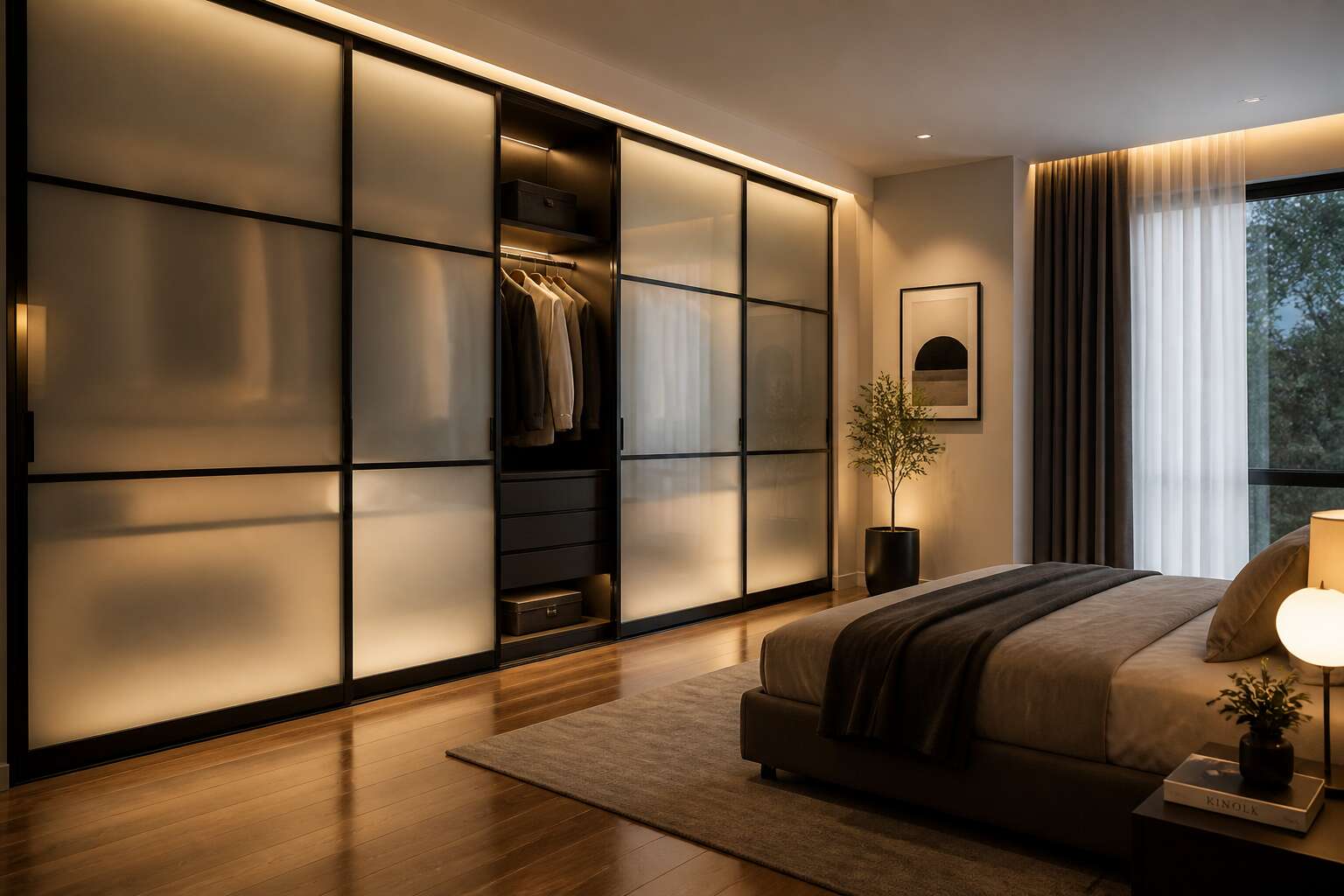
Understanding Sliding Wardrobe Doors
Space-Saving Advantages
The average bedroom loses about 20% of its usable floor space to furniture that opens outward. Swinging doors claim a generous arc of real estate every time you need a clean shirt. Sliding wardrobe doors eliminate that problem by moving along a horizontal track. This simple change returns precious floor area to the room.
Forget what you have seen in hotel lobbies. Modern options for wardrobe sliding doors are not flimsy partitions. They are robust systems with smooth glides and soft-close mechanisms. In a compact Johannesburg flat or a Cape Town cottage, this design is a practical choice. Your shins will thank you.
The space saving happens because the door never enters the room. It stays flush to the cabinet. This allows you to push a dresser closer to the wardrobe or walk past without sideways shuffling.
– A narrow bedroom nook becomes usable.
– A home office can host a proper wardrobe.
– A guest room retains its walking path.
The hardware is entirely static. No hinges swing into the space. This also means wall space behind the door remains clear for artwork or a full-length mirror. The visual weight of the room is lighter.
You can place a bed closer to the wall. You can add a bench at the foot of the bed. The layout becomes flexible. That flexibility is the core advantage. Your room works harder for you.
This approach solves the perpetual problem of rooms that feel smaller than they are. A sliding system changes the geometry of daily movement. The final choice still depends on your style preference, but the practical benefit is undeniable. Start your search for wardrobe sliding doors with this spatial freedom in mind.
How They Differ From Hinged Doors
Hinged doors demand a clearance arc. Sliding systems run on parallel tracks, so the panel stays within the frame. That difference changes how you approach the room. You never step back to let a door swing. You just reach for the handle and glide.
For wardrobe sliding doors, the track and rollers are the quiet workhorses. Steel rails, nylon wheels, and soft close dampers make the motion feel effortless. Hinged doors rely on sturdy frames and regular alignment checks. Sliders need occasional track cleaning to keep dust from building up.
- Hinged doors expose the full interior at once. Sliders reveal only one section.
- Sliding panels can be mirrored, timber, or lacquered glass.
- Hinged doors allow easier access to every corner without moving panels.
Key Components and Hardware
The hardware behind a sliding door determines its character. Aluminium tracks stay lightweight. Steel rails handle heavier panels. Top-hung systems suspend the door from overhead hangers. That keeps the floor free for cleaning. Bottom-roller systems rely on a slim floor channel. Each configuration suits different room conditions. For wardrobe sliding doors, the panel weight decides which hardware makes sense.
Rollers use nylon wheels with sealed ball bearings. These resist dust and reduce friction. Soft-close dampers catch the door near the end of its travel. They protect the frame from slamming. In my experience, the damper strength makes the biggest difference. Adjustable hangers let you lift or lower each panel by a few millimetres. That simple adjustment solves most alignment problems. Spare parts for wardrobe sliding doors are widely available.
- Track profile influences noise levels
- Roller material changes the glide experience
- Damper strength must match door mass
Common Configurations and Track Layouts
A sliding door is only as reliable as the track above it, and the track is only as straight as the wall holding it. Most South African walls fail that test. I have the crooked measurements to prove it! The two common configurations for wardrobe sliding doors are bypass and bi-fold. Here is the difference:
- Bypass tracks carry panels on parallel rails so they slide over one another. They need long track runs and even ceilings.
- Bi-fold tracks hinge panels together and fold them to one side. They need clear floor space and a solid corner anchor.
Track layouts for wardrobe sliding doors complicate the choice further. Single-track systems move one panel, leaving the other fixed. Multi-track systems give each panel its own rail, granting fuller access to the wardrobe interior. Uneven floors and older ceilings usually push people toward bypass. The trade-off is always the same. You trade floor space for reach, or reach for floor space.
Choosing the Right Track and Roller System
Top-Hung vs. Bottom-Rolling Systems
Nearly 70% of sliding door malfunctions trace back to the track and roller system. When you choose hardware for wardrobe sliding doors in South Africa, the top-hung versus bottom-rolling choice shapes daily use.
Top-hung systems suspend the entire door weight from an overhead aluminium rail. The floor remains clear, which simplifies cleaning and prevents dust accumulation. These systems suit heavier doors since rollers glide along a fixed track with little resistance.
Bottom-rolling systems carry the load on floor-mounted wheels. They offer a traditional feel and often prove easier to retrofit into existing homes. However, the exposed bottom track collects dust and needs periodic maintenance.
Key distinctions include:
- Load-bearing location
- Floor clearance
- Retrofit complexity
- Maintenance frequency
In my experience, homeowners in Durban or Cape Town often prefer top-hung systems for wardrobe sliding doors. The elevated track avoids salt-laden dust near the floor, keeping rollers cleaner.
Soft-Close and Damping Mechanisms
Selecting the correct rollers for wardrobe sliding doors requires attention to bearing quality and track material. Nylon wheels with sealed ball bearings handle daily use better than basic plastic alternatives. Aluminium tracks with a powder coated finish resist corrosion in coastal regions like Durban or Cape Town. I recommend checking the manufacturer’s load rating before committing to a specific profile.
Soft-close mechanisms deserve equal consideration. These hydraulic dampers engage during the final 100 millimetres of travel, slowing the door before it contacts the frame. This function prevents finger pinching and reduces wear on the roller assembly over time.
- Check the weight capacity of each roller
- Confirm the damper force matches door mass
- Inspect the mounting brackets for adjustability
For wardrobe sliding doors with soft-close fittings, test the resistance during a showroom demo. A damper that is too strong forces the door to bounce back. One that is too weak offers no cushioning benefit whatsoever.
Track Materials and Durability
The choice of track material dictates the operational lifespan of any fitted system, particularly for wardrobe sliding doors. In South Africa, a coastal climate demands materials that withstand persistent moisture and salt. Extruded aluminium outperforms rolled steel here, as it does not flake or oxidize when the protective coating is scratched.
I find that homeowners often overlook the bearing race, the channel where the wheels travel. For wardrobe sliding doors, a track with a rough finish creates a bumpy ride, placing horizontal stress on the rollers. Anodised aluminium offers a harder, self-lubricating surface, which reduces friction significantly.
– The profile’s wall thickness adds torsional rigidity to the overall frame.
– A correctly milled radius within the channel minimises wear on nylon wheels.
– Pre-drilled extrusion patterns allow for secure floor or header mounting.
Weight Capacity and Stability
The average sliding door weighs between 30 and 80 kilograms, yet many budget track systems are rated for barely half that load. For wardrobe sliding doors, the discrepancy invites premature wear and sudden derailment.
Rated load capacity matters more than the thickness of the visible aluminium. Examine the manufacturer’s specifications for dynamic load, which accounts for the door in motion, not merely at rest. A system designed for 60 kilograms will operate smoothly with a 45 kilogram door, leaving a margin for bent wheels and misalignment.
- Check the roller wheel’s diameter and bearing quality. Larger wheels distribute weight better.
- Confirm the track’s mounting points align with structural studs or headers.
Stability also depends on the door’s height-to-width ratio. A tall, narrow panel amplifies lateral forces at the track, demanding a wider roller base. I have seen beautifully finished doors scrape within months simply because the weight rested on a single flimsy bracket!
Noise Reduction Features
A rattling wardrobe door can disrupt a household. The cause is usually the track and roller system, not the door itself. Selecting the right components for wardrobe sliding doors means understanding how noise travels. Steel wheels on thin aluminium tracks produce a high frequency screech, while nylon or polymer wheels with sealed bearings absorb vibration at the contact point.
Compare these noise reduction features when evaluating roller systems for wardrobe sliding doors:
- Urethane coated wheels that dampen metal on metal contact
- Track inserts made of soft PVC or felt strips
- Self lubricating bushings that eliminate dry friction
In my experience, track geometry matters too! A channel with a curved entry point guides the wheel gently, avoiding the thump of misalignment. Wall mounted tracks transmit less impact noise than floor mounted ones. The wheel base must match the door height, because a narrow base on a tall door will wobble and clatter.
Materials, Finishes, and Glass Options
Wood Veneer and Laminate Finishes
Surface materials determine how your doors age. Wood veneer uses real timber slices, preserving the grain without solid plank cost. Laminate finishes are synthetic layers that resist scratches and humidity. Both can look sharp, but they behave differently under South African sunlight and coastal salt. We have seen laminate outlast veneer in humid Durban homes!
Glass options add a separate dimension. Frosted, tinted, or mirrored panels hide clutter or amplify light. When selecting finishes for wardrobe sliding doors, consider how glass interacts with the surface texture.
- Wood veneer suits traditional interiors and needs gentle cleaning.
- Laminate works better for high traffic bedrooms and children’s areas.
Your final choice depends on climate, lifestyle, and tolerance for dusting. The finish defines the overall appearance.
Mirrored Sliding Doors
Nearly seven out of ten South African homeowners renovating a bedroom choose mirrored sliding doors over any other finish. That number keeps climbing because mirrors do double duty. They give you a full length dressing mirror while reflecting existing light across the room.
Mirrored sliding doors suit smaller spaces, where a solid panel can make the room feel closed off. The reflective surface also removes the need for a separate standing mirror. For families, the practical benefit is clear. A mirrored door hides a messy wardrobe while making the room feel more open. And you can choose a plain mirror, a tinted bronze option, or a smoked grey finish. All three manage glare differently, so the choice depends on window placement.
Here is what to weigh before committing:
– A plain mirror offers maximum reflection but shows fingerprints faster near handle zones.
– Tinted mirrors reduce heat gain in west facing bedrooms, which matters in Gauteng summers.
– Smoked glass adds a muted, modern look without turning your room into a changing room.
Glass options interact with the sliding track system too. Standard 4mm mirror glass is fine for most rooms, but heavier 5mm or 6mm glass needs rollers rated for the extra mass. Pair that with your top hung hardware, and the door glides safely for years Elias.
Aluminium framed mirrors are the most affordable route. Frameless options look sleek but require precision cutting and thicker glass. If you have kids, consider a laminated mirror backing. It holds shattered pieces together if the door takes a hard knock know.
No finish removes the need for regular slider maintenance. But mirrored doors, more than timber or laminate, demand clean tracks because dust shows quickly on the reflective surface. Choose your glass and frame together, not separately. The frame affects how much light bends across the mirror know. And always confirm the warehouse door opening height before ordering custom panels.
For wardrobe sliding doors, mirrored systems now outsell every other finish category in South African showrooms. That trend persists because buyers want function, light, and visual size. Match the mirror type to your room orientation, pair it with proper rollers, and you have a door that works while you sleep, dress, and pack.
Glass Panels and Acrylic Alternatives
Acrylic panels now rival glass in every showroom! They offer a lighter load for your track system and a safer option for high-traffic spaces. Unlike glass, acrylic won’t shatter into jagged shards, though it does develop surface scratches over time. For a polished look without the weight, consider polycarbonate sheets that mimic frosted glass.
Finishes change how the panel interacts with light. A brushed metal frame adds texture, while a matte acrylic finish softens glare. I recommend testing samples in your actual room, because artificial lighting alters the appearance dramatically.
- Clear glass panels: maximum clarity, need regular cleaning
- Smoked acrylic: reduces glare and adds depth
- Textured polycarbonate: hides smudges and resists impacts
Choose the material that matches your maintenance tolerance. The right panel for wardrobe sliding doors balances durability, weight, and aesthetics.
Custom Colors and Textures
Texture determines how a door feels before you touch it. Custom colours and textures for wardrobe sliding doors now extend far beyond factory whites and oak grains. Manufacturers offer deep charcoal, terracotta, and muted pastels, while embossed laminates mimic raw linen or brushed concrete.
A matte finish resists fingerprints better than gloss, a practical concern in humid cities like Durban. Dual-tone panels allow one colour on the room side and another inside the closet. This detail suits walk-in layouts where both faces stay visible.
Popular custom finishes include:
- High-gloss polyester for a reflective sheen
- Micro-embossed surfaces that scatter light softly
- Metallic strips embedded along panel edges
Your lighting determines which finish works. Low-reflectance panels suit bright bedrooms, while gloss adds drama to a dressing area. The right choice for wardrobe sliding doors balances maintenance, durability, and the mood you want daily.
Eco-Friendly Material Choices
Choosing environmentally responsible options for wardrobe sliding doors begins with the raw board. Recycled particleboard and FSC-certified plywood reduce deforestation pressure while maintaining structural rigidity. Bamboo composite offers a rapid-growth alternative with a hard-wearing face.
Finishes matter too. Low-VOC lacquers and water-based sealants keep indoor air cleaner without sacrificing durability. Some manufacturers now offer honeycomb-core panels, which use less material while retaining strength.
- Recycled aluminium tracks with powder-coated surfaces
- Cork or hemp acoustic inserts inside hollow panels
- Cradle-to-cradle certified edge banding
I have seen reclaimed oak from old Durban warehouses reborn as sliding door faces, each scrape telling a story. These choices lower your carbon footprint and give your space a genuine point of difference in a market flooded with mass-produced options.
Measuring, Installing, and Maintaining
Accurate Measurement Techniques
The difference between a smooth sliding action and one that sticks comes down to how you measure for wardrobe sliding doors. A laser distance measurer gives a true reading, but floor unevenness and wall curvature, common in older South African homes, need attention. Take three measurements across the opening and use the smallest value as your baseline.
Installation demands patience, real patience! Fit the top track first, then check that the verticals are plumb before anchoring anything. In my experience, a spirit level alone is insufficient. Use a plumb bob or laser level to confirm alignment. Once the doors hang, adjust the floor guides so the panels run parallel to the track.
Maintaining accuracy for wardrobe sliding doors requires regular checks. Temperature shifts and building settlement move openings. Every six months, test that the doors glide without lateral play. Re-tighten track brackets and re-check floor guide spacing when friction appears.
Aligning and Adjusting Doors
When the panels hang after installation, the real work begins. The true test for wardrobe sliding doors is alignment. A 2 mm misalignment becomes a sticky track in months. I set the verticals with a plumb bob before locking the top track. Measuring the gap at floor and ceiling reveals what a spirit level cannot.
Once installing, hang both doors and adjust the floor guides one by one. Common symptoms:
- A drifting panel: loosen the floor guide, nudge the wheel, re-test.
- A visible gap at the top: shim the top track bracket.
- Panels meeting unevenly: check the bottom rail tension.
Tedious, but a door that touches the frame only where it should is worth the effort.
Maintenance repeats the logic. Twice a year, re-check the floor guide spacing and re-tighten track brackets when nothing seems wrong. Settlement shifts the opening. A steady hand on these adjustments keeps the doors parallel.
Cleaning and Lubricating Tracks
Dust and fibre build up in the bottom track for wardrobe sliding doors faster than expected. A soft brush and vacuum attachment every few weeks keeps the channel clear. Johannesburg’s dry winters create fine dust that settles into the wheel bearings.
Lubrication matters more than frequency. Use a silicone spray, not oil, which attracts lint. Apply sparingly to the track surface and wheel axles.
- Wipe the track with a dry cloth before lubricating
- Spray silicone into the guide channels
- Slide the doors back and forth to distribute the product
Reapply every three months. A clean track reduces strain on the rollers and keeps the doors running quietly.
Troubleshooting Common Issues
Measuring and installing for wardrobe sliding doors often feels like a high stakes Tetris game with glass pieces. One millimeter of mismeasurement and your doors will refuse to glide, catching on the track with a grating screech. Common post installation issues rarely come from the hardware itself. More often, the track is mounted on a wall that believes it is straight but is not. You know the type!
Troubleshooting that stubborn drag requires patience and a level. If your doors lean noticeably to one side, check the floor roller alignment first. The usual culprits:
- A loose bracket on the top rail
- A bent wheel axle from overzealous force
- A track shifted by a hair’s breadth
Each turns a smooth operation into a noisy, grinding mess. In Johannesburg’s climate, thermal expansion throws off even a perfectly measured track. That faint click is the frame adjusting, not a defect. Most grievances for wardrobe sliding doors involve a screwdriver and a steady hand. The doors themselves are usually innocent!
Design Inspiration and Room Integration
Minimalist and Modern Aesthetics
Minimalist design for wardrobe sliding doors has moved beyond visual restraint. The door becomes part of the room’s architecture, not an object added afterwards. In South African homes, where space often flows between bedroom and en suite, the door’s profile either anchors the room or fades into the wall.
Flush-mounted panels sit nearly invisible within their tracks. Recessed handles, or none at all, keep the sightline clean. The finish matters as much as the mechanics. A matte laminate in a tone pulled from your wall colour creates continuity. A vertical grain wood veneer adds warmth without breaking the minimalist rule.
Some approaches to integration:
- Match the door colour to the skirting boards
- Use a full-height panel to draw the eye upward
- Place lighting behind the track to create a floating effect
The result is a surface that feels intentional, not decorative.
Incorporating Lighting and Accessories
Lighting changes how a room feels after sunset. LED tape fixed inside the track channel throws a soft wash across hanging clothes. Motion sensors turn it on when the door slides open. That detail matters in South African bedrooms where the cupboard often sits in a darker corner.
Accessories extend what a doorway can do. Good additions for wardrobe sliding doors include:
- A pull-down valet rod for pressing shirts
- Wire baskets that slide with the panel
- Magnetic bars for ties, belts, and scarves
Recessed downlights aimed at the door face produce a grained shadow across a grooved panel. A slim floor channel with LED strip lighting defines the glide path at night. Pair these with a motion sensor for wardrobe sliding doors and the room responds before you touch a handle!
Using Sliding Doors in Small Bedrooms
In tight South African bedrooms, the wardrobe dominates the space when closed. Clever integration for wardrobe sliding doors changes that calculation. A mirrored panel doubles as a dressing mirror and throws window light across the room. A flush track allows the bed to sit closer to the wall. The door face becomes part of the room, not a separate object.
Design inspiration starts at the ceiling line. A full-height panel draws the eye upward. A pale laminate keeps the space airy. A recessed bulkhead hides the top track, and that clean line is the aim for wardrobe sliding doors in smaller rooms.
Consider these layout approaches:
- Place a mirrored door facing the window to bounce light across the room
- Specify a dark timber panel behind the bed to frame the headboard
- Run one continuous track so one door hides the other
- Choose a matte finish to cut glare in Cape Town sun
Matching Door Styles to Interior Themes
In my experience, an interior theme chooses the door, not the other way around. The finish for wardrobe sliding doors must answer the room’s existing mood, whether that is the raw warmth of Cape pine or the cool restraint of a concrete wall. A Victorian row house settles into a fluted glass panel. A beach cottage leans toward pale oak, which softens the light.
Think of the room as a sequence of surfaces, and the door belongs to that sequence, not to the closet alone. These alignments hold true for wardrobe sliding doors in most South African homes:
– Industrial loft: charcoal laminate with a black top track
– Coastal retreat: whitewashed timber with a hidden rail
– Classic Karoo farmhouse: dark stained wood with bronze handles
The track height shapes the room as much as the panel does! A flush recessed rail lets the door read as a wall panel, and the space keeps its own silhouette.
DIY Upgrades and Retrofitting
Design inspiration starts with an awkward wall or an unfinished room. In Cape Town homes, I have watched a plaster wall dictate a raw steel finish for wardrobe sliding doors, while a Durban north coast bedroom demanded frosted glass to soften the glare. The door should read as an original architectural feature.
For room integration, consider how the alignment of wardrobe sliding doors matches skirting, ceiling lines, and the floor. A track that stops short of the wall breaks the visual rhythm. Running the rail into a plastered recess makes the hardware disappear. For retrofitting older houses, this means building a bulkhead or adjusting the header. DIY upgrades remain possible:
- Replace sliding rollers with sealed bearings
- Attach felt bumpers to the track ends
- Fit a minimalist handle rail
Retrofitting a mirrored panel onto an existing frame changes the room’s depth perception. Keep the track aligned and the weight balanced, and the result is a custom look for wardrobe sliding doors without a full rebuild.

0 Comments