Why Choose Sliding Door Systems
Maximizing Floor Space in Compact Rooms
Sliding door systems turn wasted swing space into usable square metres. In a compact Johannesburg flat, a hinged door consumes roughly one square metre of circulation area every time it opens. My clients often rediscover that space within days of swapping to indoor sliding doors. The result feels like a room expanded by simple subtraction!
Consider what that reclaimed area can host:
- A slim bookshelf or console table
- A dedicated yoga corner
- An unobstructed path for natural light
These gliding panels keep furniture placement flexible. You no longer plan around a door’s arc. That freedom lets a workstation or dresser sit exactly where the old swing used to take up space.
Enhancing Natural Light Flow Between Rooms
Solid walls block daylight completely. An interior partition between rooms prevents most natural light from reaching the far side, so homeowners switch on electrical fittings even during peak sun hours. Indoor sliding doors offer a transparent alternative.
Gliding glass panels let sunshine travel freely through a home. Morning rays from an east-facing kitchen can sweep across a hallway and into a study without hitting a solid barrier. The difference in brightness is immediate!
The practical gains are measurable:
- Lower lighting bills during daylight hours
- Brighter interiors without structural renovation
- Stronger visual connections between living areas
In my experience, Johannesburg homeowners choose indoor sliding doors for exactly this reason. The panels become architectural features in their own right, slim frames that let light pass through instead of blocking it.
Creating Seamless Transitions for Open-Concept Living
Open-concept living asks how rooms hold their character without becoming separate worlds. Swinging doors force a choice: closed creates a barrier, open consumes wall space and interrupts sightlines. Indoor sliding doors answer differently. They tuck alongside the wall, letting two rooms stay connected while keeping their own territories.
The result is a home that responds to the moment. With indoor sliding doors, a kitchen extends into a dining area, then slides shut for quiet. The movement is nearly silent. The track carries the weight, and the panel becomes a shifting wall rather than a hinge-bound obstacle.
For daily rhythm:
- Doorways no longer claim floor space when open
- Rooms adapt from lively to private
- Furniture placement stays flexible across zones
In my work with Johannesburg homeowners, preference for this system comes down to the seamless transitions it provides. The house keeps its boundaries, yet those boundaries never feel fixed.
Improving Accessibility with Smooth Gliding Mechanisms
According to the World Health Organization, over one billion people live with some form of disability. For many, the simple act of opening a door becomes a daily obstacle. Indoor sliding doors remove that barrier. Their smooth gliding mechanisms require minimal strength, making them an accessible choice for the elderly, those using wheelchairs, or anyone recovering from injury.
A sliding panel moves along a track with little resistance, and the floor remains level, so walkers and mobility aids pass through without frustration. This is why many Johannesburg homeowners choose indoor sliding doors for accessibility. They provide independence, dignity, and ease in every threshold.
Boosting Property Value with Modern Aesthetics
In the Johannesburg property market, first impressions decide the final offer. A door that slides rather than swings signals a home designed with foresight. Indoor sliding doors bring a clean, architectural line that photographs well and impresses during showings. Real estate agents often highlight them as a premium feature.
Modern aesthetics hinge on simplicity. A slim-profile sliding panel creates a crisp look that suits both industrial lofts and suburban renovations. It removes the clutter of a hinged swing, freeing wall space for art or furniture. This visual calm translates directly to perceived value.
Homebuyers respond to tangible upgrades. Consider what adds the most return for your budget:
- Large-format panels that blur the boundary between rooms
- Quiet runners that suggest quality craftsmanship
- Minimal frames that make rooms feel taller
When potential buyers see indoor sliding doors, they imagine fewer repairs and a more contemporary lifestyle. That perception boosts the asking price without extensive renovation. In a competitive market, small details tip the balance.
Popular Types of Interior Sliding Doors
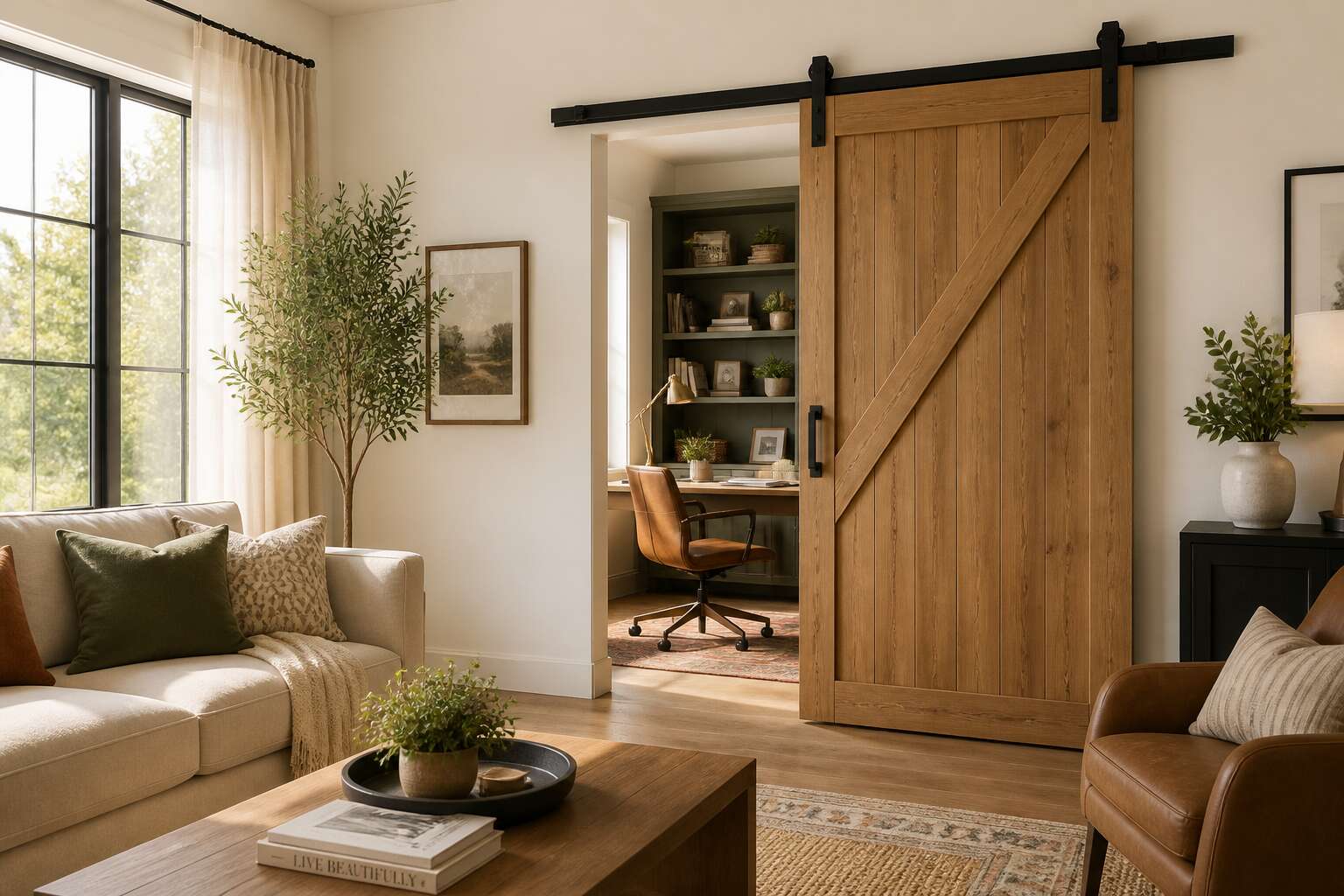
Barn Doors: Rustic Charm for Contemporary Homes
The barn door, once workaday farm equipment, now defines interior character in South African homes. Designers in Cape Town and Johannesburg routinely specify indoor sliding doors for their natural texture and sturdy construction. A barn door’s presence is immediate and grounding.
The hardware matters as much as the timber. Steel rails, roller hangers and floor guides work together in precise mechanics. Wood selection changes the entire temperament. Oregon pine brings warmth, while hardwood offers dense, meditative grain.
Popular configurations include:
- Reclaimed timber planks with black steel strapping
- Minimalist flush slabs with concealed tracks
- Mixed materials such as oak paired with brass inserts
The appeal of indoor sliding doors lies in their versatility. A barn door can anchor a rustic scheme or soften a restrained, modern room. For homeowners seeking distinction beyond standard folding options, the barn style delivers a tactile richness that becomes part of daily life.
Pocket Doors: Hidden Storage and Clean Lines
Pocket doors disappear into the wall cavity entirely. That trick makes them the space savers of indoor sliding doors. In Johannesburg apartments, where square metres carry a premium, the pocket door hides entirely within the wall. I have specified them in narrow hallways where a hinged door would have made the passage unusable.
The mechanism demands precision. A misaligned track turns a smooth glide into a frustrating grind. Specifying quality hardware from the start avoids that problem.
Pocket doors suit rooms where privacy and openness must coexist. A study that tucks away, a scullery that disappears, a guest bathroom that reclaims the hallway. The wall becomes the door.
Common configurations:
- Single pocket doors for standard openings
- Double pocket doors for wider spans
- Partial pocket doors for shallow walls
Each requires a cavity depth of roughly twice the door thickness.
Bypass Sliding Doors for Closets and Pantries
Bypass sliding doors solve a problem that hinged doors cannot touch. In a narrow passage leading to a pantry, a swinging door eats into every trip you make with groceries. Bypass doors run on parallel tracks, letting panels glide past one another. You open one side while the other stays put.
I specified bypass doors for a farmhouse pantry in Mpumalanga that needed bulky storage without losing aisle space. The doors slide horizontally, so nothing blocks the walkway. For closets, they work the same way. Two panels cover the opening, and you can access either side without moving furniture.
- Standard bypass: two panels, one track above, one below
- Three panel bypass for extra wide openings
- Bypass with mirror finish for dressing areas
These indoor sliding doors suit rooms where you need full access but cannot afford a swing radius. That makes them a practical choice for tight bedrooms and deep storage rooms.
Folding Sliding Doors (Multi-Panel Systems)
A multi panel folding door transforms a standard opening into a full width passageway. Each panel hinges to the next and rides along a track, collapsing into a compact stack at one end. This mechanism opens nearly the entire doorway. I recall a wine cellar in Stellenbosch where the owner wanted to display the bottle collection without losing wall space. The folding panels stacked neatly against the side, leaving the full opening clear. For spaces wider than standard doorways, indoor sliding doors with folding panels work well. Common configurations include:
- Two panel folding sets for narrow openings
- Four panel systems that stack evenly
- Six panel versions for double door widths
The folding action creates a continuous surface when closed and a generous opening when open. Unlike bypass doors, you never slide one panel behind another. The entire assembly moves as one linked system. Indoor sliding doors of this type suit rooms where you want to connect two areas occasionally while keeping privacy when needed.
Glass Sliding Doors for Partitioning Rooms
Glass sliding doors are a study in architectural transparency. They do not hide the division they create. Instead, they invite the eye to travel through a space while defining its boundaries with a crisp, visual line. In places like Johannesburg, where the light can be sharp and direct, a frosted or tinted pane can temper that intensity. The mechanism is the same as any other track system, but the material changes the entire character of the room. The reflection on the glass can also add a sense of depth, making a narrow passage feel longer than it is.
The utility of these partitions is best realised in spaces where noise reduction is secondary to visual continuity. A home office can feel less like a box when you can see into the living area, yet the closed door still signals a clear shift in function. For larger properties, perhaps those near the Cape coast, tempered glass holds up well against the salt air and wind. Consider the hardware and the thickness of the pane carefully, as these details determine how quiet the glide will be. The options are usually straightforward:
– Clear glass for maximum light transfer
– Tinted or smoked glass for a softer glare
– Textured or patterned panels for privacy
The true value of these indoor sliding doors lies in their duality. They offer a way to separate without a sense of enclosure, providing acoustic separation through the density of the glass itself. While a plasterboard wall is final, a glass partition is a proposal. It suggests a room can change its shape according to the hour of the day and the mood of the occupants.
Mirrored Sliding Doors to Add Depth and Light
Mirrored sliding doors reflect what is already there. That simple trait makes a cramped room feel twice its size and redirects whatever light finds its way in. I have seen a narrow hallway transformed by a single mirrored partition, the kind of change that needs no renovation, only a track and a pane.
Consider these options when choosing mirrored indoor sliding doors:
- Full mirror panels for maximum depth
- Mirrored panels with a frosted strip for privacy
- Tinted mirror glass to reduce glare near large windows
The mirror backing matters more than the frame. A cheap coating dulls quickly, especially in coastal climates. The hardware also earns its keep here, since a heavy pane needs a stable mechanism to slide without a hitch.
Choosing the Right Materials and Finishes
Solid Wood vs. MDF: Durability and Style
The material you choose for your indoor sliding doors shapes your daily experience. Solid wood has natural grain that ages visibly; MDF offers a flat, uniform surface that stays predictable. In South Africa, humidity varies from coastal to highveld, testing both choices.
Think about how your indoor sliding doors will be used:
- A family home with children demands resilience over romance
- A minimalist flat prefers clean, painted surfaces
- A farmhouse tolerates natural wear as character
Solid wood warps with moisture, but it can be sanded and refinished. MDF resists warping but chips along edges when neglected. Finish selection is critical. An oil-based sealer protects wood; a matte polyurethane guards MDF. Base your choice on living conditions and maintenance habits, because the door must perform for years, not merely satisfy a showroom idea.
Glass Panels: Clear, Frosted, or Textured Options
Once you choose the frame material, the glass panels become the next decision for indoor sliding doors. Clear glass keeps the sightline open. It works best in quiet rooms where smudges stay minimal. Frosted glass blurs the boundary. It lets light through, but keeps clutter and private moments out of view. Textured glass goes further. Patterns like reeded or hammered catch light and add depth without sacrificing daylight.
In South Africa, think about dust and humidity. Coastal air leaves a film on clear glass, so sliding doors near the sea need frequent wiping. Highveld dust settles into textured grooves. Develop a matching wipe-down routine for your materials. Some surfaces demand more attention than others. Choose the trade-off you can live with.
Natural Veneer and Laminate Finishes
There is a particular satisfaction in choosing how a door feels under your hand before you even consider how it looks. The finish of your indoor sliding doors dictates more than colour, it dictates the daily interaction between your home and its environment. Natural veneer offers a tactile warmth that laminate cannot mimic, a thin slice of real oak or ash bonded to an engineered core. In South African summers, however, direct sunlight can fade a beautiful veneer unevenly. A high-quality laminate, by contrast, is a study in resilience, its printed surface resisting UV rays and the scuffs from busy hallways.
Selecting between the two often comes down to the life you live inside the house. Veneer requires a gentle hand, occasional oiling, and a respect for its organic nature. Laminate asks for nothing and gives back durability. For families with young children or pets, laminate is the practical workhorse. For a quiet study or a formal dining room, the deep grain of a veneer adds a richness that feels established.
– Wood grain laminate offers the look of timber without the maintenance.
– Matte finishes hide fingerprints better than gloss.
– Matt black hardware pairs well with oak veneer for a contemporary edge.
South African homes, particularly those on the coast, face a specific adversary in the form of moisture. Veneers can swell and peel when exposed to humid, salty air, so a well-sealed edge is crucial. Laminate tolerates these conditions with ease, making it a lower-risk option for coastal properties. The choice hinges on your willingness to maintain the material versus your desire for a natural aesthetic. Both finishes can transform a room, but they demand different levels of engagement.
Handles, Tracks, and Hardware Materials
The hardware that carries your indoor sliding doors often receives less attention than the panels themselves, but I have learned to look at the track first. That thin rail of metal tells you how long the door will live. In South African coastal towns, a steel track can rust within months if exposed to humid, salty air, while a cheap aluminium handle pits and dulls. The material choice matters more than the colour.
- Anodised aluminium resists corrosion better than raw steel and weighs less for light doors.
- Stainless steel holds its strength for decades, but the roller channels need regular cleaning.
- Brass adds a luxurious feel, yet it stands poorly against sea spray and requires sealing.
Nylon-coated rollers reduce noise and extend the life of the track. Check the gauge of the rail as well, a flimsy profile bends under a heavy solid door. Pair the hardware with your chosen finish, a matt black pull works with oak veneer, and a slim aluminium channel suits clear glass.
Color Trends and Painting Options
The finish you choose for your indoor sliding doors speaks before the hardware does. I have seen charcoal panels ground white marble in Johannesburg kitchens, while coastal homes lean toward dusty sage and sand tones. Paint offers the easiest transformation. A quality primer and two coats of satin acrylic resist the humidity that troubles Durban summers. Matte finishes hide fingerprints but mark easily; eggshell balances durability with softness. For timber doors, consider a clear oil that deepens the grain instead of covering it. This season, warm terracotta and muted olive echo the Highveld landscape.
- Test paint samples against your floor tones in natural morning light.
- Choose a tinted sealer for raw wood to avoid blotchy absorption.
The colour is not decoration; it defines how the room breathes and how the light moves through your home.
Installation Tips and Maintenance Best Practices
Assessing Wall Framing for Pocket and Barn Doors
Before you commit to indoor sliding doors, the wall you anchor them to deserves scrutiny. In many South African homes, plastered brick walls conceal plumbing or electrical conduits, which can derail a pocket door installation. Use a stud finder and a bore scope to map the cavity, and verify the header can support the track weight.
- Check for level floors to avoid track misalignment.
- Lubricate rollers and tracks every six months with a silicone spray.
For barn doors, the framing must resist lateral force. A single timber strut nailed into drywall will fail. Reinforce with a solid backer board, then test the assembly before hanging your door. This diligence prevents costly rework later.
Tools and Skills Needed for DIY Installation
There is a particular satisfaction in watching a heavy door glide open with a gentle push, a silent confirmation that your patience during installation has paid off. But before you feel that, you will likely face an afternoon of precise measurements and unplanned adjustments. The tools matter less than your willingness to slow down and think in three dimensions.
For a DIY installation of indoor sliding doors, you will need more than just a spirit level and a cordless drill. A laser level is invaluable for marking track positions across uneven plaster, while a good quality hole saw will prevent the timber from splitting when you install the floor guides. You also need the skill to read your own work critically. Step back and look at the gap between the door and the wall. If your eye catches an inconsistency, a tape measure will confirm it.
1. Mount the track to the header first, ensuring the screws bite into solid timber.
2. Hang the door on the rollers before tightening the track fully to allow for minor alignment shifts.
3. Install the floor guide last, using a pencil mark to check the swing arc without causing scratches.
Once the door is hanging, resistance often tells you more than a ruler. If the pull feels heavy, check the roller bearings for debris. A buildup of dust in the top track is the most common culprit, not the door weight itself. Use a silicone spray, not oil, to keep the movement smooth, as oil attracts the fine grit typical in many South African homes during the dry season.
Professional Installation vs. Self-Install: Pros and Cons
The moment of triumph arrives when the hinges align and the track accepts the rollers with a satisfying click. But a beautiful installation is only the beginning. The true character of your indoor sliding doors reveals itself in the months that follow, through the rhythm of daily use and the quiet battle against dust and time.
Maintenance demands a light touch and a regular ritual. Begin by wiping the top track with a dry microfiber cloth every fortnight. This simple act prevents the gritty buildup that turns a smooth glide into a stubborn shuffle. For the rollers, a quarterly application of a dry PTFE spray works wonders. Avoid petroleum-based lubricants; they attract the fine dust that characterizes the South African Highveld. Check the floor guide for debris, as a single pebble can scratch a wooden door base. The timber panels themselves benefit from a yearly treatment with a quality furniture oil, which nourishes the grain and protects against the dry winter air.
The decision between hiring a professional and tackling the project yourself rests on a few honest assessments.
- Professional installation guarantees precision for complex wall constructions, especially when retrofitting pocket doors into existing masonry.
- A skilled installer possesses the specialised tools, such as laser levels and heavy-duty drills, to handle solid hardwood doors without damage.
- Most reputable suppliers offer a workmanship warranty on the hardware, which becomes void if a DIY installer misaligns the track.
The self-install path offers the satisfaction of saving on labour costs, typically a substantial portion of the quote. It also grants you the flexibility to work at your own pace and correct mistakes without awkward phone calls. Yet, the risk remains. A miscalculated header mount can cause the door to bind and wear the bearings prematurely. For lightweight internal doors on straight, sturdy walls, a confident DIYer will succeed. For heavy glass panels or installations requiring structural modifications, the professional’s expertise proves invaluable.
Ensuring Smooth Roller Alignment and Track Lubrication
Roller alignment is the unglamorous core of a trouble free sliding system. When a door drags, the fault usually traces back to a misaligned roller or a dirty track. Wipe the track clean before adjusting anything. With the door mounted, loosen the bottom roller screws and turn them in small increments. The door should hang level and move without resistance. A bubble level reveals even a millimetre of deviation.
For lubrication, use a dry PTFE spray on the track’s inner groove every three months. It keeps indoor sliding doors gliding without attracting the fine dust common in South African homes. Silicone based sprays work too. Avoid oil based products.
The floor guide needs attention. Debris collects in that narrow slot, and one grit particle can scratch a wooden base. Clear it monthly.
After an adjustment, stick to this sequence:
- Clean the track and let it dry.
- Adjust rollers in quarter turns, checking level each time.
- Apply PTFE spray to the track and wheel bearings.
- Test the door five times each way.
Cleaning Glass Panels and Frames Effectively
A smudged glass panel undoes all the elegance of a well installed sliding door. For indoor sliding doors, clarity is the defining feature. I have seen spotless tracks ruined by streaked glass. The culprit is often water quality, and South Africa’s mineral rich tap water leaves residue that ordinary cleaners miss.
Switch to deionised water for your final wipe! Mix a drop of mild dish soap with warm water, then finish with a squeegee. For frames, detail the corners with a cotton bud to avoid dust accumulation.
- Wipe glass daily with a dry microfibre cloth.
- Deep clean frames monthly with a soft brush.
Always test a small area first, especially on powder coated finishes. A gentle approach keeps indoor sliding doors performing beautifully.
Troubleshooting Common Sliding Door Issues
A sliding door that resists halfway is rarely possessed. It is usually a track out of true. In South Africa, where coastal humidity swells timber and highveld dust settles into every groove, the panel will tell you exactly what it needs. You must listen. Shim the frame until level before fitting the rollers. A 2 mm slope turns a smooth glide into a daily struggle. Fix the top guide first, then adjust the bottom rollers with an Allen key. Never force anything. A door that scrapes the floor needs a minor roller lift. Raise it too high and the panel will jump the track entirely.
Debris is the silent saboteur. Vacuum the track weekly. A cotton bud reaches the corners where dust compacts into a paste that grips the wheels. Nylon rollers outlast steel on indoor sliding doors. Replace worn wheels before they damage the frame. If a door rattles in a storm, tighten the top guide until it touches the panel without pressure. Limit screws must be set correctly to stop the door sliding past its stopper. A sagging panel means the bottom rollers have shifted. Realign them from the front adjustment screw. When the door still binds, check the floor for expansion. Wood swells in Durban’s humidity. The door is not broken. It is responding to the air. Track your maintenance and you will stay ahead of the trouble.
Design Concepts and Styling Inspiration
Minimalist Designs for Modern Interiors
The quietest room in a house is the one where movement is deliberate. Indoor sliding doors change static barriers into gliding planes. In a minimalist interior, this discretion is vital.
I have seen a single panel of pale oak, mounted on a narrow track, separate a sunlit lounge from a darker study. This pause respects both spaces. South African homes benefit from this controlled openness.
- Reduce visible components to a single line of motion.
- Let the floor run uninterrupted beneath the panel.
- Choose a monochrome palette that makes the door recede.
These choices are discipline, not decoration. When the door becomes an afterthought, the room itself gains a stronger presence.
Vintage and Industrial Aesthetics with Reclaimed Materials
In Johannesburg lofts, the old grain silo doors never quite work as room dividers. For homes, indoor sliding doors made from salvaged timber carry a different character. Each gouge and bolt tells a story of warehouse floors and forgotten freight. Vintage and industrial aesthetics share an obsession with evidence.
Pair rough reclaimed pine with black steel tracks. The contrast feels honest. The wood softens the metal, the metal anchors the wood. One client’s door, cut from an old bowling alley, still carries the oil stains of a thousand games. Indoor sliding doors in this style do not hide their mechanics; they display them like a family crest.
- Sand only the edges
- Oil the surface sparingly
- Let the patina speak
This aesthetic rewards patience. A door that moves slowly, creaking politely, becomes the quiet centerpiece of a dinner party.
Using Sliding Panels as Room Dividers
A survey of Johannesburg architects asked about flexible room division. 71 percent chose sliding panels as their first tool. A panel on a track alters the daily rhythm of a room. One Cape Town homeowner installed indoor sliding doors with a linen and oak core to separate her kitchen from the evening chill. They stayed open all summer. When winter arrived, they slid closed and the room gained a wall that felt solid.
Try one of these directions:
- Block the low western sun, not the view.
- Match panel finish to floor colour.
- Use hidden magnets for a flush close.
These panels become the room’s reference point. In my experience, furniture tends to align with their weight, and the space starts to feel deliberate.
Combining Sliding Doors with Built-In Storage
In older Johannesburg homes, built-in storage often reads as an afterthought. A wall of shelves becomes a dumping ground for keys, paperwork, and items no one names. Combine those cupboards with indoor sliding doors, and the architecture gains a quiet severity. The door becomes a facade that hides a library or pantry at will. One client asked for a sliding panel that matched the raw concrete floor. Behind it sat a floor-to-ceiling storage wall without handles; magnetic pulls instead. Consider these dark wood offerings for such installations:
– Kiaat with a matte sealer
– Saligna with smoke-coloured stain
– Reclaimed yellowwood
The panel closes, and the room’s secrets stay hidden. Indoor sliding doors let the storage volume disappear behind a single plane. That concealment creates the tension which makes a space feel deliberate.
Lighting and Decor Accents to Highlight Doorways
Lighting transforms indoor sliding doors from functional panels into focal points. A narrow LED strip along the top track casts a soft glow that emphasises the door’s movement. A warm spotlight grazing a dark bronze door makes the grain visible and the surface feel alive. A picture light above the frame in a hallway draws the eye upward and makes the passage feel intentional.
Decor accents should respect the door’s plane. A single ceramic vase on a nearby console, a low plant, or a stack of books in muted tones. These objects relate to the door without competing for attention. When the door slides open, the decor becomes part of the larger room. When it closes, the doorway holds a quiet composition. Indoor sliding doors reward this considered styling.
Consider these accents:
- A floor lamp with a sculptural silhouette near the door’s resting position
- A small artwork on the wall perpendicular to the track
- A runner aligned with the door’s path to guide the eye
Smart Home Integration with Automated Sliding Systems
According to a 2023 home technology survey, automation is the fastest growing feature in residential design. I have watched indoor sliding doors evolve from manual panels into automated systems. In South African homes, where energy efficiency shapes routines, motorised doors respond to presence and motion. A sensor detects approach and the panel glides open without a touch.
Consider what a smart system can manage:
– Synchronised opening with lighting scenes
– Scheduled ventilation through partially opened panels
– Voice control for hands-free operation
These systems connect to existing home networks and update through firmware. The door becomes a responsive surface, adjusting to how you live. Indoor sliding doors with automation offer restraint and precision in one motion.
Budgeting and Cost Considerations
Price Range by Material and Panel Size
A modest sliding door can quietly consume a substantial portion of your renovation budget. The total expense hinges on engineering, labour hours, and the raw character of the materials you select. Solid pine and genuine oak offer warmth but command a premium. Aluminium and glass, especially with thermal breaks, introduce their own costs. Standard hardware, track systems, and finishing touches add further weight to the final quote.
Understanding current pricing helps frame your expectations when speaking to South African suppliers. Consider these general market ranges for the door system itself:
– Standard MDF and hollow-core panels: R5,000 to R12,000
– Solid hardwood or imported glass systems: R15,000 to R40,000
– Multi-panel folding units: R30,000 and upward
Installation fees, wall modifications, and custom trims often rival the door price. Always request a comprehensive breakdown before committing. A well-chosen set of indoor sliding doors transforms a hallway, yet the budget must accommodate the entire assembly, not just the visible face. Quality rollers and resistant seals will save you from costly replacements later.
Hardware and Customization Expenses
Hardware costs can silently double a renovation budget. The track system, rollers, and soft-close mechanisms often exceed the price of the door panels themselves. South African suppliers frequently quote these components separately, which means the final invoice arrives with several unwelcome additions. Customization expenses follow similar patterns; bespoke handles, anodised aluminium tracks, and concealed floor guides each introduce another line item.
Ask about hardware upgrades before committing to a system. Steel rollers outlast nylon, though they require a perfectly aligned track. Acoustic seals and draught excluders add comfort to bedrooms and home offices.
– Soft-close mechanisms: R2,000 to R6,000 per panel
– Concealed tracks: R3,500 and upward
– Custom handles or pulls: R800 to R4,000 each
A detailed quote protects against these hidden costs. Indoor sliding doors only feel premium when the engineering matches the visible finish. Budgeting for indoor sliding doors means accounting for every mechanical component, not merely the panels.
Hidden Costs in Installation and Framing Modifications
Installation and framing changes are where budgets often bleed. A pocket door, for instance, requires a wall cavity that many South African homes simply lack. Builders must cut into plaster, reinforce headers, and move electrical cables hidden inside the stud work.
Brick walls present another obstacle. Unlike drywall, masonry requires a diamond blade cutter and a steel lintel to carry the load above the opening. Plastering and painting after the work adds days to the schedule. The full cost of indoor sliding doors, therefore, includes far more than the product itself.
- Structural headers and lintels: R4,000 to R12,000
- Relocating light switches or sockets: R1,500 to R3,500 per point
- Plastering and touch-up paint: R2,500 to R7,000
Floor preparation matters too for indoor sliding doors. Tracks for bottom rollers need a perfectly level surface. Tiled floors rarely offer this. A self-levelling compound or a routed channel in the subfloor adds another contractor to the job, and that tradesperson’s quote often arrives separately from the door supplier.
Energy Efficiency and Long-Term Savings
Electricity tariffs in South Africa have climbed for years, so an indoor sliding door that leaks conditioned air becomes a recurring cost. I always urge buyers to include gaskets and threshold seals in their cost planning. A narrow price comparison overlooks energy losses from a poorly sealed track!
Energy efficiency is where long-term savings appear. Indoor sliding doors with double-glazed panels and low-emissivity glass reduce heat gain in summer and heat loss in winter. The rubber weatherstripping along the bottom rail stops the cold floor drafts that force heaters to work harder. Properly fitted doors lower the monthly electricity bill, and that saving compounds with each annual tariff increase.
- Sealed double glazing reduces heating and cooling demand
- Quality rollers and tracks prevent early replacement expenses
- UV-resistant coatings protect flooring and furniture from fading
Comparing Rental-Friendly Alternatives
Rental deposits in South Africa often vanish into maintenance claims, so every upgrade needs clear financial logic. For tenants and landlords alike, indoor sliding doors present a budgeting dilemma. Permanent installations require track framing, wall reinforcement, and professional labour. Those expenses make sense for owned property, but rentals demand less invasive approaches.
Rental-friendly alternatives can replicate the space saving effect without permanent changes. Tension rod systems fit inside existing doorways and support lightweight panels. Freestanding sliding screens run on floor mounted guides that leave no wall damage. Adhesive track strips offer a temporary option for lighter dividers.
Consider these cost conscious choices:
- Tension mounted curtains or lightweight sliding panels
- Portable folding screens with castors
- Trackless barn door kits with removable brackets
Each option keeps the budget intact while preserving the visual benefits of indoor sliding doors. When the lease ends, the unit returns to its original state.

0 Comments